

Perfume dupes explained: Affordable fragrance alternatives

TL;DR:
- Perfume dupes can sometimes outperform originals in immediate scent appeal but usually have shorter longevity.
- Sampling properly involves testing on paper and skin over several hours to evaluate scent development and durability.
- Understanding ingredient quality and skin chemistry explains why dupes often fade faster and may differ in scent evolution.
Cheaper doesn’t always mean worse. In a blind test run by Which? with over 40 testers, one dupe outperformed its designer original in overall preference. That result surprises most people, and it raises a real question: are you paying for the scent, or just the bottle? This article breaks down what perfume dupes actually are, how they compare to originals across scent, longevity, and performance, and what the science says about why they behave differently on your skin. You’ll also get practical steps for sampling dupes the right way before spending a single dollar on a full bottle.
Table of Contents
- What is a perfume dupe?
- How perfume dupes compare to originals
- The science behind dupe performance
- How to sample and choose the right perfume dupe
- Why sampling and discovery matter more than ever
- Explore, sample, and discover more scents
- Frequently asked questions
Key Takeaways
| Point | Details |
|---|---|
| Dupe definition clarified | A perfume dupe is an affordable scent designed to closely mimic a popular designer fragrance. |
| Performance differences matter | Dupes often match the first impression but originals last longer and change more on the skin. |
| Sampling is essential | Always sample a dupe before buying and compare its evolution and wear to the original. |
| Science impacts results | Ingredient quality and skin chemistry explain why dupes and originals don’t perform identically. |
| Discovery is its own reward | Exploring perfume dupes opens up affordable scent adventures and personalization possibilities. |
What is a perfume dupe?
A perfume dupe is a fragrance designed to smell similar to a well-known designer or niche perfume, but sold at a fraction of the price. The word “dupe” comes from “duplicate,” and that’s the goal: to recreate the feel and character of a popular scent using different, often more affordable, ingredients.
It’s important to separate dupes from counterfeits. A counterfeit pretends to be the original, using fake branding, copied packaging, and deceptive labeling. A dupe is honest about what it is. It doesn’t claim to be Chanel No. 5 or Dior Sauvage. It simply aims to evoke a similar olfactory experience under its own name and brand.
People seek out dupes for several reasons:
- Budget: Designer fragrances can cost $150 to $400 or more for a standard bottle.
- Everyday wear: Many people prefer saving their expensive bottle for special occasions and using a dupe daily.
- Curiosity: Some shoppers want to explore a scent family before investing in a full bottle.
- Gifting: Dupes offer a way to give someone a scent they love without the designer price tag.
The ingredients inside a dupe tell most of the story. Dupe makers typically use synthetic aroma chemicals rather than the natural extracts found in premium fragrances. While this keeps costs low, lower-quality synthetics often result in shorter longevity and less complexity as the scent develops on your skin.
This doesn’t make every dupe bad. Some synthetic ingredients are genuinely excellent, and skilled perfumers can create impressive results on a tight budget. The quality range is wide, which is exactly why sampling matters so much before you buy.
Pro Tip: Never buy a dupe in full size without testing it first. What smells appealing in the bottle can shift dramatically once it reacts with your skin chemistry over several hours.
How perfume dupes compare to originals
With the basics covered, let’s look at how dupes actually stack up against their designer originals, including what blind tests reveal about real-world performance.
The most interesting finding from consumer testing is that first impressions can genuinely favor a dupe. In blind tests involving 40+ testers, some dupes were preferred over their originals in immediate scent appeal. However, originals consistently outperformed dupes in longevity, holding their scent significantly longer throughout the day.
Here’s a simplified breakdown of how the two typically compare:
| Feature | Designer original | Perfume dupe |
|---|---|---|
| Top notes | Rich, complex, true to brief | Often close, sometimes sharp |
| Heart notes | Layered, smooth development | May simplify or flatten |
| Base notes | Deep, lasting, evolving | Often fades before full development |
| Longevity | 4 to 8+ hours | 1 to 3 hours typically |
| Projection | Strong and consistent | Variable, often lighter |
| Price | $100 to $400+ | $10 to $40 typically |
The pattern here is consistent. Dupes tend to perform well in the opening minutes, which is exactly when you’re smelling them in a store or right after spraying. That’s why so many people feel satisfied at first, only to notice the scent has vanished by lunchtime.
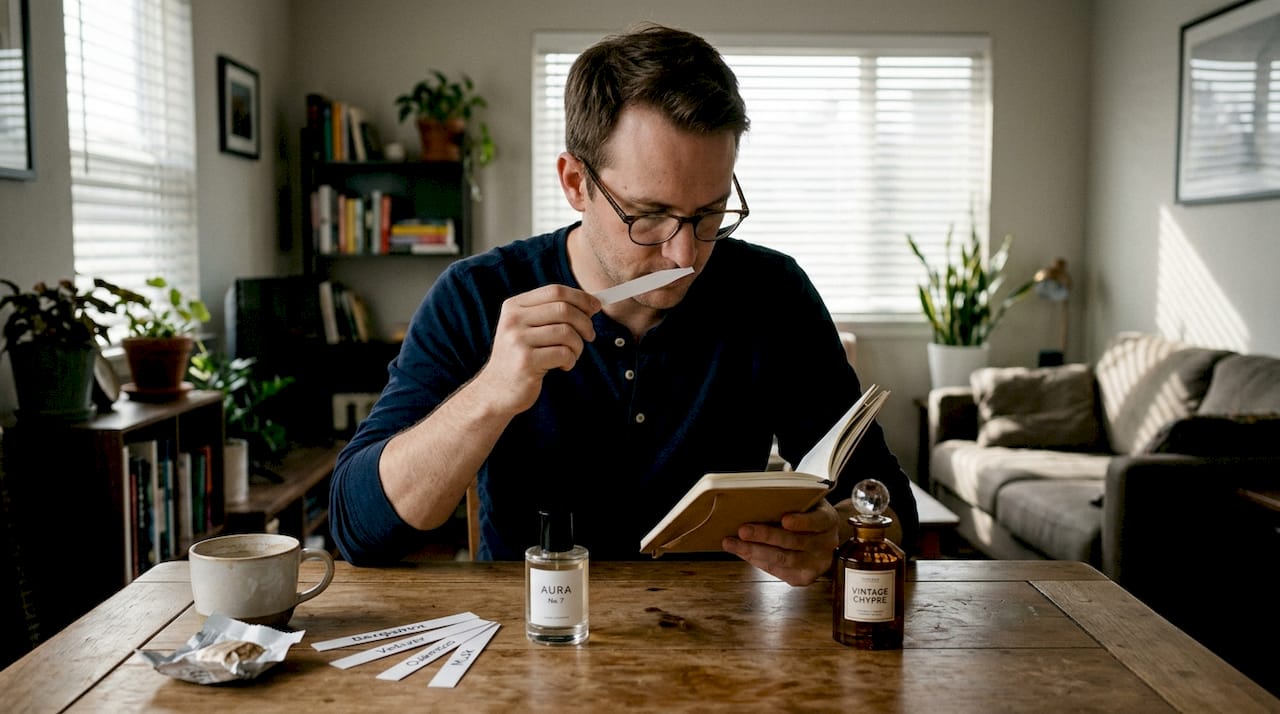
Scent development matters more than most people realize. A quality fragrance moves through three phases: top notes (what you smell first, lasting 15 to 30 minutes), heart notes (the core character, lasting 1 to 4 hours), and base notes (the lasting foundation, sometimes detectable for 6 to 8 hours). When you’re testing scent matches, you need to experience all three phases to make a fair judgment.
Common misconceptions about dupes include the belief that they’re just watered-down versions of originals. That’s not accurate. They’re reformulated from scratch using different raw materials. The result may smell similar in broad strokes but will rarely be identical once the full dry-down occurs. Knowing how to evaluate testing perfume samples correctly helps you catch these differences before committing to a purchase.
- Dupes can match top notes surprisingly well
- Heart and base note accuracy drops significantly in lower-cost dupes
- Projection (how far the scent carries) is usually weaker in dupes
- Skin type and body heat affect both originals and dupes differently
The science behind dupe performance
Understanding comparison is helpful, but the real science behind why dupes differ reveals even more about what you’re actually spraying on your skin.
The core issue is ingredient quality. High-end fragrances often use natural extracts such as Bulgarian rose, oud, or real jasmine absolute. These materials are expensive, complex, and interact with skin oils in nuanced ways. Dupes replace them with synthetic analogs. Some synthetics are genuinely sophisticated, but many budget versions use lower-grade aroma chemicals that behave predictably in a bottle but poorly on skin.
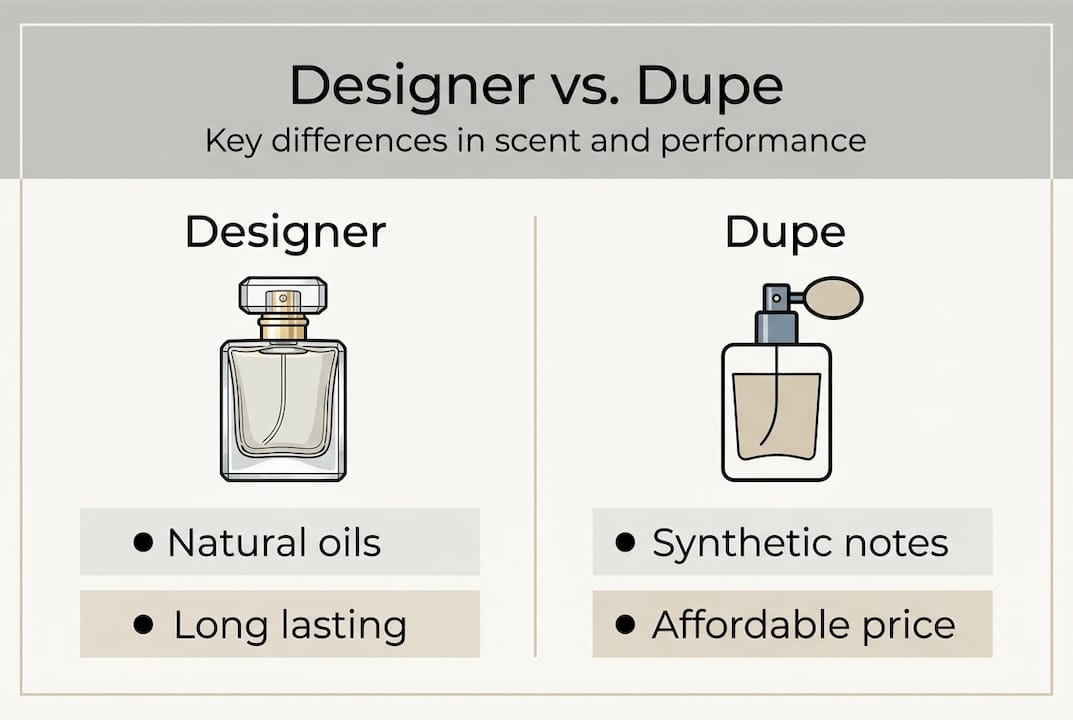
Here’s how performance typically differs by factor:
| Factor | Original | Dupe |
|---|---|---|
| Ingredient complexity | High (natural + premium synthetic) | Lower (budget synthetic focus) |
| Longevity | 4 to 8 hours | 1 to 3 hours |
| Scent evolution | Full three-phase development | Often stops at heart notes |
| Skin irritation risk | Low (regulated ingredients) | Higher in some products |
| Batch consistency | High | Variable |
Skin chemistry is another critical variable. Your skin’s pH, moisture level, and natural oils all influence how a fragrance develops. A dupe formulated with minimal fixatives (ingredients that help scent cling to skin) will fade quickly regardless of how it smells in the air. As lower-quality synthetics lack the complexity to evolve and anchor properly, the scent often disappears rather than deepens.
“The difference between a great fragrance and a forgettable one often comes down to what happens in the final hour on skin, not the first five minutes.”
There’s also a safety consideration. Some budget dupe manufacturers use ingredients that are not fully compliant with IFRA (International Fragrance Association) standards. This can increase the risk of skin irritation, particularly for people with sensitive skin. Always check ingredient transparency before applying a new dupe directly to skin.
Key scientific factors that affect dupe performance:
- Fixative concentration: Low fixatives mean faster evaporation.
- Molecular weight of aroma chemicals: Lighter molecules fade first; dupes often lack heavier base note molecules.
- Skin pH interaction: Natural extracts respond dynamically to skin; synthetics often don’t.
- Alcohol quality: The carrier alcohol affects how the scent disperses and how quickly it fades.
- Stabilizer presence: Without proper stabilizers, dupes can smell different from batch to batch.
For the most accurate assessment, best perfume testing involves wearing a sample for a full day, not just sniffing from the bottle.
How to sample and choose the right perfume dupe
Armed with science and comparison, let’s focus on practical application: how you can sample and select a dupe that’s right for you.
The biggest mistake fragrance shoppers make is deciding too fast. You spray, you sniff, you like it, you buy. But originals last 3+ hours while many dupes fade within one hour, and that difference only shows up over time. Sampling properly protects your money and your nose.
Here’s a step-by-step process for sampling a dupe effectively:
- Start with a scent strip. Spray the dupe on a paper strip and let it dry for two minutes. This gives you a neutral first impression without skin chemistry interfering.
- Apply to skin. Spray or dab a small amount on your inner wrist or elbow. These pulse points generate warmth that activates the fragrance.
- Wait 20 minutes. The top notes will fade and the heart notes will emerge. This is where many dupes start to diverge from their originals.
- Check again at the one-hour mark. Note whether the scent has deepened or simply disappeared. A quality dupe should still be detectable.
- Evaluate the dry-down. After two to three hours, what remains is the base note character. This is the truest test of longevity and quality.
- Compare side by side. If possible, test the original on one wrist and the dupe on the other during the same session.
Common mistakes to avoid when sampling dupes:
- Testing more than three fragrances in one session (your nose fatigues quickly)
- Judging a scent immediately after spraying without waiting for development
- Ignoring how a scent performs in different temperatures or humidity levels
- Choosing a dupe based only on online reviews rather than personal skin testing
Knowing how to read fragrance notes also helps. If you love woody, warm scents, look for dupes that list sandalwood, cedarwood, or amber in the base. If the dupe’s note list is vague or incomplete, that’s a red flag about ingredient transparency. Resources on testing before buying and testing perfumes correctly can sharpen your evaluation skills further.
Pro Tip: Always compare a dupe and its original on both skin and paper during the same session. Paper shows you the raw formula; skin shows you what you’ll actually wear.
Why sampling and discovery matter more than ever
Most conversations about perfume dupes focus on savings. And yes, the price difference is real. But reducing the dupe conversation to cost misses something more interesting: the discovery process itself.
Experienced fragrance enthusiasts know that finding your signature scent rarely happens in one purchase. It’s a journey of testing, comparing, and occasionally being surprised. Dupes accelerate that journey by making it affordable to explore more territory. You might test a dupe of a famous oud fragrance, realize you love the category, and then invest in a premium version with full confidence.
Sampling isn’t just about saving money. It’s about discovering new scents without the anxiety of a $200 mistake sitting on your shelf. The best fragrance collections are built through curiosity, not caution. Dupes, when approached as a discovery tool rather than a permanent substitute, give you permission to experiment freely.
Keep an open mind. Sometimes a dupe leads you somewhere unexpected, toward a scent profile you’d never have chosen from a description alone.
Explore, sample, and discover more scents
Ready to put this into practice? The smartest move any fragrance lover can make is to sample before committing. Whether you’re curious about a designer classic or want to explore a dupe’s scent family, testing first removes all the guesswork.
At Befrsh.com, you can browse a wide range of perfume sampling options across women’s, men’s, and unisex categories, including popular designer and niche fragrances. Sample kits, travel-size bottles, and gift sets make it easy to explore new scents affordably and on your own terms. No more buyer’s remorse, no more untouched bottles. Just the joy of finding what you actually love, one sample at a time.
Frequently asked questions
Do perfume dupes smell exactly like the original?
Perfume dupes often match the original’s top notes well, but dupes falter in heart/base notes as the scent develops over time on your skin.
Are perfume dupes safe for skin?
Many dupes are safe, but some use lower-quality synthetics that may increase irritation risk, especially for people with sensitive skin.
How long do perfume dupes last compared to originals?
Originals last 3+ hours on average, while many dupes fade noticeably within the first hour of wear.
What’s the best way to test a perfume dupe?
Apply the dupe to your wrist and check it at 20 minutes, one hour, and two to three hours to assess how the scent develops and how long it actually lasts.
Jätä viesti