How to Test Perfumes Before Buying for Best Results

Finding a perfume that truly fits your personality can feel overwhelming, especially with so many unique scents from niche brands across the world. For young adults and professionals exploring this journey, making informed choices matters more than ever. Perfume exploration blends personal taste with expert research and systematic testing, turning every scent trial into a step closer to your signature fragrance.
Table of Contents
- Step 1: Research Scent Options And Brands
- Step 2: Order And Organize Perfume Samples
- Step 3: Prepare Your Skin And Testing Environment
- Step 4: Test Perfumes Systematically On Skin
- Step 5: Evaluate Scent Development And Longevity
- Step 6: Decide On The Perfect Fragrance Purchase
Quick Summary
| Key Point | Explanation |
|---|---|
| 1. Research fragrance families | Understanding floral, oriental, woody, and fresh scents guides your selection and enhances your personal style. |
| 2. Organize perfume samples effectively | Create a tracking system to record notes and impressions for each scent, aiding in making informed choices. |
| 3. Test scents on clean skin | Proper skin preparation and a neutral environment ensure you accurately perceive the fragrance’s true essence. |
| 4. Systematically observe scent evolution | Document changes in fragrance over time to understand how each interacts with your body chemistry and lasts. |
| 5. Reflect on emotional responses | Assess how fragrances make you feel, as personal connection plays a vital role in choosing your ideal scent. |
Step 1: Research scent options and brands
Knowing which perfumes to explore starts with strategic research that goes beyond simply browsing store shelves. Perfume exploration requires understanding fragrance families, noting your personal preferences, and discovering brands that align with your unique style.
To conduct effective research, focus on these key approaches:
- Identify fragrance families like floral, oriental, woody, and fresh
- Explore online fragrance databases and review platforms
- Read expert reviews and professional fragrance evaluation techniques
- Follow niche perfume blogs and YouTube reviewers
- Check social media trends and recommendations from fragrance communities
Qualitative research helps uncover deeper insights about scent preferences. Understanding how different perfume ingredients interact and contribute to the overall experience can significantly improve your selection process. Professional fragrance researchers use multiple techniques to analyze consumer perceptions, including focus groups and sensory testing.
Here’s a reference table to help you identify main fragrance families and their typical scent characteristics:
| Fragrance Family | Typical Notes | Common Mood |
|---|---|---|
| Floral | Rose, jasmine, lily | Romantic, feminine |
| Oriental | Spices, vanilla, amber | Warm, exotic |
| Woody | Cedar, sandalwood, vetiver | Earthy, sophisticated |
| Fresh | Citrus, green, aquatic | Clean, energetic |
Understanding these families can guide your research and personal scent preferences.
Research transforms random selection into a strategic perfume discovery journey.
Pro tip: Create a digital mood board or spreadsheet to track perfume notes, brands, and personal reactions during your research phase.
Step 2: Order and organize perfume samples
Now that you’ve researched potential fragrances, it’s time to strategically order and manage your perfume samples. Sample collection allows you to test multiple scents without committing to full-sized bottles, giving you the flexibility to explore diverse fragrances.
Here are key strategies for ordering and organizing your perfume samples:
- Purchase sample sets from specialized retailers
- Order travel or decant sizes to minimize cost
- Create a systematic tracking system for your samples
- Request free samples during online or in-store purchases
- Consider scent sampling subscription services
When organizing your samples, develop a methodical approach to maximize your testing experience. Use a dedicated notebook or digital spreadsheet to record details about each fragrance, including brand, scent family, initial impressions, and how the perfume develops over time. This systematic documentation helps you make informed decisions and track your olfactory preferences.
Efficient sample management transforms perfume shopping from overwhelming to enjoyable.
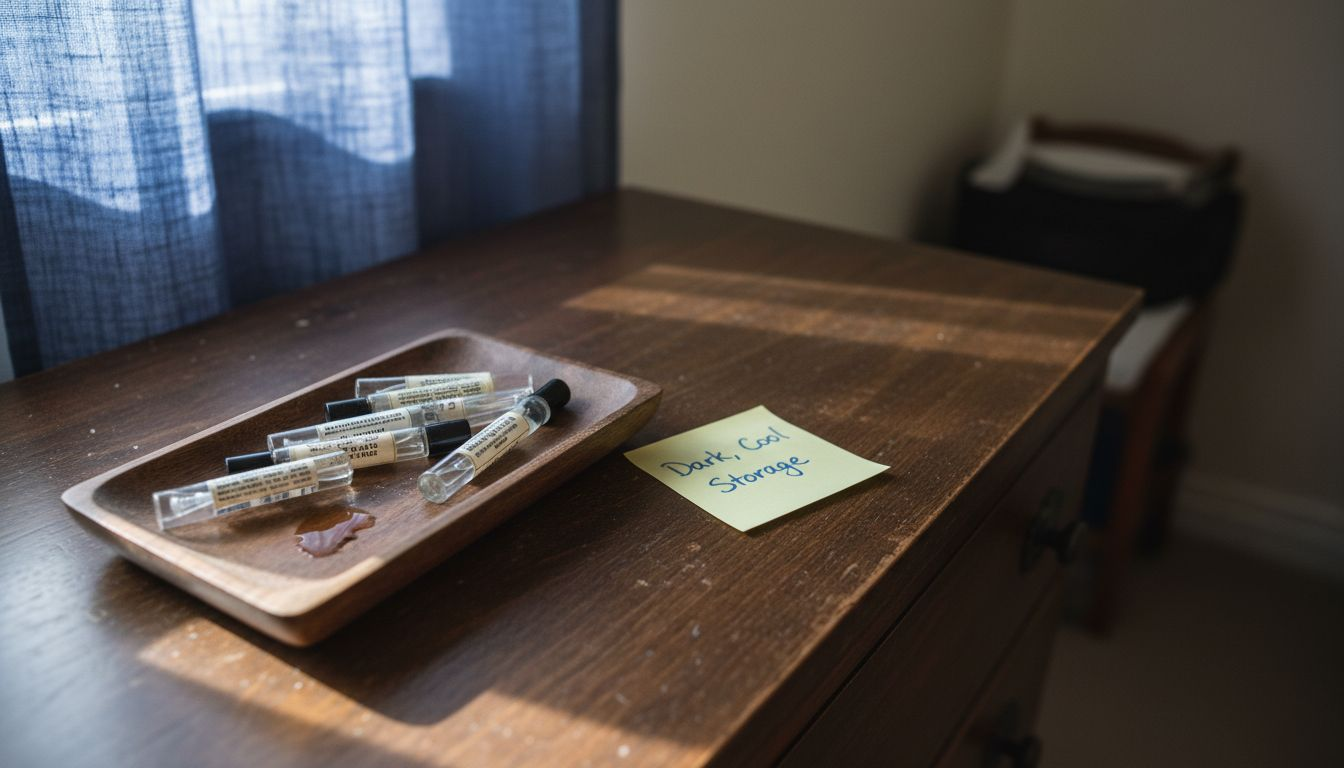
Pro tip: Store your perfume samples in a cool, dark place away from direct sunlight to preserve their original fragrance profile.
Step 3: Prepare your skin and testing environment
Successful perfume testing requires careful preparation of both your skin and surrounding environment. Fragrance testing is a delicate process that demands attention to detail to ensure you experience the truest representation of each scent.
Prepare for an accurate fragrance experience with these essential steps:
- Cleanse your skin thoroughly with unscented soap
- Avoid using lotions, deodorants, or other scented products
- Choose a neutral testing environment with consistent temperature
- Use neutral testing conditions to eliminate external influences
- Select areas with good natural lighting
- Keep testing area free from competing odors
Your body chemistry plays a crucial role in how a fragrance develops. Different skin areas react uniquely to perfumes, with pulse points like wrists and neck providing the most accurate scent projection. Understanding these nuances helps you make more informed fragrance selections by allowing each perfume to interact authentically with your natural skin chemistry.
Perfume testing is a science of subtlety and personal interaction.
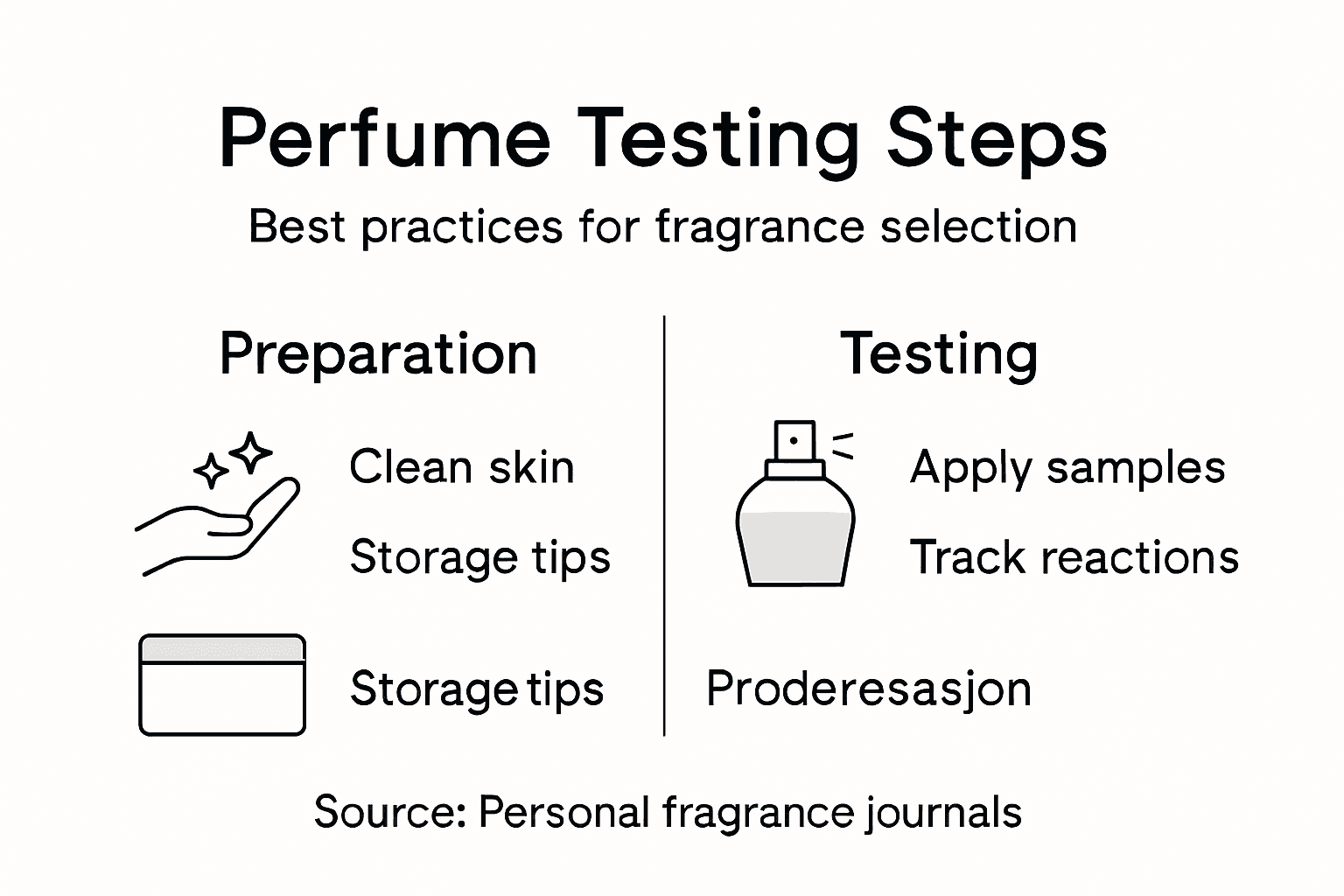
Pro tip: Test no more than two different fragrances per day to prevent olfactory fatigue and ensure accurate perception.
Step 4: Test perfumes systematically on skin
Perfume testing requires a strategic approach that goes beyond random application. Systematic fragrance evaluation helps you understand how each scent interacts uniquely with your personal body chemistry and evolves throughout the day.
Follow these critical steps for accurate perfume testing:
- Apply perfume to clean pulse points like wrists and neck
- Test one fragrance per skin area
- Wait 10-15 minutes between applications
- Conduct blind testing techniques to minimize bias
- Observe fragrance development over several hours
- Take detailed notes about scent progression
- Avoid rubbing the application area
Each perfume transforms differently on individual skin, creating a unique olfactory experience. Some fragrances might smell crisp and light initially, then develop deeper, more complex notes after several hours. By systematically tracking these changes, you’ll gain insights into how different scents interact with your natural body chemistry.
Every perfume tells a personal story through your skin.
Pro tip: Photograph your testing notes and skin reactions to create a visual fragrance journal for future reference.
Step 5: Evaluate scent development and longevity
Perfume testing goes far beyond initial impressions, requiring a nuanced approach to understanding how fragrances evolve over time. Scent progression involves carefully tracking how a perfume transforms from its first application through its entire wear cycle.
Use these comprehensive techniques to evaluate fragrance performance:
- Document initial fragrance notes immediately after application
- Record scent changes at 30-minute intervals
- Note intensity and character transformations
- Analyze fragrance technology testing for scientific insights
- Compare performance across different skin areas
- Assess total wear time and projection strength
- Evaluate how environmental factors impact scent
Fragrance longevity depends on multiple factors, including skin chemistry, environmental temperature, and the perfume’s molecular composition. Some fragrances might maintain their core character for hours, while others rapidly shift through complex olfactory stages. By methodically tracking these nuances, you’ll develop a sophisticated understanding of how different perfumes interact with your unique body chemistry.
To compare testing and evaluation approaches, use this summary table:
| Testing Step | Focus Area | Impact on Perfume Choice |
|---|---|---|
| Skin Prep | Clean skin, neutral space | Ensures true scent perception |
| Systematic Testing | Pulse points, note-taking | Tracks fragrance evolution |
| Longevity Evaluation | Hourly monitoring, environmental checks | Reveals lasting power and suitability |
This comparison helps clarify how each testing phase shapes your understanding.
A perfume’s true character reveals itself over time, not in an instant.
Pro tip: Wear each fragrance during different activities to understand how movement, temperature, and stress affect its development.
Step 6: Decide on the perfect fragrance purchase
Choosing the right perfume is an art that combines personal preference, scientific evaluation, and emotional connection. Fragrance selection requires a holistic approach that goes beyond initial impressions to ensure long-term satisfaction.
Consider these critical factors when making your final decision:
- Assess overall performance across multiple wearing sessions
- Compare how the scent interacts with your personal body chemistry
- Evaluate comprehensive testing results for consistent performance
- Check longevity and projection strength
- Consider versatility across different settings
- Reflect on the emotional response the fragrance triggers
- Ensure the scent aligns with your personal style and lifestyle
Your perfect perfume should feel like an extension of your personality, performing consistently throughout the day. Some fragrances might smell incredible initially but fade quickly, while others develop a more complex and enduring character. Trust your instincts, but also rely on the systematic testing you’ve conducted to make an informed decision.
The right perfume is not just a scent, but a personal signature.
Pro tip: Purchase a travel-sized bottle or additional samples before committing to a full-sized fragrance to confirm your long-term satisfaction.
Discover Your Signature Scent with Confidence
Understanding how to test perfumes before buying is essential to finding a fragrance that truly matches your personality and lifestyle. This article highlights key challenges like managing sample organization, avoiding olfactory fatigue, and evaluating scent longevity on your skin. At Befrsh.com, we solve these problems by offering a wide selection of high-quality perfume samples and travel sizes that make it easy to explore various fragrance families without the risk of committing to full bottles.
Make your perfume testing journey effortless and enjoyable. Browse curated sample sets, request free samples with purchases, and take advantage of convenient travel-sized bottles available at Befrsh.com. Start experimenting with scents today and unlock the perfect fragrance that tells your unique story. Visit Befrsh.com and transform your perfume discovery into a personalized celebration of scent.
Frequently Asked Questions
How do I research perfumes before buying?
To research perfumes effectively, identify fragrance families such as floral, oriental, woody, and fresh. Explore online fragrance databases and follow niche blogs to learn about different notes and styles, which will guide your search for the best scent.
What should I consider when ordering perfume samples?
When ordering samples, purchase sample sets or travel sizes to explore multiple fragrances without a significant investment. Create a systematic tracking method to document details about each sample, which will help you remember your impressions over time.
How can I prepare my skin for accurate perfume testing?
Prepare your skin by thoroughly cleansing it with unscented soap and avoiding lotions or products with strong scents. Choose testing areas on pulse points like your wrists and neck to ensure you accurately experience the fragrance as it develops.
What steps should I follow when testing perfumes on my skin?
Apply each perfume to clean pulse points, testing one fragrance at a time. Wait 10-15 minutes between applications to fully experience the scent’s evolution, and take detailed notes to track your impressions.
How do I evaluate fragrance development and longevity?
Document initial notes immediately after application and record any changes at regular intervals, such as every 30 minutes. This practice will help you understand how each fragrance evolves on your skin, including its lasting power and overall character.
What factors should I consider when choosing a final fragrance?
Assess the overall performance of each scent after multiple wearings, focusing on how it interacts with your skin chemistry and emotional responses. Reflect on the versatility of the fragrance for different occasions to ensure it aligns with your personal style.