Perfume vs eau de toilette: choose your scent in 2026

Think eau de toilette is just watered-down perfume? That’s a myth that costs fragrance shoppers hundreds of dollars yearly. These two scent categories have distinct formulations, longevity profiles, and ideal uses. Understanding concentration levels, pricing structures, and how each performs on your skin transforms guesswork into confident fragrance selection. This guide breaks down the real differences so you choose scents that match your lifestyle and budget.
Table of Contents
- Introduction To Fragrance Types
- Fragrance Concentration Differences And Scent Longevity
- Common Misconceptions About Perfume Vs Eau De Toilette
- Price Differences And Consumer Value
- Usage Scenarios And Practical Considerations
- Sampling And Testing Fragrances Before Purchase
- Conclusion: Making The Choice That Fits You
- Explore Premium Perfume And Eau De Toilette Selections
Key takeaways
| Point | Details |
|---|---|
| Concentration differences | Perfume contains 20-30% aromatic compounds while eau de toilette has 5-15%, directly affecting scent strength. |
| Longevity varies significantly | Perfume lasts 8+ hours on skin whereas eau de toilette typically fades within 3-5 hours. |
| Usage context matters | Eau de toilette suits casual daytime wear and warm climates; perfume fits formal events and cooler weather. |
| Sampling increases satisfaction | Testing fragrances on your skin before buying boosts purchase satisfaction by 27%. |
| Price reflects concentration | Higher concentration means higher cost per milliliter, but perfume may offer better long-term value through extended wear. |
Introduction to fragrance types
Perfume and eau de toilette represent distinct positions on the fragrance concentration spectrum. Perfume, also called parfum, contains the highest concentration of aromatic compounds, typically ranging from 20-30%. Eau de toilette sits lower on this scale with 5-15% concentration.
This concentration gap creates immediate differences in scent intensity and projection. When you spray perfume, the rich oil content delivers a powerful initial burst that mellows into a persistent base. Eau de toilette opens lighter and fresher, designed for a gentler sensory experience.
Between these two sits eau de parfum, containing 15-20% aromatic compounds. This middle ground offers stronger presence than eau de toilette without perfume’s intensity. Understanding these categories helps you match fragrance strength to your needs.
The concentration directly shapes your first impression. Perfume announces itself immediately with bold top notes that transition slowly through middle and base notes. Eau de toilette whispers rather than shouts, making it approachable for fragrance newcomers.
Key fragrance categories by concentration:
- Perfume (Parfum): 20-30% aromatic compounds, strongest and longest-lasting
- Eau de Parfum: 15-20% concentration, balanced intensity and longevity
- Eau de Toilette: 5-15% concentration, light and refreshing for daily wear
- Eau de Cologne: 2-4% concentration, subtle and fleeting scent experience
These differences matter because concentration determines not just strength but how fragrance molecules interact with your skin chemistry. Higher concentration means more complex scent development throughout the day.
Fragrance concentration differences and scent longevity
Chemical concentration drives everything about how fragrances perform. The perfume concentration ranges from 20-30% aromatic compounds while eau de toilette uses 5-15%, creating dramatic longevity differences.
Perfume’s dense oil content evaporates slowly because larger aromatic molecules cling to skin longer. This chemistry delivers 8-12 hours of noticeable scent, sometimes extending beyond 24 hours on clothing. Eau de toilette’s lighter formula evaporates faster, typically lasting 3-5 hours before requiring reapplication.
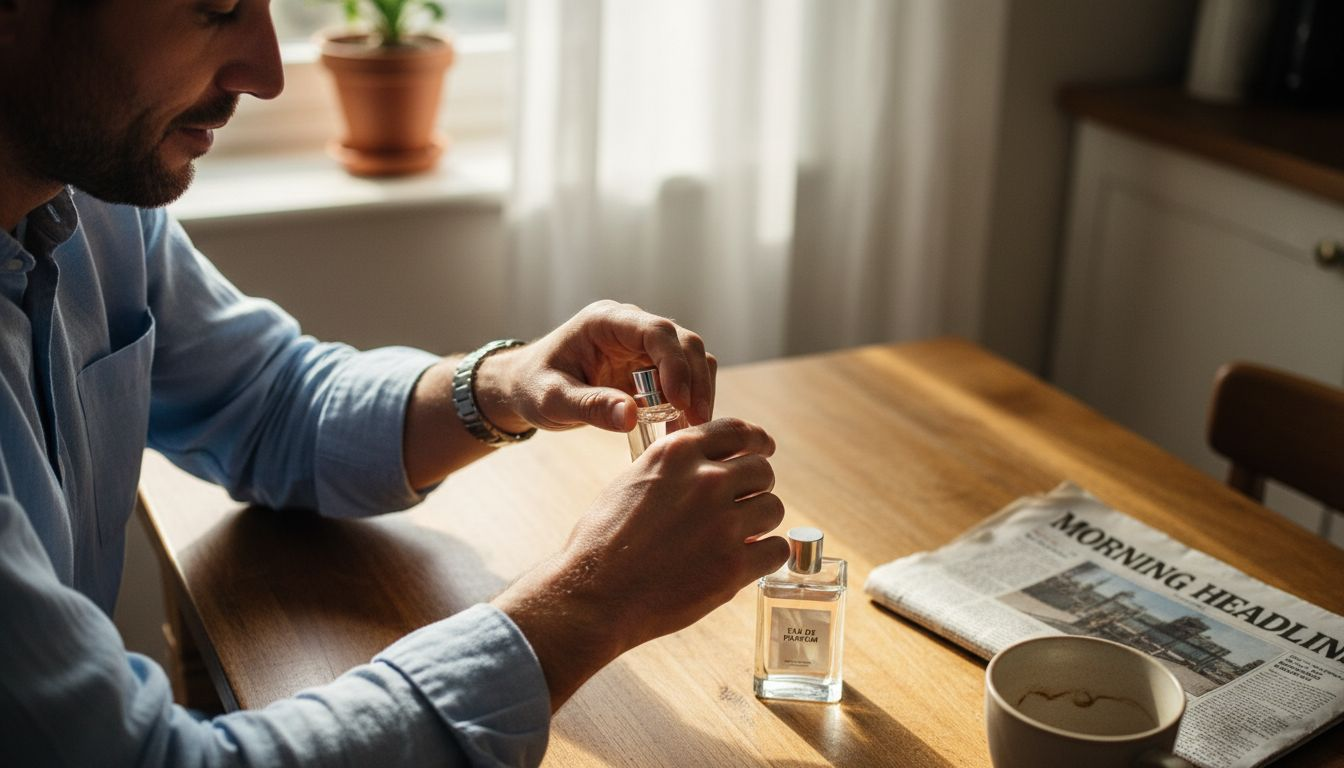
The evaporation rate follows a predictable pattern. Top notes vanish within 15-30 minutes regardless of concentration. Middle notes form the heart of the fragrance, lasting 2-4 hours in eau de toilette but 4-6 hours in perfume. Base notes create the lasting impression, persisting 5+ hours in perfume while fading around 3 hours in eau de toilette.
| Fragrance Type | Concentration | Typical Longevity | Scent Intensity | Best For |
|---|---|---|---|---|
| Perfume | 20-30% | 8-12 hours | Very Strong | Evening wear, special occasions |
| Eau de Parfum | 15-20% | 6-8 hours | Strong | Daily wear, office environments |
| Eau de Toilette | 5-15% | 3-5 hours | Moderate | Casual settings, warm weather |
Pro Tip: Apply fragrance to pulse points like wrists, neck, and behind ears where blood flow warms the skin. Moisturize first with unscented lotion because hydrated skin holds scent molecules longer, extending wear time by 30-40% regardless of concentration level.
Your expectations should align with chemistry. Perfume delivers consistent scent throughout the day with minimal fading. Eau de toilette requires midday refreshing but offers the advantage of scent variation, letting you shift fragrances between morning and evening without overwhelming intensity.
Common misconceptions about perfume vs eau de toilette
The biggest myth suggests eau de toilette is simply diluted perfume. Wrong. Perfumers formulate each concentration as a distinct product with adjusted note ratios. The lighter concentration in eau de toilette often emphasizes fresh top notes while perfume showcases richer base notes.
Consumers frequently confuse eau de toilette with eau de parfum due to similar French naming. This confusion leads to unrealistic expectations about performance. Eau de parfum sits closer to perfume in strength, while eau de toilette delivers a fundamentally different wearing experience.
Price misunderstanding creates another barrier. Many assume higher cost always means better quality or longer wear. Reality is more nuanced. A $200 eau de toilette from a luxury house may use exceptional ingredients but still fade faster than a $100 perfume from a niche brand.
“The strongest fragrance isn’t always the best choice. Matching concentration to occasion and personal preference creates the most satisfying scent experience. Context matters more than concentration alone.”
Skin chemistry plays an enormous role that marketing rarely mentions. The same fragrance performs differently on two people due to pH variations, skin type, and even diet. Oily skin holds fragrance longer than dry skin. Higher skin pH can amplify certain notes while muting others.
Common fragrance misconceptions to avoid:
- Believing eau de toilette is identical to perfume but cheaper
- Assuming all luxury fragrances last equally long regardless of type
- Thinking synthetic ingredients always mean lower quality compared to natural oils
- Expecting fragrances to smell identical on everyone who wears them
- Presuming older fragrances stored improperly maintain original quality
The concentration label tells part of the story. Read it alongside your wearing habits and environment. A perfume worn in humid summer heat may project more intensely than intended, while eau de toilette in dry winter air might vanish quickly.
Price differences and consumer value
Perfume commands premium pricing because concentration impacts production costs directly. More aromatic oils mean higher raw material expenses. A 50ml bottle of perfume typically costs 40-60% more than the same volume of eau de toilette from the same brand.
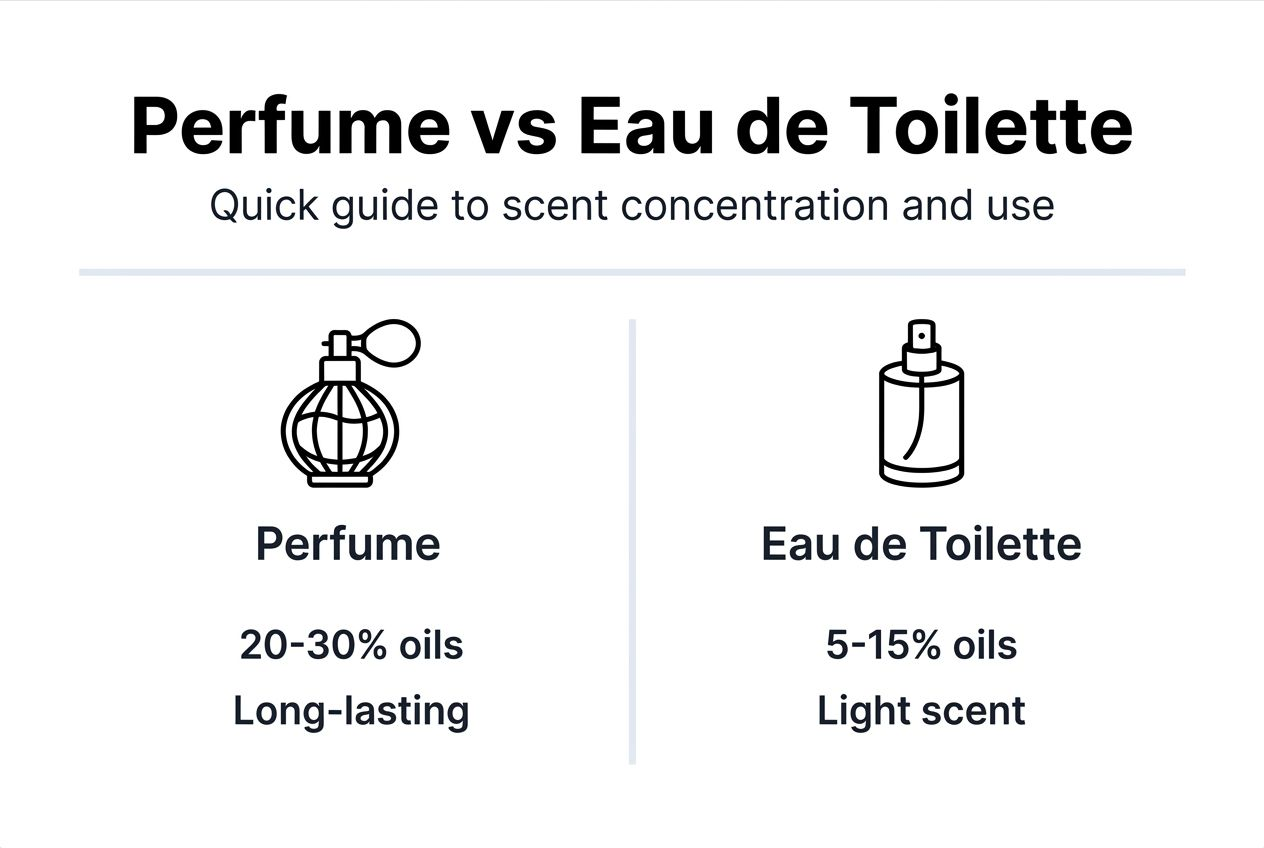
But price per milliliter misses the value equation. Perfume’s longevity means fewer applications daily. If eau de toilette requires two sprays versus one for perfume, you’re consuming it twice as fast. Run the math over months and perfume often delivers better cost per wear.
| Factor | Perfume | Eau de Toilette |
|---|---|---|
| Average price per 50ml | $120-200 | $60-100 |
| Applications per bottle | 150-200 sprays | 150-200 sprays |
| Daily applications needed | 1-2 sprays | 2-4 sprays |
| Estimated bottle lifespan | 4-6 months | 2-3 months |
| Cost per month | $20-50 | $20-50 |
Eau de toilette suits budget-conscious buyers who prefer scent variety. Lower entry price lets you build a diverse collection rather than investing heavily in one perfume. Casual wearers who apply fragrance sporadically find eau de toilette more economical since bottles don’t sit unused for years.
Pro Tip: Sample before committing to full bottles. A $15 discovery set testing five fragrances prevents $150 mistakes on scents that don’t match your chemistry or preferences. This approach improves satisfaction while reducing waste from abandoned bottles.
Consider wearing frequency in your value calculation. Daily perfume users benefit from concentration longevity. Occasional wearers who spray fragrance 2-3 times weekly may find eau de toilette lasts years, making upfront savings more meaningful than longevity per application.
Seasonal rotation affects value too. Summer heat amplifies fragrance projection, making lighter eau de toilette more practical. Winter’s dry cold demands perfume’s intensity to maintain presence. Owning both types optimized for conditions delivers better year-round value than forcing one concentration to work everywhere.
Usage scenarios and practical considerations
Occasion dictates ideal fragrance concentration more than personal preference alone. Perfume excels at evening events, formal dinners, and intimate gatherings where close interaction lets others appreciate complex scent development. The intensity creates memorable impressions in settings where bold presence fits.
Eau de toilette dominates daytime professional environments. Office colleagues appreciate subtle scent that doesn’t overpower shared spaces. The lighter concentration refreshes without demanding attention, making it workspace-appropriate while maintaining personal style.
Climate dramatically alters fragrance performance. Hot, humid weather amplifies projection, making perfume potentially overwhelming. Skin chemistry affects how fragrances perform, with body heat in tropical conditions intensifying scent molecules. Eau de toilette’s restraint prevents excessive sillage in summer heat.
Cold, dry climates present opposite challenges. Low humidity causes faster evaporation, diminishing eau de toilette’s already brief longevity. Perfume maintains presence in winter air, cutting through heavy clothing layers to project effectively.
Practical fragrance selection factors:
- Match intensity to venue size: lighter scents for small rooms, stronger for outdoor events
- Consider interaction distance: perfume for intimate settings, eau de toilette for crowds
- Align with activity level: lighter concentrations for active days, perfume for sedentary occasions
- Factor in layering: eau de toilette works better with scented body products
- Account for sensitivities: some people react to high concentrations, making eau de toilette safer
Your skin type influences which concentration works best. Oily skin amplifies and extends fragrances naturally, potentially making perfume too intense. Dry skin absorbs and mutes scent quickly, often requiring perfume’s strength to achieve noticeable projection.
PH levels vary between 4.5 and 6.5 on human skin. Higher pH can distort certain fragrance notes, particularly citrus and floral elements. Testing both concentrations reveals which formulation harmonizes with your unique chemistry.
Sampling and testing fragrances before purchase
Sampling transforms fragrance shopping from expensive gambles into confident decisions. Testing reveals how scents develop on your skin over hours, exposing note transitions invisible on paper strips. Research shows sampling increases satisfaction by 27% compared to blind full-bottle purchases.
Paper testers provide initial impressions but fail to show true performance. Skin warmth, oils, and pH interact with aromatic compounds differently than inert paper. A fragrance smelling amazing on a tester strip might turn sour or vanish quickly on your skin.
Follow this systematic approach to evaluate fragrances effectively:
- Request samples of both perfume and eau de toilette versions when available to compare concentration differences directly on your skin.
- Apply one fragrance to each wrist in the morning, noting immediate impressions but avoiding hasty judgments.
- Check scent development at 30 minutes, 2 hours, 4 hours, and 8 hours to map the complete evolution arc.
- Test during your typical daily activities since movement, heat, and environment affect projection.
- Wait 24 hours between testing different fragrances to prevent olfactory confusion and allow your nose to reset.
- Record notes about which concentration level suits your preferences, climate, and intended wearing occasions.
- Compare performance across seasons if possible, as summer heat and winter cold dramatically alter the same fragrance.
Many retailers offer comprehensive sampling guidance that walks through proper testing techniques. Following structured methods yields reliable data for purchase decisions.
Online sampling services ship curated discovery sets containing 5-10 different fragrances in 2-3ml sizes. These volumes provide 3-5 wearings per scent, enough to judge full-day performance across different conditions. The $20-40 investment in samples prevents $100-200 mistakes on incompatible full bottles.
Timing matters in testing. Hormonal fluctuations, diet changes, and even stress levels affect how fragrances smell on your skin. Test samples over multiple days rather than making snap judgments after single wearings.
Learn proper testing protocols to maximize sample value. Spray from 6-8 inches away, applying to pulse points without rubbing. Friction crushes fragrance molecules and distorts development. Let scents dry naturally to experience authentic note progression.
Conclusion: making the choice that fits you
Concentration differences between perfume and eau de toilette create distinct wearing experiences, not quality hierarchies. Perfume’s 20-30% aromatic compound concentration delivers 8-12 hour longevity with intense projection. Eau de toilette’s 5-15% concentration offers 3-5 hours of lighter, refreshing scent.
Your ideal choice balances multiple factors. Budget constraints, wearing occasions, climate conditions, and personal skin chemistry all influence which concentration serves you best. Formal evening events favor perfume’s lasting power while casual daytime settings suit eau de toilette’s subtlety.
Price comparisons extend beyond per-milliliter costs. Factor in application frequency and bottle lifespan to calculate true value. Perfume’s higher upfront cost may deliver better long-term economics through reduced reapplication needs.
Sampling eliminates expensive mistakes. Testing fragrances on your skin reveals how concentration levels interact with your unique chemistry. The 27% satisfaction increase from sampling justifies modest upfront investment in discovery sets.
Don’t let marketing or misconceptions drive your choices. Stronger isn’t always better. Match concentration to context, building a fragrance wardrobe that adapts across seasons, occasions, and moods. Confidence comes from understanding how these categories differ and selecting strategically based on your lifestyle needs.
Explore premium perfume and eau de toilette selections
Ready to experience the concentration differences firsthand? Discover curated fragrances that showcase perfume and eau de toilette at their finest. Our collection features iconic scents from houses that master both concentration levels.
Explore sophisticated options like Parfums de Marly Palatine, where rich concentration meets elegant composition. The Jean Paul Gaultier Scandal Le Parfum demonstrates how perfume intensity creates unforgettable impressions. For modern versatility, Paco Rabanne Phantom showcases eau de toilette’s refreshing appeal.
Each fragrance ships with detailed concentration information and wearing recommendations. Sample sizes let you test before committing to full bottles, applying the knowledge you’ve gained here. Build your signature scent collection with confidence, knowing exactly how concentration affects your daily wearing experience.
FAQ
What is the main chemical difference between perfume and eau de toilette?
Perfume contains 20-30% aromatic compounds while eau de toilette has 5-15% concentration. This difference affects scent strength, projection distance, and how long the fragrance remains noticeable on skin. The gap isn’t just dilution but represents different formulation approaches designed for distinct wearing experiences.
How does skin chemistry affect fragrance longevity?
Skin pH and moisture levels alter how fragrance oils evaporate and develop. Oily skin holds scent molecules longer while dry skin causes faster fading. Two people wearing identical fragrances experience different longevity and intensity based on individual skin chemistry variations. Diet, hormones, and even stress can shift how fragrances smell on you.
Is eau de toilette always less expensive than perfume?
Eau de toilette typically costs less per milliliter due to lower aromatic compound concentration. However, perfume’s extended longevity means fewer daily applications, potentially offering better cost per wear over time. Calculate value by considering how often you’ll reapply rather than focusing solely on bottle price.
What is the best way to test perfumes before buying?
Spray fragrances directly on your skin rather than relying on paper strips alone. Allow scents to develop over 6-8 hours, checking evolution at 30 minutes, 2 hours, and 4 hours. Test during normal daily activities to see how movement and body heat affect projection. Proper testing methods reveal true performance that paper testers cannot show.