Perfume discovery process 2026: 52% less buyer's remorse

Many perfume enthusiasts waste money on fragrances that disappoint after the first spray. Sampling reduces buyer’s remorse by over 50% and increases satisfaction by 35%. This guide teaches a curated, step-by-step scent discovery process to find your perfect fragrance without costly trial-and-error purchases.
Table of Contents
- Introduction To Perfume Discovery Through Sampling
- Prerequisites For A Successful Perfume Discovery Process
- Step-By-Step Perfume Sampling And Testing Method
- Common Mistakes In Perfume Discovery And How To Avoid Them
- Timelines, Costs, And Expected Outcomes Of The Discovery Process
- Alternative Perfume Discovery Approaches And Their Tradeoffs
- Safety And Sensitivity Considerations In Perfume Sampling
- Summary And Best Practices For Scent Discovery Success
- Explore Curated Perfume Samples With Be Frsh
- Frequently Asked Questions About Perfume Discovery Process
Key takeaways
| Point | Details |
|---|---|
| Structured sampling increases satisfaction | Testing perfumes methodically boosts success by 35% and reduces regret. |
| Patch testing prevents allergic reactions | Pre-testing on skin reduces allergy risk by 60%. |
| Testing timeline matters for accuracy | Allow 2-3 weeks to capture fragrance evolution and make confident decisions. |
| Physical samples outperform digital methods | Real samples are 70% more accurate than virtual scent technologies. |
| Rushing leads to poor choices | Taking time reduces wrong purchase decisions by 35%. |
Introduction to perfume discovery through sampling
Buying a full-size perfume bottle without testing is like purchasing a car without a test drive. You risk spending $80 to $300 on a fragrance that smells different on your skin than you imagined. Regular perfume purchases without sampling often lead to dissatisfaction or expensive returns.
Sampling lowers financial risks by letting you experience a fragrance’s full evolution before committing. Digital scent descriptions or store counter tests rarely capture how a perfume develops over hours on your unique skin chemistry. Physical samples deliver the true scent experience you need to make informed decisions.
Curated sample sets focus your exploration on fragrances that match your preferences. Instead of wandering through hundreds of options, curated collections boost discovery success by 40%. You explore perfumes selected by experts who understand fragrance families, note profiles, and seasonal trends.
Key benefits of systematic sampling include:
- Reduced financial waste from wrong purchases
- Confidence in your final fragrance choice
- Discovery of scents you might never have tried in a store
- Ability to test how fragrances interact with your body chemistry
Sampling transforms perfume buying from guesswork into a curated journey. You gain control over the discovery process while protecting your budget.
Prerequisites for a successful perfume discovery process
Starting your sampling journey requires proper preparation. Access to high-quality or curated sample sets forms the foundation of accurate testing. Generic or poorly stored samples can misrepresent a fragrance’s true character.
Your testing environment significantly impacts results. A neutral, scent-free space prevents false impressions caused by competing odors. Avoid testing perfumes in areas with strong cooking smells, air fresheners, or other fragrances.
Time commitment matters more than most people realize. Allow 2-3 weeks minimum for testing multiple perfumes to capture their evolution from top notes through base notes. Rushing through samples prevents you from experiencing how a fragrance changes throughout the day.
Patch testing prevents allergic reactions and takes just minutes. Apply a small amount of perfume to your inner forearm and wait 24 hours. If redness or itching occurs, you’ve avoided a larger problem. This simple step protects your skin and health.
Organizing a fragrance testing schedule prevents overlapping scents:
- Test one perfume per day for accurate comparisons
- Use a notebook or app to track impressions
- Photograph sample bottles for easy reference
- Note weather and activities during testing
- Record how long each fragrance lasts on your skin
| Essential Tool | Purpose | Why It Matters |
|---|---|---|
| Quality samples | Authentic scent testing | Poor samples misrepresent fragrances |
| Clean environment | Accurate scent perception | Competing odors confuse your nose |
| Testing journal | Track impressions | Memory fades; notes help comparisons |
| Fragrance blotters | Initial scent evaluation | Test without skin contact first |
| Calendar | Schedule tests | Prevents overlap and fatigue |
Pro Tip: Test perfumes in the morning when your sense of smell is sharpest. Your nose fatigues throughout the day from environmental scents.
Gather these materials before starting your sampling journey. Proper preparation ensures you get accurate results that lead to satisfying perfume choices.
Step-by-step perfume sampling and testing method
Follow this systematic approach to identify your ideal scent. Testing perfumes on blotters before skin, waiting 30 minutes for scent evolution, and using travel-size sprays improves testing accuracy.
- Begin by smelling the perfume on blotters to identify top and middle notes without committing to skin application.
- Wait 10 minutes after spraying the blotter to let alcohol evaporate and reveal the true scent profile.
- Apply the sample to your inner wrist or forearm, using one spray only to avoid overwhelming your senses.
- Wait at least 30 minutes before evaluating to allow the fragrance to interact with your skin chemistry.
- Smell your wrist periodically over 4-6 hours to experience how the perfume evolves through all three note stages.
- Test in your daily environment, not just at home, to understand how the scent performs in real conditions.
- Ask trusted friends for their impressions since perfumes smell different to others than to the wearer.
- Space out testing over days to prevent scent fatigue and improve comparison accuracy.
Test one perfume at a time in a neutral environment to avoid confusion. Your nose can only accurately distinguish one fragrance at a time. Testing multiple scents simultaneously creates a muddled impression that leads to poor decisions.
Use travel-size spray samples for convenience and repeatability. Sprays apply consistent amounts, unlike vial samples that can waste product or apply too much. Travel sizes let you test the perfume in different settings throughout your week.
Pro Tip: Smell coffee beans between testing different perfumes to reset your olfactory receptors. This technique, used by professional perfumers, clears scent fatigue and sharpens your perception.
Document your impressions immediately after each testing phase. Note how the fragrance opens, develops, and settles. Record whether it feels appropriate for day or evening wear, casual or formal occasions, and which seasons suit it best.
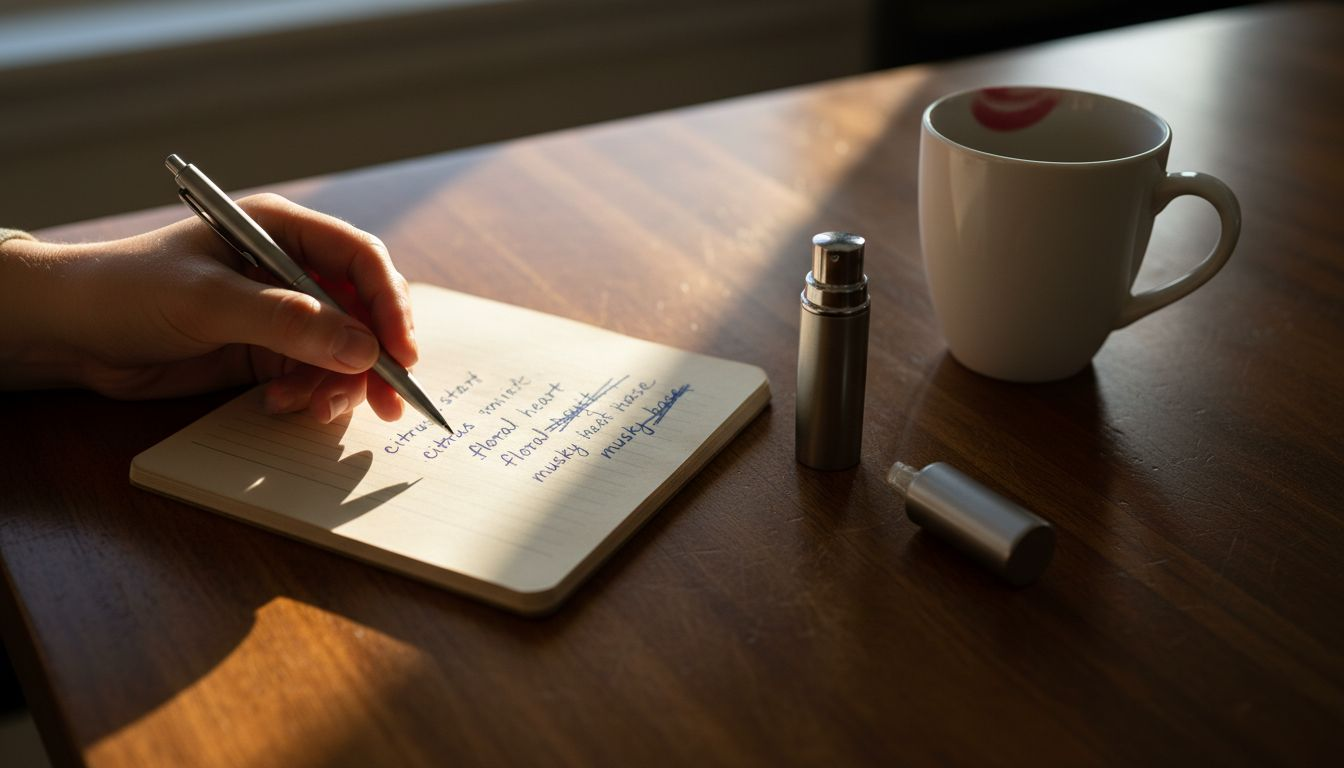
Proper testing steps take patience but deliver confident results. You’ll know exactly what you’re buying before spending money on a full bottle.
Common mistakes in perfume discovery and how to avoid them
Even experienced fragrance enthusiasts make preventable errors during sampling. Rushing perfume tests increases wrong purchase decisions by 35%. Understanding these pitfalls helps you avoid them.
Skipping patch tests raises the risk of allergic reactions significantly. Some people discover fragrance sensitivities only after applying a perfume liberally. A simple 24-hour patch test on your inner arm prevents painful reactions and wasted money.
Testing multiple scents at once causes scent confusion. Your nose cannot accurately distinguish between fragrances when several compete simultaneously. This leads to muddled impressions and poor purchasing decisions.
Common pitfalls to avoid:
- Testing perfumes when congested or sick reduces accuracy
- Applying samples to clothes instead of skin misses chemistry interactions
- Making quick decisions based only on top notes
- Testing in store environments with competing fragrances
- Ignoring how a perfume performs over several hours
Set aside sufficient time and test perfumes individually with breaks between samples. Give each fragrance the attention it deserves. If you feel rushed, postpone testing until you can focus properly.
Always perform an allergy patch test for safety before regular use. Apply a small amount to your inner forearm and monitor for 24 hours. Redness, itching, or irritation signals you should avoid that fragrance.
“The biggest mistake people make is buying a perfume based on the first 15 minutes. Fragrances evolve significantly over hours, and the dry-down phase often determines whether you’ll love or hate a scent long-term.”
Avoid testing new perfumes on sensitive or damaged skin. Cuts, rashes, or sunburned areas can react poorly to fragrance ingredients. Wait until your skin heals completely before sampling.
Recognize that department store testing creates false impressions. Bright lights, competing scents, and sales pressure prevent accurate evaluation. Take samples home and test in your natural environment for honest results.
Timelines, costs, and expected outcomes of the discovery process
Understanding the time and financial investment required helps set realistic expectations. Average perfume discovery takes 2-3 weeks to confidently decide on a fragrance that truly suits you. Testing over this period with samples costing 5-15% of bottle price reduces buyer’s remorse by over 50%.
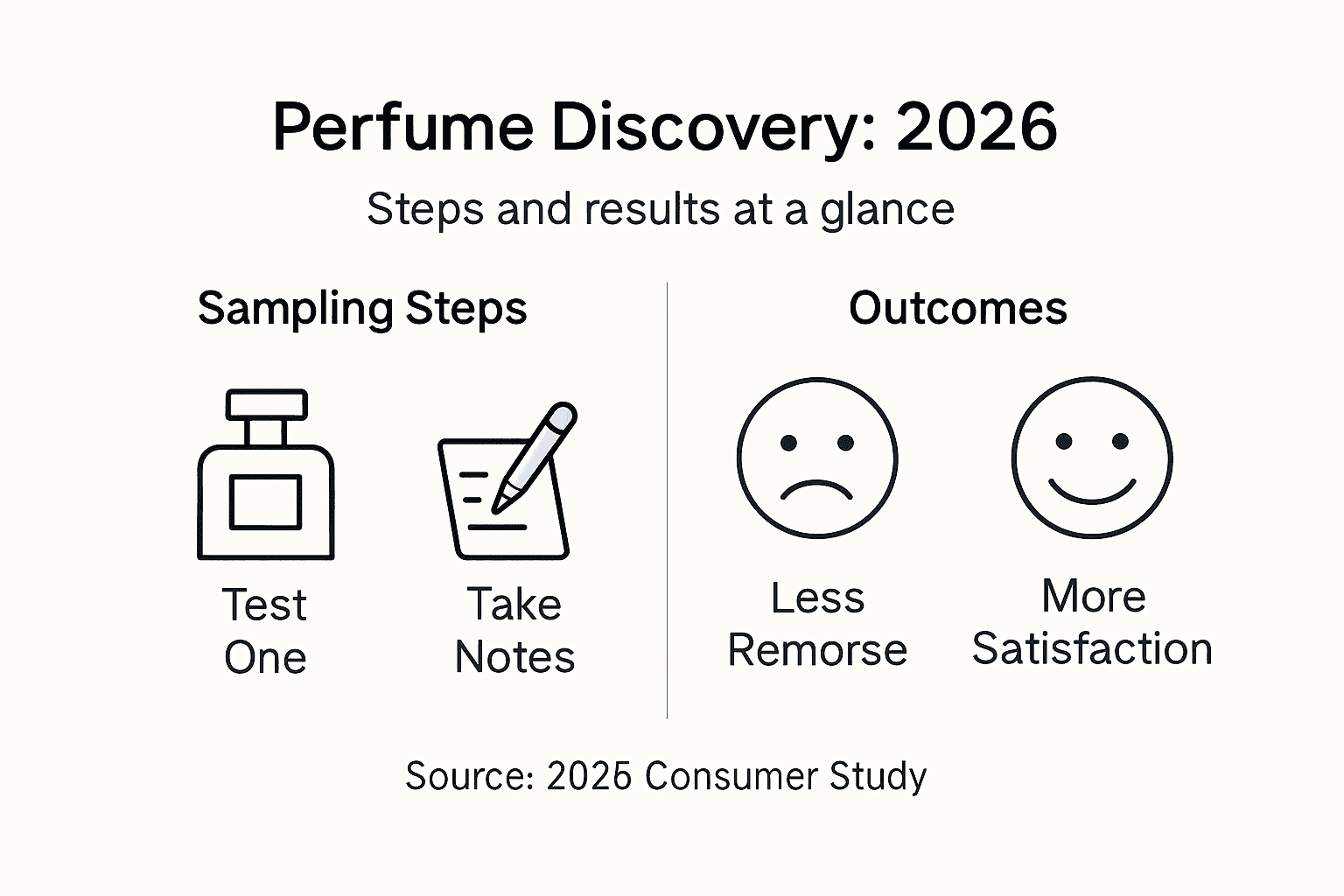
Samples generally cost between 5-15% of a full perfume bottle’s price. A 2ml sample of a $120 perfume costs $6-18, a small investment compared to buying the wrong full-size bottle. This upfront cost provides insurance against expensive mistakes.
Investing in samples greatly reduces costly returns or dissatisfaction. Returns cost time, shipping fees, and stress. Many retailers don’t accept perfume returns once opened, leaving you stuck with an unwanted bottle.
| Timeline Phase | Duration | Activities | Expected Outcome |
|---|---|---|---|
| Initial selection | 1-2 days | Research and choose 3-5 samples | Focused sample set |
| Sample arrival | 3-5 days | Wait for delivery | Samples ready for testing |
| Testing period | 2-3 weeks | Test each perfume multiple times | Clear preferences emerge |
| Final decision | 1-2 days | Compare notes and choose | Confident purchase |
Successful discovery leads to a 35% satisfaction increase with your final perfume choice. You’ll wear your selected fragrance more often and enjoy it longer because it genuinely suits your preferences and chemistry.
Financial breakdown for typical discovery:
- 3-5 perfume samples at $8-15 each: $24-75 total
- Full bottle of chosen perfume: $80-200
- Total investment: $104-275
- Cost of wrong full-size purchase without sampling: $80-200 wasted
The mathematics clearly favor sampling. Spending $30-75 on samples prevents potentially wasting $80-200 on a perfume you’ll never wear. Your per-wear cost drops dramatically when you choose correctly the first time.
Understanding timelines and costs helps you plan your perfume discovery journey. Budget both money and time appropriately for the best results.
Alternative perfume discovery approaches and their tradeoffs
Physical sample testing isn’t your only option. Digital scent technologies and virtual consultations offer alternatives with distinct advantages and limitations. Understanding these different discovery methods helps you choose the best approach for your priorities.
Physical samples provide full scent experience including skin chemistry interaction. You smell exactly how a fragrance will perform on your body throughout the day. This accuracy is unmatched by any virtual method.
Digital scent tech offers convenience but remains about 70% less accurate than physical testing. Apps and websites use algorithms to recommend fragrances based on your preferences. While helpful for narrowing choices, they can’t replicate actual scent experiences.
Sample spray bottles enhance usability and prolong testing periods compared to vial samples. Sprays deliver consistent amounts and prevent waste. You can test the same sample multiple times over weeks.
Virtual methods lack the ability to capture fragrance evolution and base notes. Descriptions and digital tools can’t show how a perfume changes from fresh top notes to deep base notes over hours. This evolution critically determines whether you’ll love a fragrance long-term.
| Method | Accuracy | Convenience | Cost | Best For |
|---|---|---|---|---|
| Physical samples | 95% | Moderate | Low ($5-15/sample) | Serious buyers |
| Store testing | 70% | High | Free | Initial exploration |
| Digital scent tech | 25% | Very high | Free-$20 | Preliminary research |
| Virtual consultations | 60% | High | $0-50 | Guidance and education |
| Subscription boxes | 85% | Very high | $15-30/month | Ongoing discovery |
Selecting a method depends on your priorities for accuracy versus convenience. If you’re buying a signature fragrance you’ll wear daily, physical samples provide the accuracy you need. For casual exploration or gifts, digital tools might suffice.
Combining methods often delivers the best results. Use digital tools to identify fragrance families that appeal to you, then order physical samples of specific perfumes for accurate testing. This hybrid approach balances efficiency with accuracy.
Safety and sensitivity considerations in perfume sampling
Fragrance sensitivity varies widely among individuals. Some people react to specific ingredients while others tolerate most perfumes well. Patch testing fragrance samples before application reduces allergenic reactions by 60%, making it an essential safety step.
Perform patch tests before regular use of any new perfume. Apply a small amount to your inner forearm and wait 24 hours. Check for redness, itching, swelling, or other reactions. If any occur, avoid that fragrance.
Patch testing perfumes on a small skin area can prevent allergic reactions. Your inner forearm provides sensitive skin similar to areas where you’ll apply perfume regularly. Testing here gives reliable results about potential reactions.
Avoid testing new perfumes on sensitive or damaged skin. Cuts, rashes, eczema, sunburn, or other skin conditions increase reaction risk. Wait until your skin heals completely before sampling.
Key safety practices:
- Always patch test new fragrances 24 hours before regular use
- Apply samples to intact, healthy skin only
- Start with one spray to gauge your reaction
- Keep samples away from eyes and mucous membranes
- Store samples in cool, dark places away from children
- Discontinue use immediately if irritation occurs
Allergy risk decreases significantly when patch testing is properly done. This simple precaution takes minimal time but prevents serious reactions. People with known fragrance sensitivities should be especially diligent.
“Fragrance allergies can develop at any age, even to scents you’ve used before. Regular patch testing of new perfumes protects against unexpected reactions and helps identify problematic ingredients.”
If you have a history of allergic reactions to cosmetics or fragrances, consult a dermatologist before extensive sampling. They can perform professional allergy testing to identify specific problem ingredients. This knowledge helps you avoid samples containing those components.
Pregnant or nursing individuals should exercise extra caution with fragrance sampling. Some perfume ingredients may not be suitable during these periods. Consult your healthcare provider before testing new fragrances if you’re pregnant or breastfeeding.
Understanding your fragrance allergy risk allows safe perfume discovery. Take appropriate precautions and you’ll enjoy sampling without health concerns.
Summary and best practices for scent discovery success
Mastering perfume discovery requires combining all the strategies covered in this guide. Select curated perfume samples to focus your search on fragrances likely to match your preferences. Curated sets eliminate overwhelming choices and increase discovery success.
Commit at least 2-3 weeks to properly test and compare scents. This timeline allows you to experience each fragrance’s full evolution and make confident decisions. Rushing shortens this process and increases the risk of buyer’s remorse.
Use neutral, scent-free spaces for sampling to ensure accurate impressions. Environmental odors distort your perception and lead to poor choices. Test at home in your everyday environment for realistic results.
Perform patch tests to ensure safety and avoid allergies before committing to regular use. This simple precaution prevents painful reactions and protects your health. Never skip this step, even for fragrances that seem mild.
Follow a systematic approach to reduce buyer’s remorse by over 50%. Test perfumes methodically using blotters first, then skin application, and document your impressions. This structure delivers reliable results.
Best practices for guaranteed success:
- Choose 3-5 samples from curated sets to start your journey
- Test one perfume per day to avoid confusion
- Apply samples in the morning when your sense of smell is sharpest
- Track impressions in a dedicated notebook or app
- Wait at least 30 minutes after application before evaluating
- Experience the full evolution over 4-6 hours
- Ask others for their impressions of how the perfume smells on you
- Make your final decision only after testing all samples multiple times
Enjoy enhanced satisfaction by discovering fragrances that truly fit your style or gifting needs. The systematic approach transforms perfume buying from gambling into confident decision-making. You’ll wear your chosen fragrance with pride knowing it genuinely suits you.
Explore curated perfume samples with Be Frsh
Ready to start your perfume discovery journey with confidence? Be Frsh offers curated perfume sample sets ideal for the systematic testing process you’ve just learned. Our collections focus your exploration on high-quality fragrances selected by experts who understand scent profiles and trends.
Our comprehensive sampling guides complement your testing process, helping you choose scents that reflect your personal style. Whether you’re discovering your signature fragrance or selecting gifts, we provide the tools and knowledge you need.
Discover exclusive travel-size samples making testing convenient anywhere you go. Our spray samples deliver consistent application and last through multiple testing sessions. You’ll experience each fragrance properly before committing to a full bottle.
Visit Be Frsh today to explore curated sets, read detailed guides, and start your perfume journey with expert support. Transform how you discover fragrances and enjoy the confidence that comes from making informed choices.
Frequently asked questions about perfume discovery process
How many perfume samples should I test before buying a full bottle?
Test 3-5 samples to compare different scent families and find your best match. Testing fewer than three limits your perspective, while more than five can cause decision fatigue. Focus on quality over quantity.
Can I test multiple perfumes on the same day?
Yes, but apply only one to your skin per day for accurate results. You can smell multiple samples on blotters during the same session to narrow choices. Save skin testing for your top candidates to avoid scent confusion.
How long should I wait between applying different perfume samples?
Wait at least 24 hours between skin applications to let the previous fragrance fully dissipate. Your skin retains scent molecules longer than you might notice. Overlapping fragrances creates false impressions and muddled comparisons.
Do perfume samples expire or lose their scent over time?
Properly stored samples last 1-3 years before noticeable degradation occurs. Keep samples in cool, dark places away from sunlight and heat. Samples in spray bottles preserve better than open vials because less air exposure prevents oxidation.
What’s the best time of day to test perfume samples?
Morning testing between 8-11 AM provides the most accurate results when your sense of smell is sharpest. Avoid testing after meals, during illness, or when wearing other scented products. Your olfactory receptors perform best when rested and undistracted.
Should I test perfumes on my wrist or another body area?
Test on your inner wrist or forearm where skin is accessible and temperature is consistent. These pulse points warm the fragrance naturally and allow easy smelling throughout the day. Avoid testing on your neck initially since you can’t easily smell it there yourself.