EDP vs EDT: key differences in scent and longevity

Many fragrance enthusiasts assume eau de parfum and eau de toilette are simply different strengths of the same scent. This misconception overlooks a surprising truth: EDP and EDT versions often feature distinct compositions that result in noticeably different fragrances. Beyond concentration, these two formats emphasize different notes, deliver unique wear experiences, and suit different occasions. This guide breaks down the real differences between EDP and EDT so you can confidently choose fragrances that match your style and needs.
Table of Contents
- Understanding Fragrance Concentration: EDP Vs EDT
- How Scent Profiles Differ Between Eau De Parfum And Eau De Toilette
- Longevity And Projection: How EDP And EDT Wear On The Skin
- Choosing The Right Fragrance For Your Style And Occasion
- Explore Premium Eau De Parfum And Eau De Toilette Fragrances
- Frequently Asked Questions
Key takeaways
| Point | Details |
|---|---|
| Concentration matters | EDP contains 15-20% perfume oils; EDT contains 5-15%, directly affecting scent intensity and duration. |
| Scent emphasis differs | EDT highlights brighter top notes for freshness; EDP focuses on richer heart and base notes for depth. |
| Longevity varies significantly | EDT lasts 4-6 hours; EDP lasts 8-12 hours on skin. |
| Projection behaves differently | EDT has more diffusive sillage initially; EDP offers softer, intimate projection. |
Understanding fragrance concentration: EDP vs EDT
Perfume oil concentration determines how a fragrance performs on your skin. This ratio of aromatic compounds to alcohol directly impacts scent strength, longevity, and overall character. The concentration of fragrance oils determines performance in ways that go far beyond simple intensity.
Here’s how the two formats compare:
| Format | Oil Concentration | Typical Price Point |
|---|---|---|
| Eau de Toilette (EDT) | 5-15% | Lower |
| Eau de Parfum (EDP) | 15-20% | Higher |
Higher concentration creates a richer scent experience. More perfume oils mean greater complexity, smoother transitions between notes, and extended wear time. Think of concentration as the difference between watercolor and oil paint: both create art, but one delivers more depth and staying power.
Concentration affects four key aspects:
- Scent intensity: EDP delivers more pronounced fragrance with less product needed
- Longevity: Higher oil content evaporates more slowly, extending wear time substantially
- Projection: EDT tends to announce itself more boldly at first; EDP stays closer to skin
- Price: More perfume oils cost more to produce, making EDP typically pricier per ounce
Pro Tip: Look beyond EDP and EDT labels to understand true performance. Check fragrance concentrations explained to learn about other formats like parfum (20-30% oils) or eau de cologne (2-5% oils). Some brands use proprietary concentration levels that don’t fit standard categories.
How scent profiles differ between eau de parfum and eau de toilette
Fragrances unfold in three distinct layers, each evaporating at different rates. Top notes appear immediately and disappear within 15-30 minutes. Think citrus, herbs, and light florals. Heart notes emerge next, lasting 2-4 hours, typically featuring richer florals, spices, or fruits. Base notes anchor the fragrance for hours, delivering warmth through woods, musks, vanilla, or amber.
EDT emphasizes top notes, creating brighter initial scent; EDP highlights heart and base notes for richness. This fundamental difference means EDT and EDP versions of the same fragrance name can smell surprisingly different. An EDT might open with sparkling bergamot and fade to a whisper, while its EDP counterpart offers a subtler opening but reveals deeper sandalwood and amber that lingers for hours.
The compositional differences create distinct experiences:
- EDT character: Fresh, crisp, energizing; emphasizes volatile top notes like citrus and green accords; lighter overall impression; faster evolution from opening to drydown
- EDP character: Warm, enveloping, sophisticated; showcases complex heart notes and lingering base; fuller-bodied presence; slower, more gradual transformation
Well-constructed perfumes are built in layers with different evaporation rates, which affects longevity. EDT formulations maximize that bright opening, knowing the scent will dissipate relatively quickly. EDP formulations invest in deeper layers, building a fragrance that rewards patience and reveals complexity over time.

This explains why you might love a fragrance in EDT but find the EDP version too heavy, or vice versa. They’re genuinely different compositions, not just stronger or weaker versions. When exploring options, consider choosing your scent in 2026 based on which note families appeal most to you.
Longevity and projection: how EDP and EDT wear on the skin
Wear time and scent throw differ dramatically between formats. Understanding these practical differences helps you select the right fragrance for your lifestyle and needs.
| Aspect | Eau de Toilette (EDT) | Eau de Parfum (EDP) |
|---|---|---|
| Longevity | 4-6 hours | 8-12 hours |
| Initial projection | Wide, diffusive sillage | Softer, intimate radius |
| Evolution speed | Rapid transition through notes | Gradual, extended development |
| Reapplication needs | Often needed after 4-5 hours | Typically unnecessary during day |
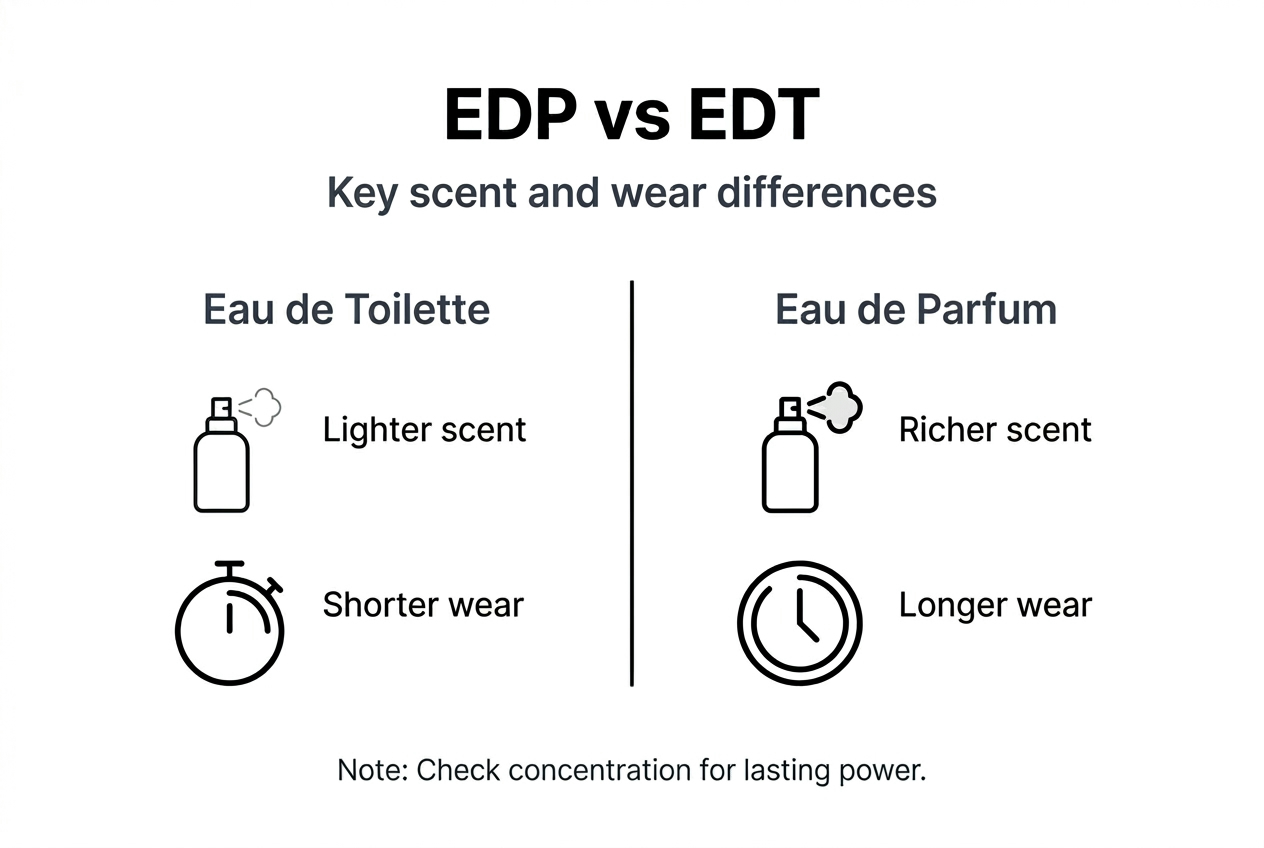
Volatility explains these differences. Top notes in EDT evaporate quickly, creating that initial burst of scent that travels farther. Base notes in EDP persist longer because they’re heavier molecules that cling to skin. EDT has more diffusive sillage initially; EDP has softer, intimate projection.
Your skin chemistry plays a crucial role. Skin hydration and chemistry influence how long and strong fragrance lasts. Dry skin absorbs fragrance oils faster, reducing longevity. Warm skin amplifies projection. Natural body chemistry can emphasize certain notes while muting others, making the same fragrance smell different on different people.
Pro Tip: Moisturize before applying fragrance to extend wear time significantly. Apply an unscented lotion to pulse points, then add your fragrance. The hydrated surface helps perfume oils adhere better and evaporate more slowly, maximizing both longevity and projection regardless of concentration.
Choose your format based on intended wear duration. EDT works beautifully for situations where you want 4-6 hours of scent: a workday, brunch, afternoon activities. EDP suits occasions demanding all-day or evening wear: date nights, weddings, full workdays when reapplication isn’t convenient. Testing perfume samples on your own skin reveals exactly how each format performs with your unique chemistry.
Choosing the right fragrance for your style and occasion
Applying this knowledge ensures you select fragrances that truly fit your needs. Follow these steps to make informed decisions:
- Test both formats on skin: Apply EDT to one wrist, EDP to the other. Note opening impressions immediately.
- Wait through full development: Check scent evolution at 30 minutes, 2 hours, and 4+ hours to experience all phases.
- Assess projection distance: Ask a trusted friend when they can detect the scent as you approach and move away.
- Consider reapplication convenience: Determine if you can easily refresh fragrance during your typical day or prefer set-it-and-forget-it options.
- Evaluate cost per wear: Calculate how many applications you get from each format based on longevity and amount needed.
Match format to setting:
- EDT excels for: Daytime office wear, casual weekend outings, warm weather, gym or active settings, situations where lighter scent is appropriate, budget-conscious daily fragrances
- EDP suits: Evening events, special occasions, cooler weather, professional settings requiring all-day wear, intimate gatherings, when you want signature scent impact
Additional factors influence your choice. Hot, humid climates amplify projection, making EDT’s lighter touch often preferable. Cold, dry conditions can mute fragrances, favoring EDP’s stronger presence. Oily skin holds fragrance longer naturally; dry skin benefits from EDP’s higher concentration. Your personal style matters too: minimalists might prefer EDT’s subtle approach, while fragrance enthusiasts often gravitate toward EDP’s complexity.
Pro Tip: Test fragrances over multiple days before purchasing full bottles. A scent you love initially might become cloying after hours of wear, or a subtle opening might reveal stunning depth. Patience rewards you with choices you’ll genuinely enjoy long-term, not just impulse buys based on first impressions.
Choosing between EDT and EDP should focus on personal preference and how fragrance evolves on your skin. Your nose knows best. Don’t let concentration percentages or price tags override what actually smells amazing on you. The perfect fragrance is the one you reach for repeatedly, regardless of its classification. Explore comprehensive guidance on choosing fragrances that match your unique preferences and lifestyle.
Explore premium eau de parfum and eau de toilette fragrances
Ready to experience these differences firsthand? Be Frsh offers curated selections of luxury EDP and EDT fragrances that showcase the distinct characteristics explained throughout this guide.
Discover Parfums de Marly Percival, a sophisticated EDP featuring lavender, geranium, and amber notes that demonstrate how higher concentration creates lasting complexity. For brighter, fresher options, explore Maison Margiela Replica Sailing Day, capturing aquatic notes perfect for daytime wear, or Maison Margiela Replica When The Rain Stops, offering clean, refreshing character ideal for warmer weather.
Each fragrance in the collection showcases different scent profiles, concentrations, and performance characteristics. Sample sizes let you test options on your skin, experiencing how they evolve throughout the day before committing to full bottles.
Frequently asked questions
What does eau de parfum mean?
Eau de parfum refers to a fragrance format containing 15-20% perfume oil concentration. This higher ratio of aromatic compounds to alcohol creates richer scent depth and extended wear. EDP typically lasts 8-12 hours on skin, making it ideal for all-day wear.
Is eau de toilette weaker than eau de parfum?
EDT generally contains lower fragrance oil concentration (5-15%) compared to EDP (15-20%), creating lighter scent intensity. However, “weaker” oversimplifies the relationship. EDT emphasizes different notes and offers distinct performance characteristics. Actual strength depends on formulation quality and your personal skin chemistry.
How long does eau de toilette typically last?
EDT usually provides 4-6 hours of noticeable scent on skin. Longevity varies based on individual factors like skin hydration, body temperature, and application method. Applying to moisturized pulse points extends wear time compared to dry skin application.
Can I wear eau de parfum daily?
Absolutely. EDP works perfectly for daily wear, especially if you want fragrance that lasts from morning through evening without reapplication. Its longer-lasting nature makes it practical for busy schedules. Choose lighter, fresher EDP compositions for office environments or warmer, deeper options for personal preference and occasion.