
5 effective ways to explore perfume notes before buying

Buying perfume online presents a unique challenge: how do you choose a scent you’ve never smelled? Without the ability to test fragrances in person, many buyers struggle to identify whether a perfume’s notes will suit their preferences. Understanding and exploring perfume notes transforms this guessing game into an informed decision. This article presents five practical methods to explore and identify scent notes effectively, helping you make confident purchases and discover fragrances that truly match your style and personality.
Table of Contents
- Understanding Perfume Notes: The Foundation
- Method 1: Testing Perfume Samples Strategically
- Method 2: Layering Perfumes To Discover Complex Notes
- Method 3: Using Scent Strips And Note Charts For Guided Identification
- Method 4: Reading And Analyzing Fragrance Pyramids
- Method 5: Keeping A Fragrance Journal For Pattern Recognition
- Explore Curated Perfume Selections At Be Frsh
Key takeaways
| Point | Details |
|---|---|
| Sample testing reveals note evolution | Testing samples on skin shows how top, middle, and base notes develop over time |
| Layering uncovers hidden complexities | Combining fragrances helps you discover subtle notes and create personalized scent profiles |
| Sensory tools train your nose | Scent strips and note charts build recognition skills for identifying fragrance families |
| Understanding note structure guides choices | Knowing how top, middle, and base notes work helps predict longevity and character |
| Multiple methods increase confidence | Using several exploration strategies reduces purchase risk and improves satisfaction |
Understanding perfume notes: the foundation
Before exploring methods to identify notes, you need to understand what perfume notes actually are. Fragrance notes consist of top, middle, and base layers that unfold over time, creating a complete scent experience. Top notes are what you smell immediately after application, typically lasting 15 to 30 minutes. These are often bright, fresh scents like citrus or herbs that create the first impression.
Middle notes, also called heart notes, emerge as top notes fade. These form the core personality of the fragrance and last 3 to 5 hours. Floral, fruity, and spicy notes commonly appear in this layer. Base notes are the foundation that anchors the entire composition, appearing after several hours and lasting 6 to 8 hours or longer. Woody, musky, and amber notes typically serve as base notes, providing depth and longevity.
This timeline matters because it affects how you perceive and enjoy a fragrance throughout the day. A perfume might smell citrusy and energizing in the morning, transform into a soft floral by afternoon, and settle into a warm, comforting woody scent by evening. Understanding this progression helps you predict whether a fragrance will suit your daily routine and preferences.
Common note families include:
- Citrus: lemon, bergamot, orange, grapefruit
- Floral: rose, jasmine, lily, violet
- Woody: sandalwood, cedar, vetiver, patchouli
- Oriental: vanilla, amber, incense, spices
- Fresh: aquatic, green, ozonic notes
Pro Tip: Start by focusing on the middle notes to identify the perfume’s core personality. These notes dominate the fragrance experience and reveal whether a scent aligns with your preferences. If you love the heart notes, you’ll likely enjoy the complete fragrance journey.
Method 1: testing perfume samples strategically
The most reliable way to explore perfume notes is through strategic sample testing. Sample testing is the most reliable way to experience fragrance notes and their evolution on skin. Your skin chemistry affects how notes develop, making personal testing essential for accurate assessment.
Follow this methodical approach:
- Apply the sample to clean, unscented skin on your wrist or inner elbow
- Wait 15 minutes to experience top notes fully before making any judgments
- Check the fragrance again after 1 hour to assess middle notes as they emerge
- Evaluate base notes after 4 to 6 hours to understand the complete scent journey
- Note your reactions at each stage, including which notes you recognize and enjoy
Timing is everything when testing samples. Top notes create excitement but fade quickly, so don’t judge a fragrance solely on initial spray. The middle notes reveal the true character, while base notes determine whether you’ll still enjoy the scent hours later. Many people make purchase decisions based only on top notes, then feel disappointed when the fragrance develops differently.
To minimize scent confusion, test only one or two fragrances per day. Your nose becomes desensitized after smelling multiple scents, making accurate assessment impossible. Give each fragrance space to develop without interference from other perfumes. Avoid wearing scented lotions or using fragranced soap before testing, as these can mask or alter the perfume’s true notes.
Pro Tip: Use blotter strips first and then test on skin to perceive notes better. Spray the sample on a paper strip and smell it to get an initial impression without commitment. If you like what you smell, then apply it to your skin for a complete test. This two-step approach saves your skin for fragrances that pass the initial screening.
Method 2: layering perfumes to discover complex notes
Layering offers an advanced exploration method that reveals subtle notes while creating personalized scent combinations. Layering perfumes helps explore and enhance individual perfume notes while customizing fragrance profile. When you combine two fragrances, certain notes become more prominent, helping you identify nuances you might miss when wearing each scent alone.
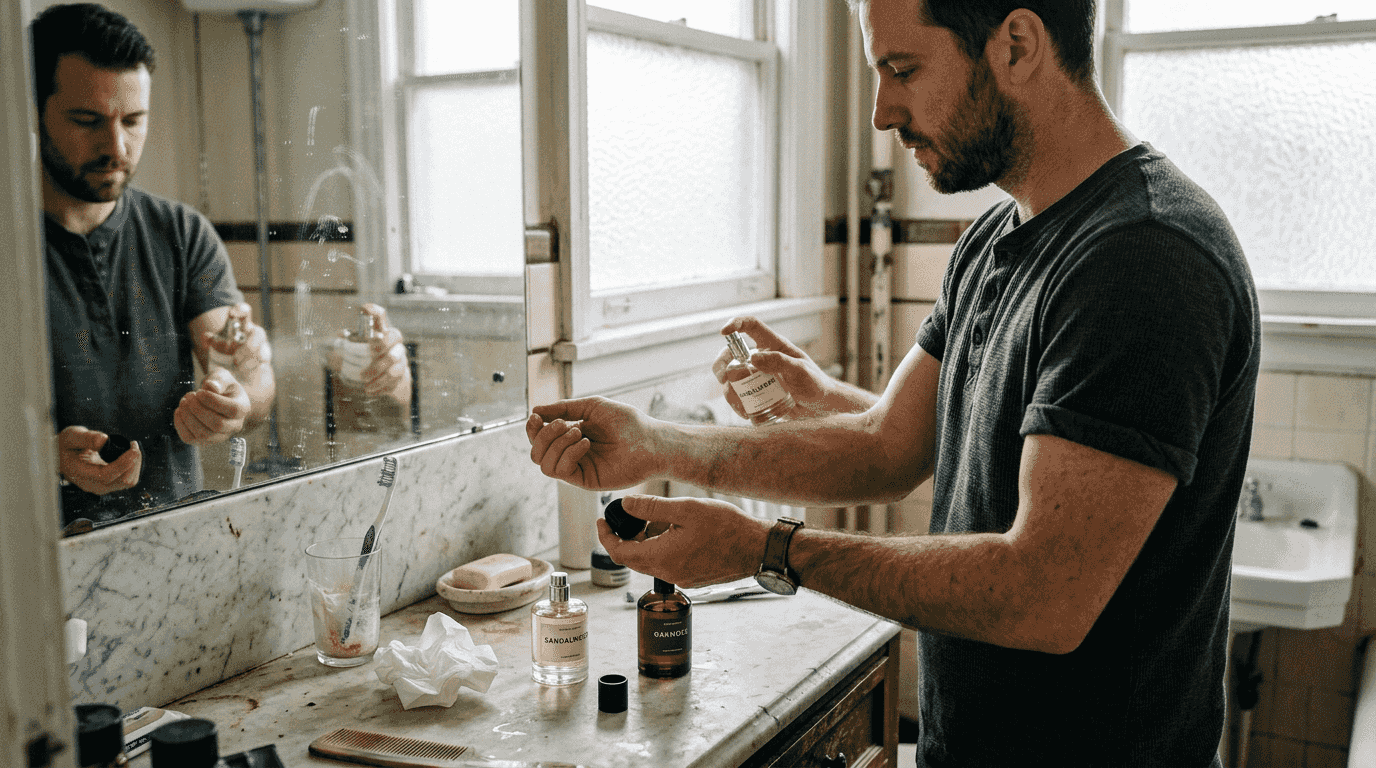
The concept is simple: apply one fragrance as your base, then add a complementary scent on top. The interaction between the two reveals hidden notes and creates depth. For example, layering a vanilla-based fragrance with a citrus scent might reveal woody undertones in the vanilla that weren’t noticeable before. This technique trains your nose to recognize individual notes within complex compositions.
Layering tips for effective exploration:
- Select fragrances with at least one compatible note family to ensure harmony
- Test small amounts first, using one spray of each fragrance maximum
- Allow 5 to 10 minutes for the notes to blend and settle before evaluating
- Start with simple combinations before experimenting with complex layering
- Keep notes on successful pairings to build your fragrance knowledge
| Aspect | Single Perfume | Layered Scents | | — | — | | Note complexity | Standard composition with defined progression | Enhanced depth with amplified individual notes | | Personalization | Limited to original formulation | Highly customizable to personal preferences | | Testing ease | Straightforward single application | Requires experimentation and practice | | Note recognition | Some notes may remain subtle or hidden | Layering brings forward previously unnoticed notes |
Layering works particularly well when exploring perfume sets or sample collections. You can experiment with different combinations without committing to full bottles, discovering which notes resonate with you most strongly. This method also helps you understand how different note families interact, building your overall fragrance literacy.
Method 3: using scent strips and note charts for guided identification
Sensory training tools provide structured ways to develop your ability to recognize individual perfume notes. Scent strips and note charts are effective tools for learning and identifying key fragrance notes systematically. These tools remove the guesswork by offering reference points for comparison and practice.
Scent strips, also called blotter strips or mouillettes, are absorbent paper strips designed for fragrance testing. Spray a perfume on the strip, wave it gently to disperse alcohol, and smell it at intervals to track note development. Unlike skin testing, strips show the fragrance’s true composition without skin chemistry interference. This makes them ideal for isolating and identifying specific notes.
Note charts organize fragrances by families and subcategories, creating a visual map of scent relationships. These charts show how notes relate to each other, helping you understand why certain combinations work well together. For example, a chart might group lavender with other herbal notes, showing its connections to rosemary and sage while distinguishing it from sweet florals like rose.
Practical exercises for building note recognition:
- Smell and match: spray three different fragrances on separate strips, identify one shared note family across all three
- Progressive recognition: start with obvious notes like vanilla or citrus, gradually move to subtle notes like iris or oud
- Blind testing: have someone prepare strips without telling you the fragrance, practice identifying notes without visual cues
- Family grouping: organize your samples by note families, compare fragrances within each group to understand variations
- Daily practice: spend 5 minutes each day smelling reference scents to build olfactory memory
Consistent practice with these tools trains your nose to distinguish between similar notes. You’ll start recognizing the difference between sweet vanilla and creamy sandalwood, or fresh bergamot and sharp lemon. This skill transforms how you read fragrance descriptions and makes online shopping more confident and successful.
Method 4: reading and analyzing fragrance pyramids
Fragrance pyramids provide visual representations of how notes are structured within a perfume. These diagrams typically show top notes at the pyramid’s peak, middle notes in the center, and base notes at the foundation. Learning to read these pyramids helps you predict how a fragrance will develop and which notes will dominate at different stages.
When you see a fragrance pyramid, pay attention to the proportion of space given to each note. Larger sections indicate more prominent notes, while smaller mentions suggest subtle accents. For instance, if bergamot occupies a large portion of the top notes section, expect a strong citrus opening. If vanilla appears as a small component in the base, it will provide warmth without overwhelming the composition.
Compare pyramids across different fragrances to understand compositional patterns. Oriental fragrances typically feature heavy base notes with rich spices and resins. Fresh fragrances emphasize top and middle notes with lighter bases. Floral fragrances balance all three layers with prominent flower notes in the heart. Recognizing these patterns helps you identify your preferred fragrance structures.
Cross-reference pyramid information with your sample testing results. Spray a sample, then review its pyramid while the fragrance develops on your skin. Notice when each listed note becomes apparent and how long it lasts. This active comparison builds your ability to recognize notes by smell rather than just reading about them. Over time, you’ll develop intuition about which pyramids indicate fragrances you’ll love.
Some fragrance descriptions include percentage breakdowns showing how much of the composition comes from each note family. A perfume might be 40% floral, 30% woody, 20% citrus, and 10% spicy. These numbers help you understand the overall character before testing, setting realistic expectations about which notes will dominate your experience.
Method 5: keeping a fragrance journal for pattern recognition
Documenting your fragrance experiences creates a personal reference library that reveals your preferences over time. A fragrance journal tracks which notes you consistently enjoy, which combinations work best, and how different fragrances perform throughout the day. This systematic approach transforms casual testing into deliberate exploration.
Record these details for each fragrance you test:
- Fragrance name and concentration (eau de toilette, eau de parfum, etc.)
- Notes listed in the official description
- Your perception of top, middle, and base notes as they develop
- How long each stage lasts on your skin
- Overall impression: love it, like it, neutral, or dislike it
- Situations where you’d wear this fragrance
- Similar fragrances you’ve tested for comparison
Review your journal monthly to identify patterns. You might discover you consistently love fragrances with jasmine middle notes but dislike heavy patchouli bases. Perhaps woody fragrances last longer on your skin than citrus scents. These insights guide future purchases and help you articulate your preferences when seeking recommendations.
Your journal also prevents repeat purchases of similar fragrances. When you see a new perfume with notes you’ve tested before, check your journal to see how you responded to those notes previously. This saves money and reduces the chance of buying fragrances that sit unused. It also helps you recognize when a supposedly new release is actually similar to something you already own.
Digital tools make journaling convenient. Use your phone’s notes app, a spreadsheet, or dedicated fragrance apps to log entries immediately after testing. Include photos of the bottle or packaging to jog your memory later. Some enthusiasts create rating systems or tags for quick filtering, like “summer appropriate” or “office friendly.”
Explore curated perfume selections at Be Frsh
Now that you understand effective methods for exploring perfume notes, put your knowledge into practice with carefully curated selections. Be Frsh offers extensive collections designed to showcase distinct fragrance notes and help you discover scents that match your preferences.
Explore sophisticated options like Hugo Boss The Scent Elixir Women, which features prominent cocoa and vanilla notes perfect for practicing base note identification. For those interested in aromatic woody compositions, Jean Paul Gaultier Le Male Elixir offers lavender and tonka bean notes that demonstrate how middle and base notes create lasting impressions. Each product page provides detailed note breakdowns, helping you apply the exploration methods covered in this article. The site’s sample availability means you can test fragrances using the strategic approaches discussed without committing to full bottles. Learn more about how Be Frsh makes fragrance exploration accessible through their accessibility information page.
FAQ
How can I tell a perfume’s top note from its base note?
Top notes appear immediately after spraying and fade within 15 to 30 minutes, typically featuring bright, volatile scents like citrus or herbs. Base notes emerge after several hours and last 6 to 8 hours or longer, usually consisting of heavier materials like woods, musks, and resins. Understanding this timeline helps you appreciate a perfume’s full character rather than judging it solely on initial impression.
Is layering perfumes safe for sensitive skin?
Layering is generally safe, but test each product separately first to ensure neither causes irritation before combining them. Use small amounts and choose fragrances you know your skin tolerates well to reduce the risk of reaction. If you have very sensitive skin, consider layering on clothing instead of directly on skin, though this won’t show how your skin chemistry affects the scent.
Can scent strips accurately represent how a perfume smells on skin?
Scent strips give an accurate initial idea of a fragrance’s composition but don’t account for how your unique skin chemistry affects development. They’re excellent for screening fragrances and identifying notes without commitment, but always follow up with skin testing for fragrances that interest you. The combination of strip testing and skin testing provides the most complete understanding of how a perfume will perform for you personally.
How many perfume samples should I test before choosing a signature scent?
Most people need to test 10 to 15 samples across different fragrance families before identifying clear preferences and finding a signature scent. This range allows you to experience various note combinations and understand which structures suit your taste and lifestyle. Keep your fragrance journal updated throughout this process to track patterns and avoid testing fatigue.
Do expensive perfumes have more complex notes than affordable options?
Price doesn’t always correlate with note complexity, though expensive perfumes often use higher-quality natural ingredients that provide nuance and depth. Many affordable fragrances feature complex, well-balanced compositions that rival luxury options. Focus on how notes develop and whether you enjoy the overall experience rather than assuming price indicates quality or complexity.