

Perfume Sampling Guide: Try, Test, Choose

Sampling a new fragrance can feel like a treasure hunt, where every choice shapes your personal scent journey. With so many labels promising prestige, finding authentic, high-quality samples becomes a key step for anyone serious about perfume discovery. This guide walks you through picking, testing, and evaluating samples, so you can confidently land a signature scent that feels personal and truly fits your style.
Table of Contents
- Step 1: Select Suitable Perfume Samples For Your Needs
- Step 2: Prepare Your Environment And Senses For Accurate Testing
- Step 3: Apply Samples And Evaluate Initial Impressions
- Step 4: Assess Longevity And Dry-Down Throughout The Day
- Step 5: Decide On Your Ideal Fragrance Purchase
Quick Summary
| Key Insight | Explanation |
|---|---|
| 1. Choose quality samples | Opt for sealed, high-quality samples to ensure an accurate testing experience. Authenticity is vital for decision-making. |
| 2. Test in neutral settings | Conduct tests in a well-ventilated, odor-free environment to prevent confusion with competing scents. |
| 3. Evaluate at multiple intervals | Assess fragrances at 15-20 minutes, 1-2 hours, and beyond to track how the scent evolves on your skin. |
| 4. Document your impressions | Take notes on how fragrances smell and feel over time, which aids in identifying long-term favorites. |
| 5. Consider lifestyle and usage | Reflect on how often you will wear the fragrance and whether its longevity aligns with your daily routine. |
Step 1: Select suitable perfume samples for your needs
Choosing the right perfume samples is your foundation for discovering a signature scent. The goal here is to find authentic, high-quality samples that accurately represent the fragrance you’re considering before making a larger purchase.
Start by understanding what makes a sample worth your time. Look for sealed, travel-sized vials that contain at least 0.5ml of fragrance—this gives you enough product to test how a scent develops on your skin over several hours, not just in the first minute. Unbranded or compromised packaging signals potential issues with sample integrity, so stick with official sources.
Consider the format that suits your lifestyle. Spray vials work great if you want to apply fragrance and move through your day naturally. Rollerballs offer targeted application and are convenient for touch-ups. Blotter strips let you smell the fragrance without applying it to skin, useful for quick comparisons. Each format serves different testing purposes, so think about how you’ll actually use the sample.
Here’s a quick overview comparing sample types for fragrance testing:
| Sample Format | Best Use Case | Application Style | Portability |
|---|---|---|---|
| Spray Vial | Everyday wear trial | Fine mist | Highly portable |
| Rollerball | Targeted touch-ups | Roll-on | Compact and secure |
| Blotter Strip | Quick scent comparison | Direct to paper | Minimal, for at home |
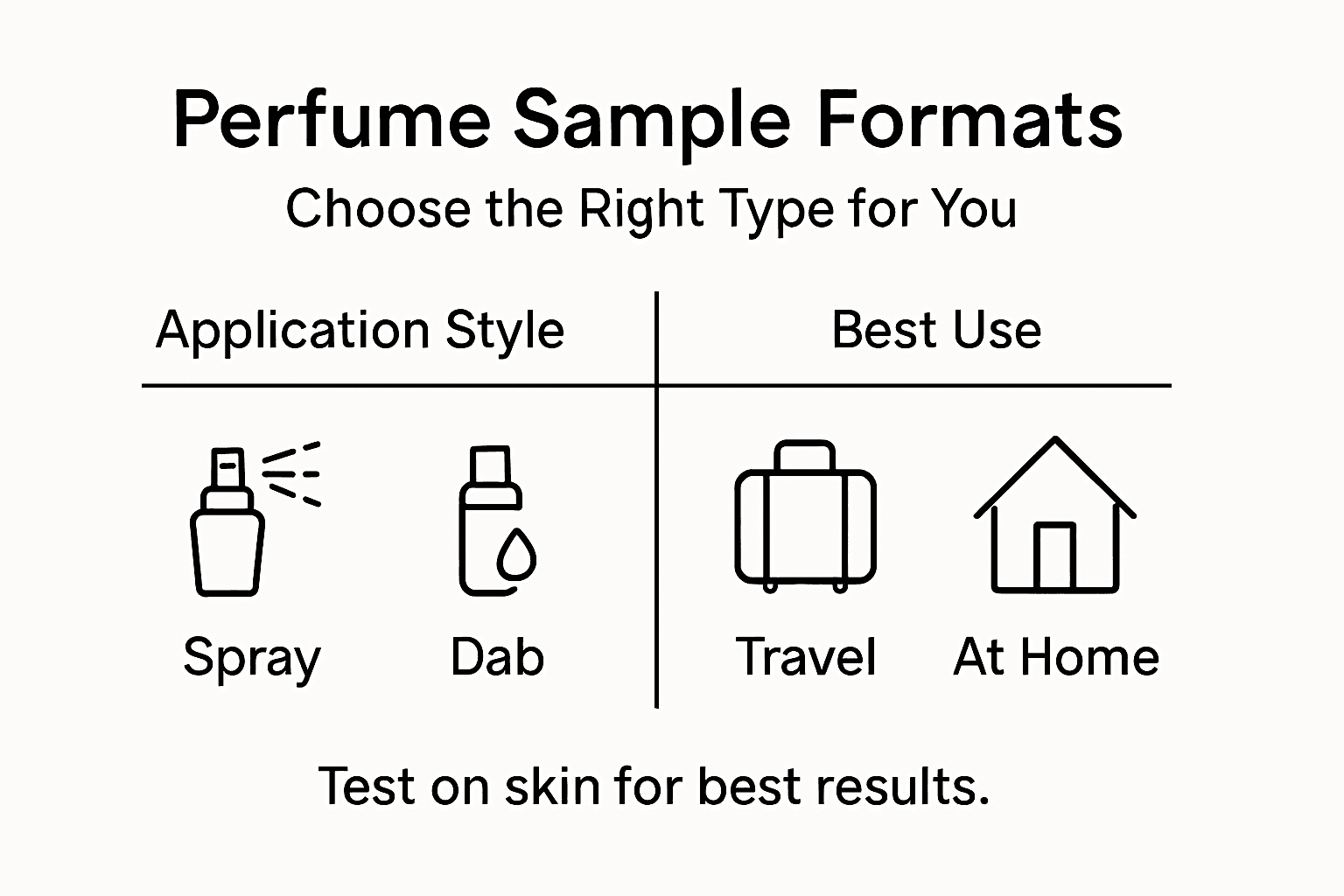
When selecting samples, prioritize variety over quantity. Rather than ordering dozens of similar scents, choose fragrances that represent different families and moods. This approach helps you identify what genuinely resonates with you versus what’s simply trendy. A good mix might include a fresh citrus option, a warm woody scent, and something with floral notes—whatever aligns with your preferences.
Authenticity matters tremendously. Selecting high-quality samples that retain the original fragrance formulation ensures you’re testing the real thing. Counterfeit or low-quality samples will mislead your decision-making process entirely.
One practical approach: start with samples that align with your existing taste. If you already love certain brands or fragrance families, sample within those categories first. This builds confidence while you explore. Over time, gradually introduce samples from unfamiliar territory—that’s where unexpected favorites often hide.
The real power of sampling is understanding how a fragrance interacts with your unique body chemistry over time, not just catching the initial spray.
Remember that testing on skin matters far more than sniffing strips. Fragrances transform throughout the day as they warm with your body heat and mingle with your natural oils. A scent that smells good in the first five minutes might turn unpleasant after an hour, or vice versa. Only skin testing reveals this crucial information.
Pro tip: Order 3-5 samples per shopping cycle rather than overwhelming yourself with 20 at once—this prevents decision fatigue and gives each fragrance genuine consideration time on your skin.
Step 2: Prepare your environment and senses for accurate testing
Your testing environment and physical state dramatically impact how you perceive fragrance. Setting yourself up correctly transforms sampling from a casual sniff into a reliable evaluation that actually informs your purchase decisions.
Start by creating a neutral, well-ventilated space free from competing odors. Avoid kitchens, bathrooms, or rooms with strong scents like candles or air fresheners—these interfere with your olfactory perception. A quiet bedroom or living area works well. Open a window slightly to maintain airflow without introducing overwhelming outside scents. This prevents sensory fatigue, where your nose becomes overwhelmed and stops detecting fragrances accurately.
Next, prepare your body. Wash your skin with unscented soap and skip scented products entirely on testing days. That includes lotions, deodorants, hair spray, and cologne. Even subtle background scents from personal care products alter how you perceive new fragrances. Clean skin gives you a true baseline for evaluation.
Control the testing conditions:
- Maintain consistent room temperature, ideally between 68-72°F
- Ensure adequate natural or neutral lighting to see fragrance color clearly
- Test at the same time of day when possible (your sense of smell varies throughout the day)
- Avoid testing when you’re hungry, tired, or stressed—these states impair olfactory perception
During testing, limit the number of scents tested at once. Three to four fragrances per session is ideal. After each fragrance, take a meaningful break using olfactory palate cleansers. Coffee beans work wonderfully, or simply smell plain air while stepping outside. This resets your sense of smell and prevents one fragrance from influencing the next.
Your olfactory system needs genuine breaks to accurately distinguish between fragrances, not just quick sniffs between samples.
Take at least five to ten minutes between testing different scents. Use this time to jot down notes about what you experienced—how it smelled, how it felt on your skin, whether it developed over time. Writing anchors your impressions before testing the next fragrance clouds your perception.
Pro tip: Test fragrances on different areas of skin—inner wrist, neck, or behind your ear—since fragrance chemistry varies slightly based on skin temperature and blood flow in different body regions.
Step 3: Apply samples and evaluate initial impressions
Now comes the actual testing. This is where your preparation pays off and you start gathering real data about how fragrances perform on your skin. The goal is to capture your honest first reaction and track how the scent evolves.
Apply each sample strategically. Spray or dab a small amount on one wrist or the inside of your elbow. Resist the urge to rub your wrists together—this breaks down fragrance molecules and speeds up scent degradation. Instead, let the fragrance settle naturally on your skin for a minute or two before bringing your wrist to your nose.
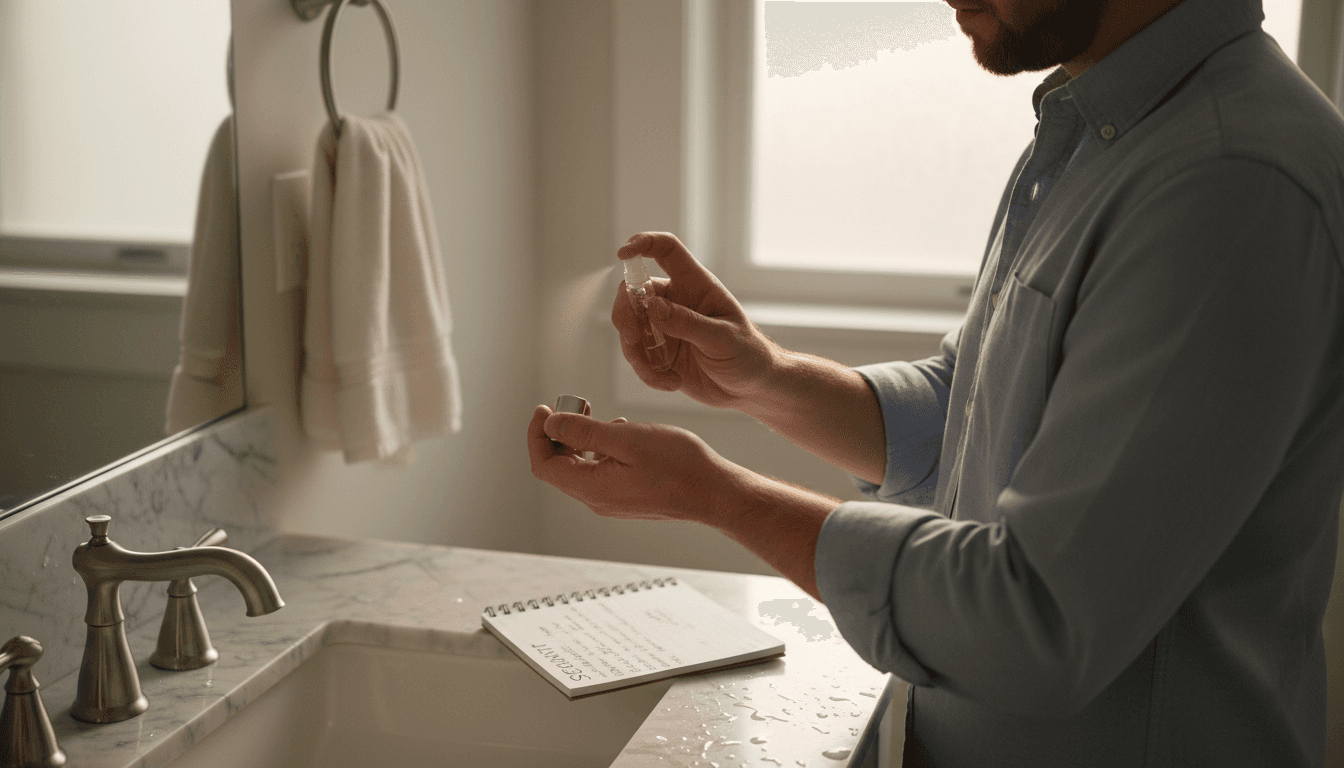
Pay attention to what happens immediately. The top notes are what you smell in the first 5-10 minutes. These are typically lighter, more volatile scents like citrus, bergamot, or fresh florals. Write down your initial reaction. Does it match what you expected? Is it pleasant or overwhelming? Be honest here—first impressions matter.
Now wait. Don’t make judgments yet. Set a timer and check the fragrance again at these key intervals:
- 15-20 minutes: The heart notes emerge as top notes fade
- 1-2 hours: The base notes become more prominent
- 4-6 hours: The fragrance settles into its final projection
As you observe each stage, notice how your perception shifts. A fragrance that smells sharp and citrusy at first might become warm and creamy as base notes develop. How you test fragrances directly influences whether you’ll actually enjoy wearing it long-term.
During this waiting period, engage your other senses. Notice how the fragrance feels on your skin. Does it feel light and airy, or heavy and dense? Pay attention to how it projects—can people nearby smell it, or is it intimate and personal? These details matter when choosing a scent.
The fragrance you fall in love with at hour two is usually the one you’ll keep reaching for, not the one that impressed you in the first minute.
Jot down observations throughout the day. Use simple descriptors like warm, fresh, spicy, sweet, or creamy. Don’t worry about sounding poetic. Your goal is documenting what actually happened on your skin, not writing perfume reviews.
Pro tip: Test only one fragrance per wrist to avoid mixing scents, or use the back of your neck and inner elbow on opposite arms to compare two fragrances simultaneously throughout the day.
Step 4: Assess longevity and dry-down throughout the day
Longevity is where perfume separates the impressive from the practical. A fragrance might smell amazing for thirty minutes, but if it disappears by noon, you’ll be reapplying constantly. This step teaches you how to track what actually happens on your skin over time.
Understand the science first. Fragrances contain volatile top notes that evaporate quickly, heart notes that linger longer, and base notes with fixatives that slow evaporation and provide lasting power. How perfume longevity works depends on this carefully balanced formulation. When you’re testing, you’re watching this entire process unfold.
Set specific time checkpoints throughout your day. Check the fragrance at these intervals:
- 30 minutes: Still mostly top notes
- 2-3 hours: Heart notes dominating
- 6-8 hours: Base notes taking over
- 12+ hours: The skin scent phase (barely perceptible)
At each checkpoint, bring your wrist to your nose and assess the intensity honestly. Is the scent still strong? Have you stopped smelling it because you’ve become accustomed to it, or has it actually faded? This is crucial—nose blindness is real. Ask someone nearby to smell your wrist. Their feedback reveals true projection.
Notice how the character changes during dry-down. A fragrance that felt fresh and citrusy might become creamy and warm as it settles into base notes. Some people love this transformation. Others find the final dry-down unpleasant. Document whether the progression appeals to you throughout the full wear cycle.
Environmental factors matter significantly. Test the same fragrance on different days if possible. Your skin type, hydration level, body temperature, humidity, and even what you ate affect how long a fragrance lasts. Assessing perfume longevity requires multiple tests to account for these variables.
This table summarizes key factors that influence actual fragrance longevity:
| Factor | Effect on Longevity | How to Adjust for Testing |
|---|---|---|
| Skin Type | Dry skin shortens longevity | Moisturize before applying scent |
| Weather | Heat increases volatility | Test in varying climates/seasons |
| Application Area | Warm spots magnify intensity | Use wrists, neck, elbow for test |
| Activity Level | Higher activity fades scent | Test on a typical activity day |
A fragrance that lasts six hours on dry winter skin might only last four hours during humid summer weather—plan accordingly.
Track whether the fragrance eventually becomes a skin scent, detectable only on close inspection. Some people prefer fragrances that fade to skin scents by evening. Others need something with serious staying power that’s noticeable all day.
Pro tip: Test the same sample on your body and on a fragrance strip simultaneously to compare how skin chemistry affects longevity compared to a neutral surface.
Step 5: Decide on your ideal fragrance purchase
You’ve tested, observed, and documented. Now comes the decision. This step transforms your testing data into an actual purchase choice that aligns with your needs and lifestyle.
Review your notes from all testing sessions. Look for patterns in what you loved and what you rejected. Did you consistently return to certain fragrances? Which ones did you forget about entirely? Your honest testing notes reveal what genuinely appeals to you versus what impressed you initially.
Consider these practical factors alongside your emotional responses:
- How often will you realistically wear this fragrance?
- Does the longevity match your daily schedule?
- Does the projection fit your environment (office, outdoor, casual)?
- Will you enjoy the dry-down as much as the opening?
- Does the price justify the quality and longevity?
Separate the hype from the reality. A fragrance beloved by everyone on social media might not suit your skin chemistry or lifestyle. Conversely, a niche scent that seemed unusual at first sampling might have grown on you. Trust your testing experience, not external opinions.
Think about your fragrance wardrobe strategically. Rather than buying one perfect fragrance, consider developing a collection that covers different moods and seasons. Exploring niche fragrances alongside mainstream options gives you versatility. A fresh citrus for spring, a warm vanilla for fall, a crisp fragrance for the office, and something sensual for evenings creates well-rounded options.
The best fragrance purchase is one you’ve tested thoroughly and chosen for yourself, not one you think you should like.
Check whether how to test perfumes properly impacts your final decision. If you followed the testing process carefully, you should feel confident in your choice based on real data, not guesswork.
Before committing to a full-size bottle, consider these options. Buy a travel size first if available. This lets you test the fragrance in your actual daily routine before investing in a larger size. Some retailers offer decants or smaller initial purchases. Order samples from multiple sources to ensure you’re comparing apples to apples.
Remember that skin chemistry changes seasonally. A fragrance you love in winter might feel heavy in summer. Plan your purchase accordingly and stay open to rotating fragrances throughout the year.
Pro tip: Purchase from retailers offering easy returns or money-back guarantees, especially for full-size bottles, so you can confidently test your choice in real-world conditions without risk.
Discover Your Perfect Scent with Befrsh’s Premium Perfume Samples
Choosing the right fragrance can feel overwhelming given the many variables involved like longevity, dry-down, and how the scent reacts with your unique skin chemistry. The article highlights the importance of carefully selecting authentic, high-quality perfume samples and testing them in a neutral environment to make an informed choice. This process addresses the common challenges of guesswork, disappointment, and wasted purchases many fragrance lovers face.
At Befrsh.com, we make this journey effortless by offering an extensive range of perfume samples including popular, niche, unisex, and seasonal options. Our selection supports your goal to try and test fragrances on your own skin over time so you can confidently decide which scents resonate with you without any guesswork.
Ready to explore a curated collection designed to match your preferences and lifestyle Try our authentic and convenient samples today to reduce your purchase risks and enhance the joy of discovering your signature scent. Visit Befrsh.com now and experience fragrance testing the smart way with fast shipping and customer-focused service.
Frequently Asked Questions
How do I select the right perfume samples for testing?
Choosing suitable perfume samples starts with finding authentic, high-quality options that come in sealed vials of at least 0.5ml. Focus on exploring different fragrance families and formats that match your lifestyle; for example, opt for spray vials for daily wear and rollerballs for targeted touch-ups.
What should I do to prepare my environment for accurate perfume testing?
To evaluate perfumes effectively, create a neutral, well-ventilated space free from competing odors. Clean your skin with unscented soap and avoid scented products on testing days to ensure you’re testing the fragrance accurately over time.
How can I evaluate the initial impressions of a perfume sample?
Apply each perfume sample to one wrist and take a moment to let it settle before smelling. Notice the top notes after the first few minutes, then track how your perception changes over time, especially at the 15-20 minute and 1-2 hour marks.
What factors should I consider in evaluating longevity of a fragrance?
To assess longevity, check the fragrance at specific time intervals, like 30 minutes, 2-3 hours, and 6-8 hours after application. Document whether the scent remains strong, fades, or becomes a skin scent, as these observations will help you decide if the fragrance fits your daily routine.
How do I decide on the ideal fragrance purchase after testing?
Review your notes from all testing sessions and identify any patterns in your reactions. Consider whether the fragrance lasts long enough for your activities, if the dry-down is appealing, and if the price matches its quality.
Is it advisable to test only one perfume sample at a time?
Yes, it’s best to test just one fragrance per wrist or area of skin to avoid mixing scents. This clarity allows you to accurately gauge how each fragrance develops over the day and makes it easier to compare their unique qualities.