

Why test perfumes first for perfect scent matches

Many fragrance shoppers spray perfume on a paper strip at the counter, sniff once, and decide to buy. This common habit overlooks a crucial scientific reality: your skin chemistry transforms every scent uniquely. What smells fresh on a blotter may turn sour on your wrist within an hour. Testing perfumes on your own skin before purchase reveals the true fragrance journey and prevents expensive disappointment.
Table of Contents
- Understanding Perfume Composition And Scent Development
- How Body Chemistry Affects Perfume Scent
- Common Misconceptions About Perfume Testing
- Comparing Methods: Blotter, Skin, And Environmental Testing
- How To Test Perfumes Effectively To Avoid Regret
- Benefits Of Testing Perfumes Before Purchase
- Discover The Joy Of Perfect Scents With Be Frsh
- Why Is It Important To Test Perfumes Before Purchasing?
Key takeaways
| Point | Details |
|---|---|
| Perfumes change over time | Perfumes evolve over several hours through top, heart, and base notes due to evaporation, revealing different scent layers. |
| Body chemistry matters | Skin pH and oils cause 30 to 40 percent variation in scent compared to paper testing, making personal testing essential. |
| Testing reduces regret | Around 70 percent of perfume buyers regret purchases when skipping testing, wasting money on unsuitable fragrances. |
| Skin testing beats blotters | Paper strips miss the interaction between scent molecules and your natural oils. |
| Time reveals true character | Allow several hours to experience the full scent profile from bright top notes to deep base notes. |
Understanding perfume composition and scent development
Perfume is not a single static smell. It unfolds like a story with three distinct chapters called top, heart, and base notes. Top notes burst forward immediately after spraying, typically lasting 15 to 30 minutes. They are bright and volatile, often citrus or herbal.
Heart notes emerge next, forming the fragrance core for two to four hours. Floral, spicy, or fruity aromas usually dominate this stage. Base notes anchor the composition, lingering up to eight hours or more with woody, musky, or amber tones.
This sequential emergence happens because scent molecules evaporate at different rates based on molecular weight. Lighter molecules vanish quickly, while heavier compounds persist. Understanding how to test perfumes before buying ensures you experience all three stages on your skin.
The initial spray you smell at the counter represents only a tiny fraction of the fragrance story. A perfume that starts with sparkling bergamot may settle into warm sandalwood that clashes with your preferences. Testing over several hours reveals whether you truly enjoy the complete scent journey.
Key considerations for scent development:
- Top notes disappear fastest, creating an early impression that may mislead.
- Heart notes define the fragrance personality and deserve careful attention.
- Base notes linger longest, so they must appeal to you throughout the day.
- Complete evaluation requires wearing the perfume for at least six hours.
Without observing this full evolution, you risk buying a fragrance that initially delights but ultimately disappoints. The buyer regret data confirms this pattern across thousands of perfume purchases.
How body chemistry affects perfume scent
Your skin is not a neutral canvas. Individual pH levels range from 4.5 to 6.2, creating acidic to slightly acidic environments that interact with fragrance molecules. A perfume may smell sweet on one person and sharp on another purely because of pH differences.
Natural skin oils further modify scent. Oilier skin holds fragrance longer and amplifies certain notes, while dry skin causes faster evaporation and muted projection. Skin temperature, diet, hormones, and even medication subtly shift how scent molecules behave on your body.
This biochemical interaction explains why the same bottle smells dramatically different across individuals. Paper blotters eliminate this variable entirely, presenting a standardized scent divorced from real-world wearing conditions. Skin pH and oils cause 30 to 40 percent variation in scent compared to paper testing, making blotter judgments unreliable for personal choice.
Factors influencing scent on skin:
- Acidic skin enhances citrus and fresh notes but may sour floral compositions.
- Alkaline skin softens sharp notes and extends woody base notes.
- Oily skin amplifies projection and longevity, sometimes overwhelming subtle fragrances.
- Dry skin shortens wear time and requires more frequent reapplication.
Pro Tip: Test perfumes on pulse points like wrists or inner elbows where natural warmth activates scent molecules most effectively. Avoid rubbing your wrists together, as friction crushes delicate top notes and distorts the fragrance profile.
Always test perfumes correctly on your skin rather than relying on paper strips. This reveals how the fragrance will actually perform during daily wear and prevents mismatches.
Common misconceptions about perfume testing
Many shoppers believe a quick sniff on a blotter strip reveals everything worth knowing about a perfume. This assumption ignores scent development and body chemistry. The first impression captures only fleeting top notes, missing the heart and base that define long-term appeal.
Another widespread myth suggests that perfumes smell the same on everyone. This belief persists despite obvious evidence to the contrary. Friends often disagree about the same fragrance because their unique skin chemistry produces genuinely different scent experiences.
Some buyers assume testing multiple perfumes simultaneously helps comparison shopping. In reality, testing more than three fragrances at once causes olfactory fatigue. Your nose loses ability to distinguish subtle differences, leading to confusion rather than clarity.
Environmental factors like temperature and humidity significantly alter scent perception, yet many testers ignore context. A perfume tested in a hot, humid store will smell different in cool, dry outdoor conditions. Seasonal variation matters more than most realize.
Common testing errors to avoid:
- Judging a perfume based solely on the initial burst of top notes.
- Testing on paper and assuming it matches skin performance.
- Spraying multiple fragrances on different body areas at the same time.
- Making purchase decisions without waiting for scent evolution.
- Ignoring how temperature and humidity affect fragrance projection.
Educated testing requires patience and proper method. Rushing the process guarantees poor fragrance choices that waste money. Learn perfume testing best practices to make informed decisions based on complete information rather than fleeting impressions.
Comparing methods: blotter, skin, and environmental testing
Different testing approaches serve distinct purposes. Blotter testing offers convenience and prevents skin contact with unfamiliar products. You can quickly eliminate obviously unsuitable fragrances without committing skin space.
Skin testing provides the most accurate preview of real-world performance. It incorporates your unique chemistry and reveals true longevity and projection. However, skin testing requires time and limits how many perfumes you can evaluate in one session.
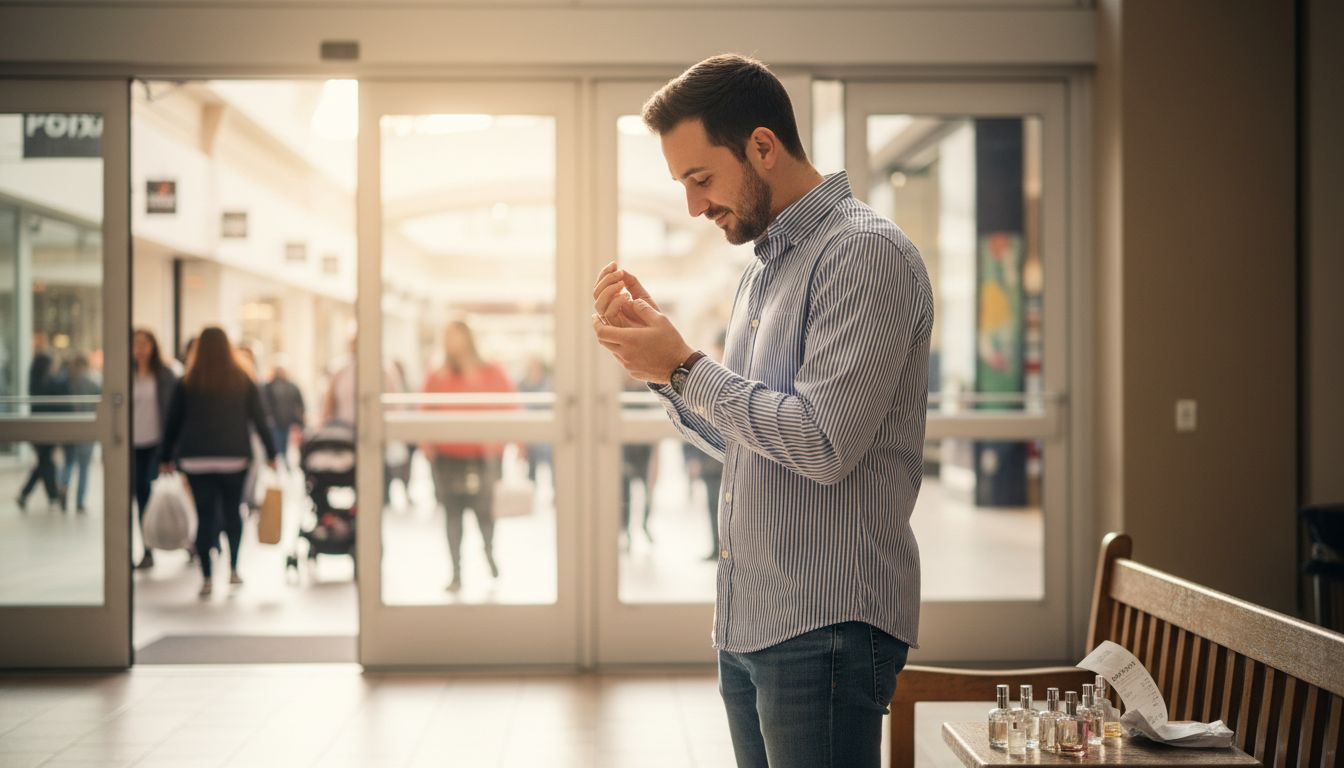
Environmental testing involves wearing perfume in various conditions like indoors, outdoors, warm weather, and cool weather. Temperature and humidity dramatically shift scent intensity and character. A perfume perfect for winter may overwhelm in summer heat.
| Testing Method | Advantages | Limitations | Best Use Case |
|---|---|---|---|
| Blotter Strip | Fast, hygienic, compares multiple scents quickly | Misses skin chemistry, no longevity data | Initial screening to narrow choices |
| Skin Testing | Reveals true scent on your body, shows longevity | Time-consuming, limits simultaneous tests | Final evaluation before purchase |
| Environmental Testing | Shows seasonal performance, real-world context | Requires extended testing period | Confirming versatility and occasion suitability |
No single method provides complete information. Start with blotters to eliminate obvious mismatches. Move to skin testing for serious candidates. Finally, test in different environments to confirm versatility.
Key testing insights:
- Blotter testing works best for quick elimination rounds.
- Skin testing must precede any purchase decision.
- Environmental variation matters more than most buyers realize.
- Combination approach reduces regret and increases satisfaction.
Compare testing methods thoroughly to understand tradeoffs and choose the right approach for each decision stage. Layering methods builds comprehensive understanding.
How to test perfumes effectively to avoid regret
Effective testing follows a deliberate process that respects scent evolution and your nose’s limitations. Start by selecting no more than three fragrances to test on a single day. More than three causes olfactory confusion.
- Apply one small spray to a pulse point like your wrist or inner elbow. Pulse points generate warmth that activates scent molecules naturally.
- Wait at least 30 minutes before forming any opinion. This allows volatile top notes to settle and heart notes to emerge. Do not judge immediately.
- Smell your wrist periodically over the next four to six hours. Notice how the scent transforms through different stages. Does it remain pleasant throughout?
- Test only one perfume per wrist to avoid mixing scents. If testing three fragrances, use both wrists and one inner elbow.
- Take notes on your phone documenting initial impression, one-hour impression, and four-hour impression. Memory fades quickly, and notes prevent confusion.
- Revisit the test spot after eight hours if possible. Base notes at this stage reveal long-term compatibility. Does the dry down appeal to you?
Pro Tip: Avoid coffee beans as palate cleansers. They add another strong scent to your fatigued nose rather than resetting it. Step outside for fresh air instead, which genuinely clears olfactory receptors.
Testing discipline separates successful fragrance buyers from those drowning in regret. Patience reveals whether a perfume truly matches your style and chemistry. Follow effective perfume testing steps systematically to make confident choices backed by complete information.
Benefits of testing perfumes before purchase
Testing perfumes before purchase delivers measurable benefits beyond simple satisfaction. Data shows that around 70 percent of perfume buyers regret purchases when skipping testing. This regret translates to wasted money on bottles that sit unused.
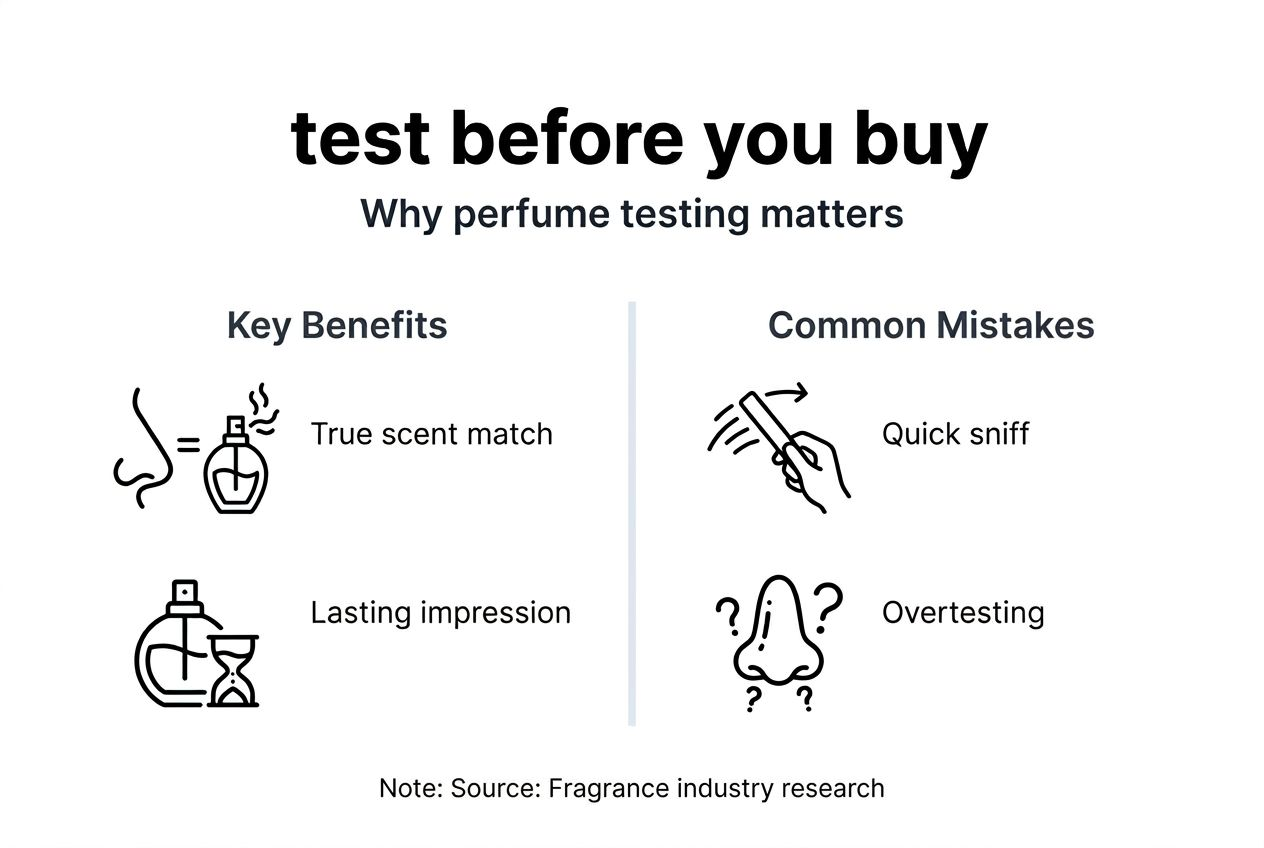
Samples reduce product return rates by up to 25 percent according to industry research. Returns cost retailers and frustrate buyers who must navigate return policies. Testing prevents this cycle entirely.
Personalized scent selection improves when you test thoroughly. You discover which fragrance families complement your chemistry and lifestyle. A corporate professional may need subtle scents for meetings, while a creative may prefer bold expressions.
Financial benefits accumulate over time. Avoiding just two unsuitable full-size purchases per year saves $200 to $400. Testing samples costs a fraction of this amount while preventing expensive mistakes.
Key testing benefits:
- Dramatically reduces buyer’s regret from 70 percent to nearly zero with proper testing.
- Saves money by preventing purchases of unsuitable full-size bottles.
- Builds confidence in fragrance choices through complete evaluation.
- Enables discovery of niche and artisan perfumes without financial risk.
- Enhances overall enjoyment of scent collection and wearing experience.
The testing benefits extend beyond individual satisfaction to environmental impact. Fewer returns mean less shipping and packaging waste. Samples use minimal packaging compared to full bottles.
Smart testing transforms perfume buying from gamble to informed decision. You build a collection that genuinely reflects your preferences rather than accumulating marketing-driven impulse purchases. Every bottle earns its place through demonstrated compatibility with your body and lifestyle.
Discover the joy of perfect scents with Be Frsh
Testing perfumes properly requires access to quality samples and expert guidance. Be Frsh specializes in helping fragrance enthusiasts discover their perfect scents through comprehensive sampling. Our perfume sampling guide walks you through each testing stage with practical advice refined over thousands of customer experiences.
We offer samples from popular and niche fragrance houses across women’s, men’s, and unisex categories. Testing authentic samples on your skin over several days reveals true compatibility before you invest in full bottles. Learn how to test perfume samples for best results using our detailed tutorials. Fast shipping and customer-focused service make scent discovery effortless and enjoyable. Build your perfect collection with confidence, one sample at a time.
Why is it important to test perfumes before purchasing?
Does perfume really smell different on everyone?
Yes, skin chemistry including pH and natural oils causes significant scent variation between individuals. The same perfume bottle produces noticeably different results on different people. Testing on your own skin shows how it will actually smell on you.
How long should I test a perfume before buying?
Test for at least four to six hours to experience all three scent stages: top, heart, and base notes. Initial impressions capture only the fleeting top notes. True compatibility emerges as heart and base notes develop over time.
Can I test multiple perfumes at once?
Limit testing to three perfumes maximum per day to avoid olfactory fatigue. Your nose loses ability to distinguish scents when overwhelmed. Test different fragrances on separate days for clearest evaluation and most accurate impressions.
Why do paper strips give misleading results?
Paper strips eliminate skin chemistry variables like pH and oils that dramatically alter scent. They show standardized fragrance composition but not how it performs on human skin. Skin testing reveals real-world wearing experience that paper cannot replicate.
What is the biggest mistake in perfume testing?
Judging a perfume based solely on the first spray is the most common error. Top notes dominate initially but disappear within 30 minutes. Rushing the evaluation process causes poor choices and buyer regret. Patience reveals true fragrance character through all development stages.
Jätä viesti