What is niche perfume? A 2026 guide to unique fragrances

Many people assume all perfumes are alike or only differ by brand name. This belief overlooks a fascinating category that transforms fragrance from commodity to art. Niche perfumes offer unique and artistic scent experiences prioritizing individuality over mass appeal. This guide will explain what niche perfumes are, how they differ from designer fragrances, and how to explore them. Whether you’re a fragrance beginner or an enthusiast interested in quality and uniqueness, you’ll discover why niche perfumes represent a distinct approach to scent creation and personal expression.
Table of Contents
- What Defines A Niche Perfume? Key Characteristics Explained
- Niche Vs Designer Perfumes: Understanding The Differences
- The Growing Niche Perfume Market: Trends And Challenges In 2026
- How To Explore And Select Niche Perfumes: A Guide For Enthusiasts And Novices
- Discover Unique Niche Perfumes At Be Frsh
- Frequently Asked Questions
Key takeaways
| Point | Details |
|---|---|
| Artistic expression | Niche perfumes focus on creative vision and rare ingredients rather than commercial appeal. |
| Limited production | Smaller batches and selective distribution create exclusivity and maintain quality standards. |
| Higher concentration | Niche fragrances contain 20-30% perfume oil, enhancing longevity and depth compared to designer scents. |
| Growing market | The niche perfume market is projected to reach over $4 billion by 2029 due to demand for individuality. |
| Unique experience | Storytelling and unconventional blends offer a distinct sensory journey beyond mainstream fragrances. |
What defines a niche perfume? Key characteristics explained
Niche perfumes represent a fundamentally different philosophy in fragrance creation. Niche perfumes prioritize artistry, unusual ingredients, and expressive creative direction over mass-market appeal. Unlike commercial fragrances designed to please everyone, niche scents embrace bold, sometimes polarizing compositions that reflect the perfumer’s personal vision.
The ingredients set niche perfumes apart immediately. Perfumers source rare materials like oud from Southeast Asia, orris root requiring years of processing, or exotic botanicals unavailable to mass producers. These unconventional ingredients create scent profiles you won’t encounter in department stores. A niche perfume might blend smoky incense with tart rhubarb or pair leather with iris, combinations that focus groups would typically reject.
Production scale matters significantly. Niche brands produce smaller batches, often numbering in hundreds rather than millions of bottles. This limited distribution maintains exclusivity and allows perfumers to use costly ingredients without compromising quality. You’ll find niche perfumes primarily through specialist boutiques, independent retailers, or directly from perfume houses rather than mass-market chains.
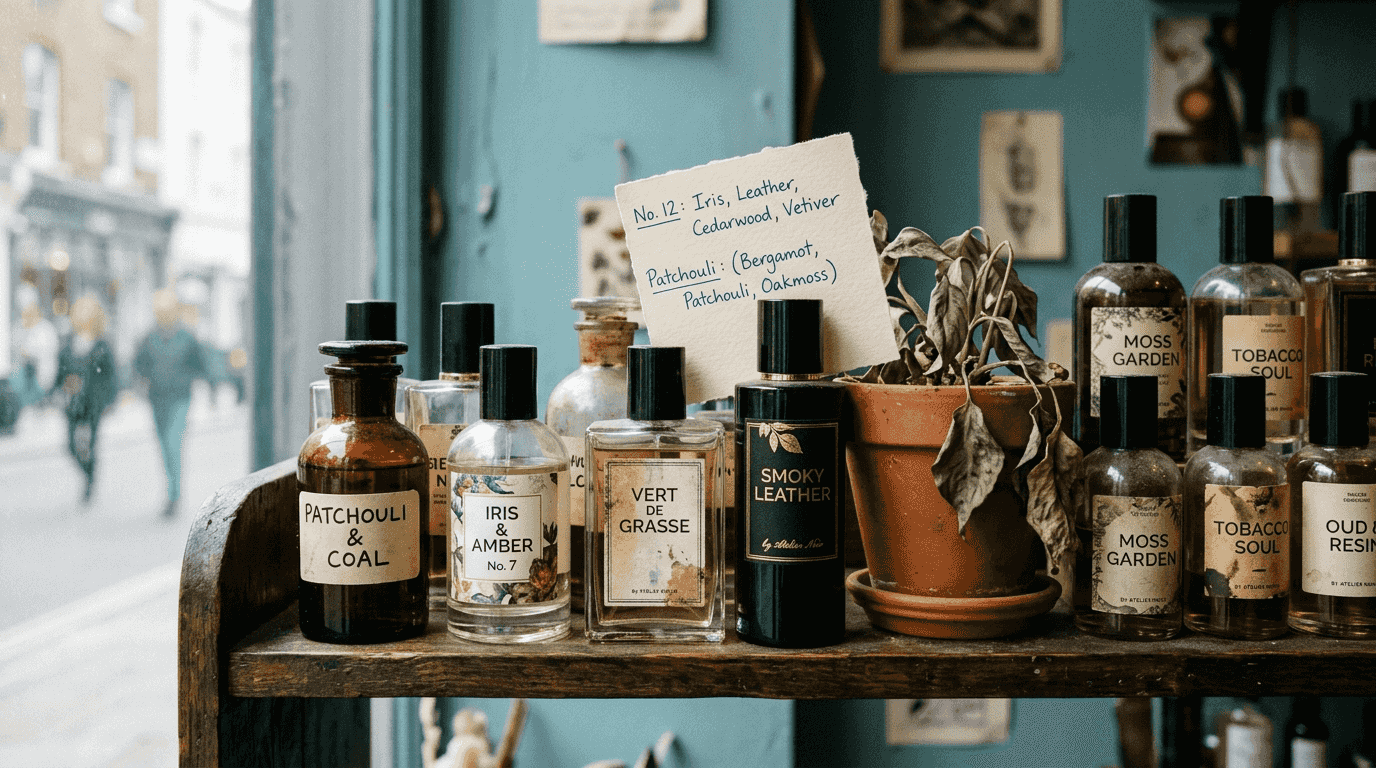
Storytellingdrivesnichefragrance creation. Each scent tells a narrative, whether inspired by a specific place, memory, or artistic concept. Perfumers craft these stories intentionally, inviting wearers into an olfactory experience rather than simply providing a pleasant smell. This narrative depth distinguishes niche perfumes from fragrances designed purely for commercial success.
Concentration levels reveal another key difference. Niche perfumes typically contain 20-30% perfume oil, significantly higher than commercial fragrances. This elevated concentration delivers greater longevity, richer depth, and more complex evolution on skin. A niche scent might last 8-12 hours while revealing different facets throughout the day.
Key characteristics include:
- Artistic freedom prioritized over broad commercial appeal
- Rare, unconventional ingredients and unexpected blends
- Limited production runs with selective distribution
- Strong narrative and creative vision behind each fragrance
- Higher perfume oil concentration for enhanced performance
Pro Tip: When exploring defining niche fragrance, focus on how a scent makes you feel rather than whether others will like it. Niche perfumes reward personal connection over universal approval.
Niche vs designer perfumes: Understanding the differences
The distinction between niche and designer perfumes extends far beyond packaging or price tags. Production volume creates the first major divide. Designer brands manufacture millions of bottles annually for global distribution through department stores and retail chains. Niche producers craft smaller quantities, sometimes fewer than 1,000 bottles per release, sold through specialized channels.
Marketing approaches differ dramatically. Designer fragrances aim for broad commercial success with bigger marketing budgets, featuring celebrity endorsements and extensive advertising campaigns. Niche brands invest minimal resources in traditional marketing, relying instead on word-of-mouth, fragrance communities, and the quality of their creations to build reputation.
Ingredient investment reveals stark contrasts. Niche brands spend 25-40% of their price on high-quality fragrance oils versus 5-8% for designer brands. This difference directly impacts scent quality, complexity, and longevity. Designer brands allocate remaining budget to packaging, advertising, and retail margins, while niche brands prioritize the liquid inside the bottle.
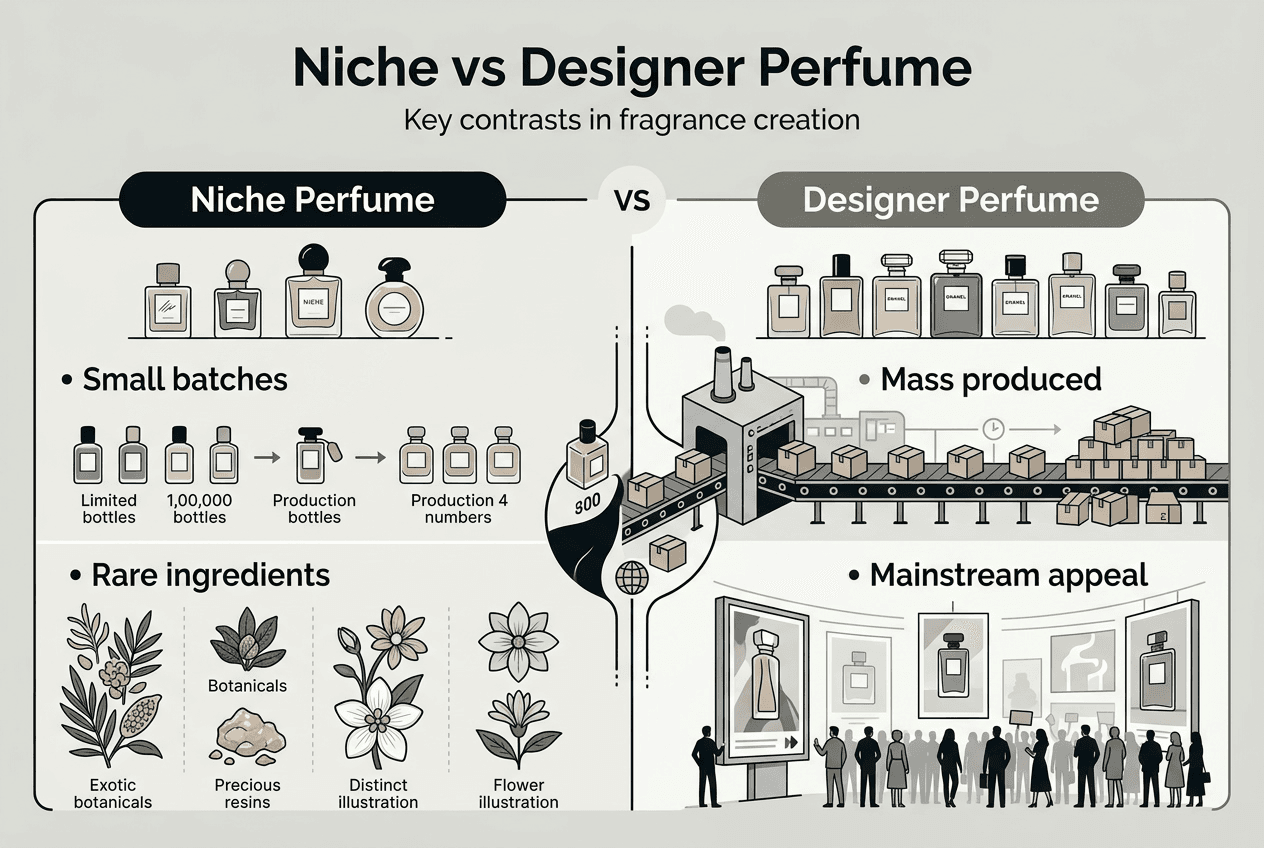
Development processes follow opposite paths. Designer fragrances undergo extensive focus group testing to ensure broad likability and minimize risk. Perfumers adjust formulas based on consumer feedback, smoothing rough edges and removing polarizing notes. Niche perfumers embrace creative risks, crafting bold compositions that might alienate some wearers while deeply resonating with others.
Product strategy shows clear patterns. Designer brands frequently release flankers, variations on successful fragrances designed to capitalize on brand recognition. A popular scent might spawn dozens of flankers over years. Niche brands focus on fewer, more distinctive offerings, with each release representing a complete artistic statement rather than a commercial variation.
| Aspect | Niche Perfumes | Designer Perfumes |
|---|---|---|
| Production volume | Small batches, hundreds to thousands | Mass production, millions of bottles |
| Ingredient budget | 25-40% of retail price | 5-8% of retail price |
| Distribution | Specialist boutiques, direct sales | Department stores, global retail chains |
| Development | Artistic vision, creative risks | Focus group tested, broad appeal |
| Marketing spend | Minimal, word-of-mouth focus | Extensive advertising, celebrity endorsements |
| Product releases | Few distinctive offerings | Many flankers and variations |
The wearing experience differs substantially. Niche perfumes evolve more dramatically over hours, revealing layers as different notes emerge and fade. Designer fragrances often maintain consistent profiles, designed for immediate recognition and steady performance. This complexity makes niche scents more engaging for fragrance enthusiasts who appreciate nuanced development.
Key differences include:
- Niche perfumes use rare, expensive ingredients; designer fragrances prioritize cost efficiency
- Niche brands embrace polarizing compositions; designer brands seek universal appeal
- Niche distribution remains selective; designer fragrances achieve mass availability
- Niche perfumes tell specific stories; designer fragrances target lifestyle aspirations
Pro Tip: When comparing designer perfumes guide options with niche alternatives, sample both on your skin over several hours. The quality difference becomes apparent as niche fragrances reveal their complexity while designer scents remain more linear.
The growing niche perfume market: trends and challenges in 2026
The niche perfume industry is experiencing remarkable expansion. The Global Luxury Niche Perfume market is expected to grow to $4084.41 Million by 2029, reflecting rising demand for unique, identity-driven scents. This growth represents a fundamental shift in consumer preferences away from mass-produced fragrances toward personalized olfactory experiences.
Self-expression drives this market transformation. Modern consumers increasingly view fragrance as a form of personal identity rather than simply a grooming product. They seek scents that reflect their individuality, values, and aesthetic preferences. Niche perfumes satisfy this desire by offering distinctive compositions unavailable in mainstream markets.
Industry surveys confirm this momentum. 65% of participants expect the niche perfume market to grow significantly over the next five years, citing demand for unique fragrances as the primary driver. This optimism spans perfumers, retailers, and industry analysts who recognize changing consumer priorities.
Challenges temper this growth. 40% of respondents identified high production costs and limited distribution as major obstacles. Sourcing rare ingredients, maintaining small-batch quality, and accessing retail channels require significant investment. These barriers keep niche perfumes exclusive but limit market expansion potential.
Market consolidation is reshaping the landscape. Larger luxury conglomerates increasingly acquire successful niche brands, providing capital and distribution while theoretically preserving creative independence. This trend raises questions about whether acquired brands can maintain their artistic integrity under corporate ownership.
| Market Metric | Current Status | Future Projection |
|---|---|---|
| Market value 2026 | $3.2 billion (estimated) | $4.08 billion by 2029 |
| Expected growth rate | 8-10% annually | Sustained through 2029 |
| Primary growth driver | Demand for unique, personal scents | Self-expression and individuality |
| Major challenge | High production costs, limited distribution | Maintaining exclusivity while scaling |
| Industry consolidation | Increasing acquisitions by luxury groups | Continued through 2026-2029 |
Brands adapt through innovation. Many niche perfumers expand product lines beyond traditional eau de parfum, offering discovery sets, candles, and body products. These extensions provide entry points for curious consumers while generating revenue to support core fragrance development.
Digital channels transform niche perfume access. Online retailers and subscription services now offer curated selections and sample programs, reducing the barrier of committing to full bottles. This democratization helps niche brands reach audiences beyond major metropolitan areas with specialist boutiques.
“The niche perfume market’s growth reflects a broader cultural shift toward authenticity and personal expression. Consumers no longer want to smell like everyone else; they want fragrances that tell their unique stories.”
Key market trends include:
- Rapid growth driven by demand for individuality and self-expression
- Consolidation as luxury groups acquire independent niche brands
- Digital expansion through online retailers and subscription services
- Product line extensions beyond traditional perfumes
- Persistent challenges around production costs and distribution access
Pro Tip: The growing market means more niche options become available, but also watch for brands that prioritize marketing over quality after acquisition. Research role of niche perfumes in your scent journey to identify authentic artisanal creators versus commercial operators using niche positioning.
How to explore and select niche perfumes: a guide for enthusiasts and novices
Exploring niche perfumes requires a different approach than shopping for designer fragrances. Start by sampling widely before committing to full bottles. Order discovery sets, visit specialist boutiques offering testers, or purchase decants from reputable sources. This experimentation helps you identify scent families and specific notes that resonate with your preferences.
Focus on evolution rather than first impressions. Niche perfumes often use unusual notes and blends, rewarding close, sustained wear rather than instant crowd-pleasing impact. Apply a sample and observe how it develops over 6-8 hours. Initial sharpness might soften into warmth, or bright citrus might reveal deeper woody foundations. This patience reveals the perfumer’s complete vision.
Consider the narrative behind each fragrance. Read about the inspiration, ingredients, and creative process. Understanding a perfume’s story enhances appreciation and helps you connect emotionally with scents. A fragrance inspired by Mediterranean summers might resonate if you cherish coastal memories, even if you’ve never encountered that specific ingredient combination.
Test on skin, not paper. Fragrance chemistry interacts with your unique skin pH, oils, and temperature, creating personalized results. A scent that smells harsh on a blotter might bloom beautifully on your wrist. Apply samples to pulse points and allow several hours for full development before judging.
Take detailed notes during your exploration. Record initial impressions, how scents evolve, longevity, and emotional responses. Note which ingredients or families appeal most. These records become invaluable references when selecting future purchases or describing preferences to fragrance consultants.
Step-by-step exploration process:
- Order discovery sets or decants from multiple niche brands to sample diverse styles
- Apply one sample per day, testing on skin rather than relying on blotter impressions
- Observe how each fragrance evolves over 6-8 hours, noting opening, heart, and base developments
- Research the story and ingredients behind scents that intrigue you
- Revisit favorites multiple times before purchasing full bottles to confirm lasting appeal
- Join fragrance communities online to discover recommendations and share experiences
Pro Tip: When exploring unique niche fragrance examples, don’t dismiss challenging scents immediately. Sometimes the most rewarding fragrances require several wearings to fully appreciate their complexity and artistry.
Seek specialist guidance when possible. Knowledgeable consultants at niche boutiques can recommend fragrances based on your preferences and guide you toward discoveries you might not find independently. Their expertise accelerates your learning curve and helps avoid costly mistakes.
Build your collection gradually. Resist the urge to purchase multiple bottles quickly. Live with each fragrance across different seasons, occasions, and moods. A scent that seems perfect in winter might feel heavy in summer. This patience ensures your collection reflects genuine preferences rather than impulse decisions.
Discover unique niche perfumes at Be Frsh
Your journey into niche perfumes deserves a trusted partner. Be Frsh curates a selection of high-quality niche perfumes designed to delight fragrance enthusiasts and beginners alike. We understand that discovering your signature scent requires exploration without the commitment of full bottles. Our sample program lets you experience exclusive scent stories crafted by expert perfumers you won’t find elsewhere.
Explore detailed descriptions and guides that help you select your perfect niche scent. Whether you’re drawn to bold, unconventional compositions or seeking subtle sophistication, our collection offers diverse options across multiple fragrance families. Enjoy easy shopping, fast delivery, and expert advice for your fragrance journey. Start your niche perfume exploration today and discover scents that truly reflect your individuality.
Frequently asked questions
What is the difference between niche and artisanal perfumes?
Niche and artisanal perfumes overlap significantly but aren’t identical. Niche perfumes come from small, independent brands prioritizing artistic expression over commercial appeal, though some niche houses operate at moderate scale. Artisanal perfumes specifically emphasize handcrafted production by individual perfumers, often in very small batches. All artisanal perfumes qualify as niche, but not all niche perfumes are artisanal. The distinction matters primarily for collectors seeking the most exclusive, handmade creations versus those simply wanting non-mainstream fragrances.
Are niche perfumes more expensive than designer perfumes?
Yes, niche perfumes typically cost more due to ingredient quality and production scale. Niche brands spend 25-40% of their price on high-quality fragrance oils versus 5-8% for designer brands. Rare materials like natural oud, iris absolute, or vintage oakmoss command premium prices. Small-batch production eliminates economies of scale, increasing per-unit costs. However, higher concentration means niche perfumes last longer per application, potentially offering better value despite higher upfront cost. The investment reflects genuine quality differences rather than marketing markup.
How can I ensure a niche perfume suits my personality?
Test the perfume over time to see how it evolves on your skin, as chemistry varies between individuals. Consider the story and ingredients that personally resonate with you, whether that’s a specific place, memory, or aesthetic. Seek expert advice from knowledgeable consultants who can guide you toward fragrances matching your preferences. Sample decants before purchasing full bottles to live with scents across different contexts. Your ideal niche perfume should feel like an authentic extension of your identity rather than a compromise. Visit niche perfume scent discovery resources for personalized guidance.
Are niche perfumes limited edition or widely available?
Niche perfumes are produced in smaller quantities and sold via specialist retailers or directly from perfumers. While not always strictly limited edition, availability remains more restricted than mass-market designer brands. Some niche releases become permanent collection staples, while others appear as seasonal or limited offerings. Distribution focuses on specialist boutiques, independent retailers, and brand websites rather than department stores. This selective availability maintains exclusivity and allows brands to control quality and presentation. However, growing online access makes niche perfumes increasingly obtainable regardless of geographic location.