
Popular Perfume Notes Guide: 852% Pistachio Surge 2026

Perfume notes evolve rapidly, and 2026 proves this dramatically. Pistachio note surged 852% in popularity, transforming from obscure to mainstream. Understanding how top, heart, and base notes work together helps you navigate these shifts confidently. This guide breaks down perfume note categories, their emotional impact, and practical sampling strategies so you can explore luxury scents without costly mistakes.
Table of Contents
- Introduction To Perfume Notes
- How Perfume Notes Influence Emotion And Memory
- 2026 Trending Popular Perfume Notes
- Common Misconceptions About Perfume Notes
- Sampling And Layering Popular Perfume Notes Effectively
- Conclusion: Building A Personalized Luxury Perfume Wardrobe
- Discover Your Perfect Scent With Befrsh Sampling
- FAQ
Key Takeaways
| Point | Details |
|---|---|
| Perfume note structure | Top notes evaporate first creating initial impressions; heart notes form the main character; base notes provide lasting depth. |
| Emotional connection | Scent bypasses rational processing to trigger memory and emotion directly through brain pathways. |
| 2026 trends rising | Pistachio, mineral accords, and creamy gourmands dominate while synthetic florals fade. |
| Sampling reduces risk | Testing notes on your skin reveals true scent evolution before full bottle commitment. |
| Layering extends wear | Combining complementary notes increases longevity and creates personalized signature scents. |
Introduction to Perfume Notes
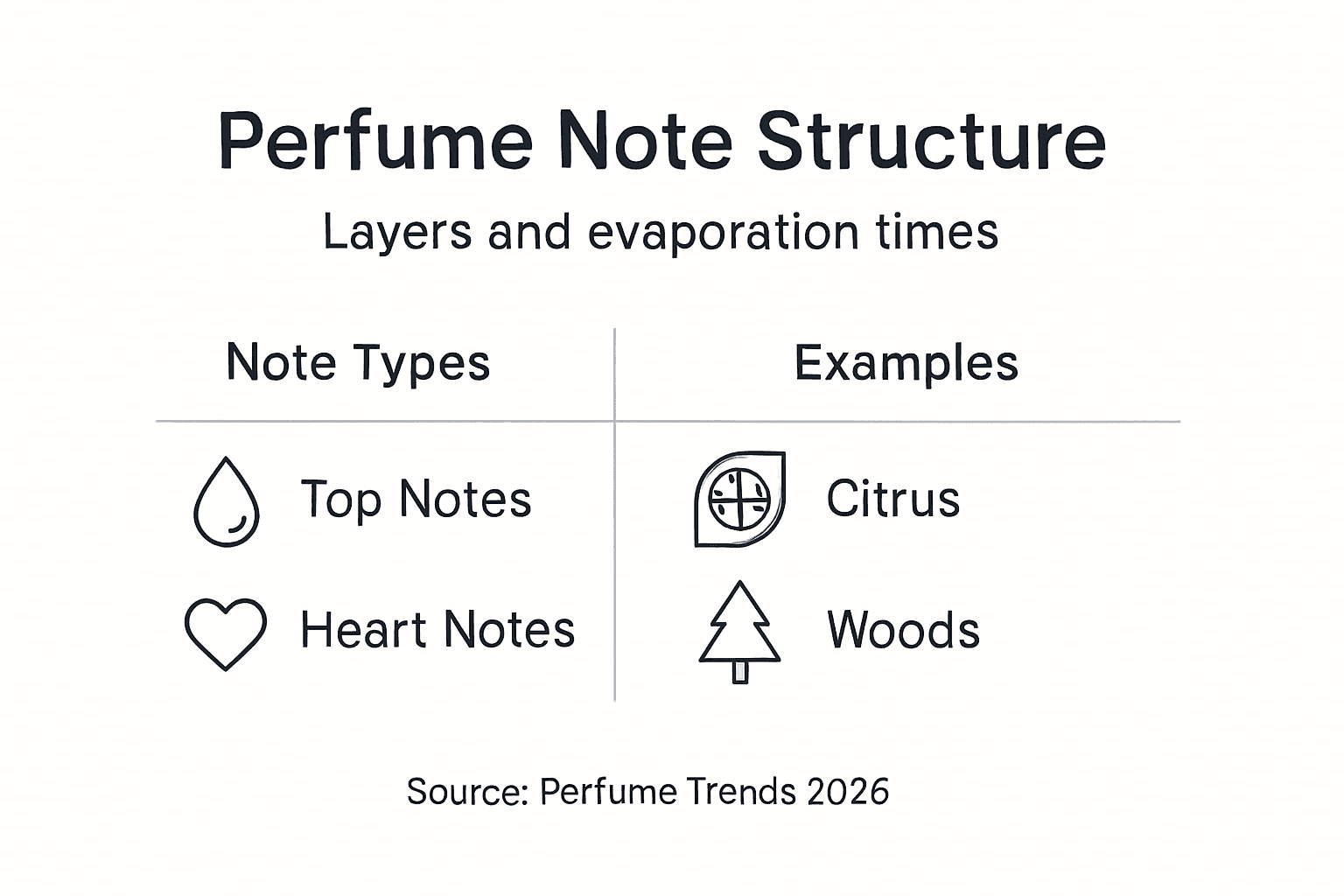
Perfume construction follows a pyramid structure with three distinct layers. Each layer serves a specific function in scent development and evaporates at different rates. Top notes evaporate first and create the first scent impression; base notes last longest and provide depth.
Top notes appear immediately upon application, lasting 15 to 30 minutes. Citrus, light florals, and fresh herbs dominate this category. Heart notes emerge after top notes fade, forming the perfume’s main character for 3 to 5 hours. Floral, spicy, and fruity accords typically occupy this middle layer. Base notes anchor the composition, lingering 5 to 8 hours or longer with woods, musks, and resins.
This temporal evolution creates complexity. A perfume smells different 5 minutes after application versus 5 hours later. Recognizing this helps you evaluate fragrances accurately during sampling.
Perfume Note Properties Comparison
| Note Type | Evaporation Time | Common Examples | Primary Function |
|---|---|---|---|
| Top | 15-30 minutes | Bergamot, lemon, lavender | Initial impression and freshness |
| Heart | 3-5 hours | Rose, jasmine, cinnamon | Main scent character |
| Base | 5-8+ hours | Sandalwood, vanilla, amber | Depth and longevity |
Pro Tip: Focus on heart notes when sampling. They reveal the perfume’s true personality after the initial burst fades but before base notes fully develop.
How Perfume Notes Influence Emotion and Memory
Your brain processes scent differently than other senses. Smell bypasses the thalamus to trigger the amygdala and hippocampus, linking fragrance deeply to emotion and memory. This direct pathway explains why certain scents instantly transport you to specific moments or feelings.
The amygdala handles emotional responses while the hippocampus manages memory formation. When you smell vanilla, your brain might recall childhood baking sessions before consciously identifying the note. This automatic response makes perfume selection deeply personal.

Choosing fragrances becomes more meaningful when you understand this connection. A scent that evokes positive memories or desired emotions performs better than one selected purely on trend or packaging. This principle guides luxury perfume houses in crafting emotionally resonant compositions.
Common Emotions Evoked by Note Families
- Citrus notes: Energy, freshness, optimism
- Floral accords: Romance, femininity, elegance
- Woody bases: Confidence, grounding, warmth
- Gourmand notes: Comfort, indulgence, nostalgia
- Green/aquatic: Clarity, calm, natural connection
“Scent memory links directly to emotional centers, making fragrance choices intensely personal and evocative beyond rational preference.”
2026 Trending Popular Perfume Notes
Fragrance trends shift annually, and 2026 introduces striking changes. Pistachio note surged 852% as a sophisticated nutty gourmand, offering creamy warmth without excessive sweetness. This note bridges comfort and elegance, appealing to consumers seeking approachable luxury.
Warm honey and caramel accords evolved beyond simple sweetness. Modern formulations balance these gourmand elements with woods or spices, creating complexity. The result feels skin-like and intimate rather than overly saccharine.
Mineral and aquatic notes emerge as significant trends. These accords provide clean, modern freshness distinct from traditional citrus openings. 2026 trends include skin-like, creamy gourmand, mineral and warm amber bases moving away from synthetic florals. The shift reflects consumer preference for natural, wearable scents over bold floral statements.
Creamy, skin-like fragrances dominate luxury launches. These perfumes smell like enhanced versions of clean skin, featuring musks, soft woods, and gentle florals. The effect feels personal and signature rather than generically perfumed.
Top 2026 Trending Notes
- Pistachio: Creamy, nutty, sophisticated gourmand without heavy sweetness
- Mineral accords: Clean, modern freshness resembling rain on stone
- Warm amber: Rich, enveloping base providing comfort and depth
- Honey: Evolved beyond sweetness with spice and wood complexity
- Cashmeran: Soft, woody musk creating skin-like warmth
- Sea salt: Crisp aquatic note adding airy lightness
Pro Tip: Sample these trending notes in various combinations. Pistachio paired with amber creates warmth, while pistachio with mineral notes feels fresher and more contemporary.
Common Misconceptions About Perfume Notes
Many consumers misunderstand how perfume notes function, leading to purchasing disappointment. Correcting these beliefs improves selection confidence and satisfaction.
The most common misconception claims top notes last longest because they smell strongest initially. Actually, top notes evaporate fastest, typically within 30 minutes. Base notes persist for hours despite their subtlety at application. This confusion causes people to buy perfumes based on initial spray without experiencing full development.
Intensity differs from longevity. A powerful opening doesn’t guarantee long wear. Some loud top notes fade quickly while quiet base notes linger all day. Evaluate both projection and staying power separately when sampling.
Layering doesn’t automatically cause scent clashes. Thoughtful combinations enhance rather than confuse fragrance profiles. Complementary note families blend smoothly, especially when sharing similar intensities or base elements.
Modern gourmands transcend simple sweetness. Contemporary formulations balance edible notes with woods, spices, or green elements. Dismissing all gourmands as overly sweet ignores sophisticated options like the trending pistachio accords.
Misconceptions Corrected
- Myth: Top notes last longest / Reality: Base notes provide longevity despite subtle initial presence
- Myth: Expensive perfumes always perform better / Reality: Performance depends on skin chemistry and note composition regardless of price
- Myth: Layering creates muddy scents / Reality: Strategic layering with complementary families enhances complexity
- Myth: Gourmands smell only like food / Reality: Modern gourmands blend edible notes with sophisticated woody or spicy elements
- Myth: One spray reveals true scent / Reality: Full development requires 4 to 6 hours on skin
Sampling and Layering Popular Perfume Notes Effectively
Smart sampling techniques reduce purchase risk and accelerate fragrance discovery. Layering perfume notes strategically extends fragrance longevity and personalization. Sampling perfume reduces purchase risk and supports discovery, endorsed by retailers with sample sets.
Test perfumes on skin rather than paper strips. Skin chemistry alters scent development significantly. What smells amazing on a card might clash with your natural oils. Apply samples to pulse points and wait at least 4 hours before judging.
Layer strategically by matching note families or intensities. Pair woody bases together or combine complementary gourmands like vanilla and pistachio. Avoid mixing competing dominant notes, such as heavy oud with bright citrus, unless intentionally creating contrast.
Step-by-Step Sampling and Layering Process
- Select 3 to 5 samples representing different note families or trending accords you want to explore.
- Apply one sample to each pulse point (wrists, inner elbows, neck) on different days for isolated testing.
- Track scent evolution at 30 minutes, 2 hours, and 6 hours to understand full development.
- Identify which notes resonate emotionally and physically with your skin chemistry.
- Experiment with layering two compatible samples on separate days before combining multiples.
- Start layering with lighter concentrations, building intensity gradually to avoid overpowering results.
Complementary Note Combinations for Layering
- Pistachio plus amber: Warm, enveloping gourmand with depth
- Mineral accords plus sea salt: Crisp, modern aquatic freshness
- Vanilla plus sandalwood: Creamy, grounded sweetness with sophistication
- Honey plus tobacco: Rich, spicy warmth without excessive sweetness
Pro Tip: Start with broad note families like florals, woods, or gourmands. Once you identify preferences, narrow to specific notes like rose versus jasmine or sandalwood versus cedar for refined selection.
Conclusion: Building a Personalized Luxury Perfume Wardrobe
Understanding perfume note categories transforms fragrance selection from guesswork to informed choice. Top, heart, and base notes create temporal evolution that reveals different facets over hours. Recognizing how scent triggers emotion through direct brain pathways helps you choose fragrances that resonate personally rather than following trends blindly.
Sampling eliminates costly purchasing mistakes. Testing on your skin reveals true compatibility and development patterns. Layering extends this exploration, allowing you to customize scents and increase longevity through strategic combinations.
A versatile perfume wardrobe includes options for different moods, seasons, and occasions. Rather than committing to full bottles immediately, sampling builds knowledge gradually. This approach reduces financial risk while expanding your scent vocabulary.
Befrsh.com’s sampling service provides access to luxury and niche fragrances in trial sizes. Explore trending notes like pistachio or mineral accords without full bottle investment. Testing multiple options simultaneously accelerates discovery and confidence.
Action Steps for Confident Perfume Discovery
- Sample at least 5 to 7 different note families to identify preferences
- Test each sample over full 6 hour development cycle on skin
- Track emotional responses and memories each scent triggers
- Experiment with layering two complementary samples before adding complexity
- Build a collection representing different moods rather than duplicating similar profiles
- Revisit samples across seasons as temperature affects scent perception
Discover Your Perfect Scent with Befrsh Sampling
Exploring popular perfume notes becomes effortless with Befrsh.com’s curated sample collections. Understanding what perfume samples offer helps you access luxury fragrances risk-free. Travel-sized options let you test trending notes like pistachio, mineral accords, and creamy gourmands on your skin over multiple days.
Sampling improves scent accuracy dramatically compared to in-store testing. You experience full development cycles in real environments rather than rushed counter decisions. Following proven sampling techniques ensures confident selections.
Befrsh.com offers samples from popular and niche brands across women’s, men’s, and unisex categories. Recognizing the importance of samples for scent accuracy transforms your fragrance journey. Visit Befrsh.com today to start building your personalized luxury perfume wardrobe through smart, risk-free exploration.
FAQ
What are top, heart, and base perfume notes?
Top notes create the initial impression, lasting 15 to 30 minutes with light citrus or herbal scents. Heart notes emerge next, forming the main fragrance character for 3 to 5 hours through florals or spices. Base notes provide depth and longevity, persisting 5 to 8 hours with woods, musks, and resins. Understanding how fragrance top notes function helps you evaluate scents accurately during sampling.
How can layering perfume notes improve scent longevity?
Layering combines complementary notes, creating richer compositions that last longer than single fragrances. Base notes from one perfume enhance and extend another’s projection. This technique allows personalized scent creation while reducing purchase risks through creative use of existing samples. Strategic layering approaches transform simple fragrances into complex, signature scents.
Why is sampling perfumes before buying important?
Sampling lets you experience full scent development on your skin over hours rather than minutes. Skin chemistry significantly alters fragrance notes, making in-store testing unreliable. Sampling reduces purchase risk and increases satisfaction by revealing true compatibility. Testing perfumes thoroughly before buying prevents costly disappointments and builds fragrance knowledge efficiently.
What makes pistachio note popular in 2026 perfumes?
Pistachio offers creamy, nutty warmth without excessive sweetness, bridging gourmand comfort with sophisticated elegance. The note pairs well with amber for depth or mineral accords for freshness. Its 852% popularity surge reflects consumer preference for approachable luxury that feels modern rather than traditionally sweet. Pistachio’s versatility across seasons and occasions drives its widespread adoption.
How long should I test a perfume sample before deciding?
Test samples over at least 6 hours to experience full note development from top through base. Apply on different days to account for variables like temperature, humidity, and skin condition. Three to five wears provide sufficient data about longevity, projection, and emotional resonance. Rushing evaluation leads to purchases that disappoint after initial excitement fades.