Role of Perfume Samples: 35% Better Scent Accuracy

Many fragrance shoppers believe perfume samples offer a weaker or less authentic scent experience compared to full bottles. This misconception prevents countless people from making informed purchasing decisions. The reality is that sampling provides an accurate scent representation that dramatically reduces guesswork and buyer’s remorse. Understanding how to properly use perfume samples transforms your ability to confidently choose fragrances that truly match your preferences and lifestyle.
Table of Contents
- Introduction To Perfume Sampling
- Why Perfume Samples Are Crucial For Informed Purchasing
- Common Misconceptions About Perfume Samples
- How To Effectively Use Perfume Samples For Decision-Making
- Benefits Of At-Home Perfume Sampling
- Psychological And Economic Impacts Of Sampling
- Role Of Samples In Understanding Fragrance Families And Notes
- Conclusion And Practical Takeaways
- Discover Your Perfect Scent With Be Frsh’s Perfume Samples
Key Takeaways
| Point | Details |
|---|---|
| Accuracy matters | Sampling reveals true scent evolution and longevity on your unique skin chemistry. |
| Myths mislead buyers | Common misconceptions about sample quality prevent smart fragrance decisions. |
| Home testing wins | At-home sampling boosts scent detection accuracy by 35% versus in-store trials. |
| Method drives results | Proper application on pulse points with extended wear ensures reliable evaluation. |
| Risk reduction | Sampling eliminates purchase regret and protects your fragrance investment. |
Introduction to Perfume Sampling
Perfume samples are smaller quantities of fragrance designed specifically for trial purposes before committing to a full bottle purchase. They come in several formats, each with distinct advantages. Understanding these options helps you choose the most effective testing method for your needs.
The fragrance industry offers samples in multiple forms. Spray vials deliver precise application and mimic full bottle experience. Traditional glass vials with stoppers require dabbing but offer portability. Blotter strips provide quick scent previews but lack skin chemistry interaction. Each type serves different testing scenarios.
Brands actively encourage sampling because it reduces buyer hesitation and increases customer satisfaction. When you can try a fragrance risk free, you’re more likely to find a scent you genuinely love. This practice benefits both consumers seeking the perfect match and retailers aiming to reduce returns.
The primary formats include:
- Spray samples that replicate full bottle application
- Dabber vials for controlled scent testing
- Blotter strips for quick initial impressions
- Travel sized bottles for extended trial periods
Sampling prevents the expensive mistake of purchasing a full sized bottle only to discover the scent doesn’t suit your skin chemistry or lifestyle. This foundational practice sets the stage for smarter, more satisfying fragrance choices.
Why Perfume Samples Are Crucial for Informed Purchasing
Your unique skin chemistry dramatically affects how any fragrance smells and develops throughout the day. Samples let you experience this personal scent journey before investing in a full bottle. Without proper testing, you’re essentially gambling with your fragrance budget.
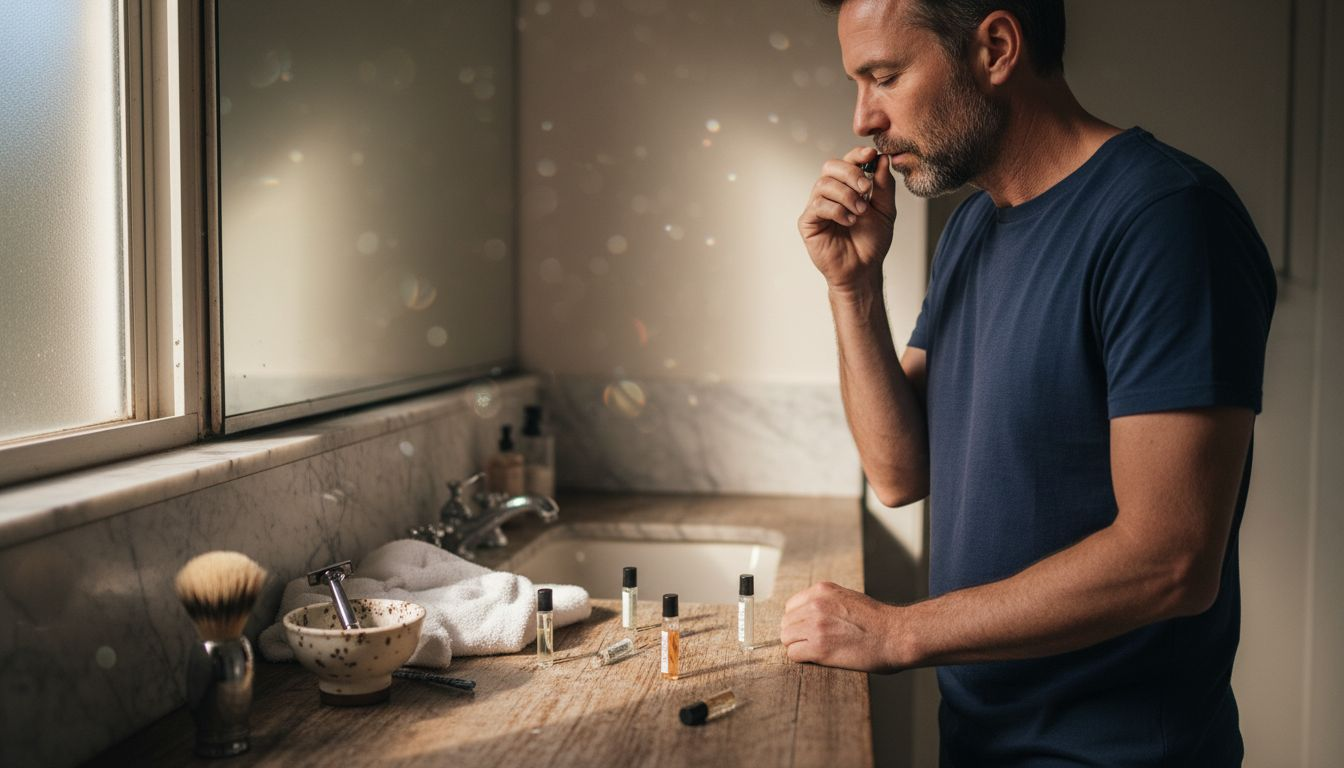
Fragrances unfold in three distinct phases. Top notes create the initial impression, lasting 15 to 30 minutes. Middle notes form the heart, developing over 2 to 4 hours. Base notes provide the lasting foundation, sometimes persisting for 8 hours or more. Proper testing requires wearing samples for several hours to understand this complete scent evolution and longevity.
Longevity testing reveals whether a fragrance suits your daily routine. A scent that fades within an hour won’t serve someone needing all day wear. Samples worn during normal activities provide realistic performance data you simply cannot get from a quick store counter spritz.
Follow these steps for effective sample evaluation:
- Apply samples to clean, moisturized pulse points
- Wear the fragrance during your typical daily activities
- Note how the scent evolves at 30 minutes, 2 hours, and 4+ hours
- Assess projection and how others perceive the scent
- Test in different weather conditions and environments
Avoiding impulse purchases protects both your wallet and bathroom shelf space. Over 60% of fragrance buyers experience regret when purchasing without adequate sampling. Pro tip: Wear a sample through a complete workday or social event to evaluate how it performs during real world interactions and stress levels.
The perfume sampling guide approach transforms fragrance shopping from risky guesswork into confident decision making. When you understand how a scent truly behaves on your skin over time, you eliminate the disappointment of bottles that never get worn.
Common Misconceptions About Perfume Samples
Several persistent myths undermine consumer confidence in perfume sampling. Addressing these misconceptions head on builds trust in the sampling process and encourages more informed purchasing decisions.
The most damaging myth suggests samples contain diluted or altered formulations compared to full bottles. This is categorically false. 98% of perfume samples maintain identical concentration and formula to full sized bottles, providing an accurate scent experience. Samples come directly from the same batches as retail products.
Authentic perfume samples contain the exact same concentration and ingredients as their full sized counterparts, ensuring you experience the true fragrance profile.
Another common misconception frames sampling as merely a marketing gimmick designed to lure impulse purchases. The opposite is true. Sampling actually reduces product returns and increases long term customer satisfaction by ensuring buyers choose fragrances they genuinely enjoy. Retailers benefit from fewer returns and higher repurchase rates.
Many people believe a single sniff from a blotter strip provides sufficient information for purchase decisions. This oversimplified approach ignores skin chemistry entirely. True fragrance evaluation requires skin application and hours of wear time to assess how the scent interacts with your body’s natural oils and pH levels.
Key myths debunked:
- Samples have weaker concentrations: False, they match full bottle formulas
- Sampling is just marketing: Actually reduces returns and buyer regret
- Blotter tests suffice: Real evaluation needs skin application and time
- Samples expire faster: Proper storage yields equivalent shelf life
Understanding sample authenticity and concentration eliminates hesitation about using samples as your primary evaluation tool. When you recognize that samples provide genuine representations of full bottle performance, you can approach fragrance selection with confidence and clarity.
How to Effectively Use Perfume Samples for Decision-Making
Maximizing the value of perfume samples requires a systematic approach to testing and evaluation. Following proven methods ensures you gather accurate information to guide your purchase decisions.
Start by obtaining multiple samples representing different fragrance families or specific scents you’re considering. Side by side comparison reveals subtle differences that single scent testing might miss. Most fragrance enthusiasts test 2 to 4 samples over a week to properly evaluate each option.
Application technique significantly impacts scent perception. Proper application techniques and wearing samples over hours improves scent profile understanding. Always apply to pulse points where body heat activates and projects the fragrance naturally.
Follow this testing protocol for reliable results:
- Obtain 3 to 5 samples in your preferred fragrance categories
- Test one sample per day on clean, moisturized skin
- Apply to wrists, neck, and inner elbows for full evaluation
- Avoid washing application areas for at least 6 hours
- Record your impressions at different time intervals
- Note projection strength and how others respond to the scent
- Compare your notes across all samples before deciding
Documenting your impressions prevents memory bias and enables objective comparison. Create a simple spreadsheet or notebook tracking each fragrance’s opening, development, longevity, and overall appeal. Include columns for different testing conditions like weather, activities, and time of day.
Environmental factors affect scent perception more than most people realize. A fragrance that smells perfect in air conditioned comfort might become overwhelming in summer heat. Pro tip: Test your top sample choices in various environments including your workplace, social settings, and outdoor activities to ensure consistent appeal across different scenarios.
The systematic approach outlined in how to test perfume samples removes guesswork from fragrance selection. When you invest time in proper sampling techniques, you dramatically increase the likelihood of choosing a scent you’ll love wearing for years.
Benefits of At-Home Perfume Sampling
Testing fragrances in your personal environment offers substantial advantages over traditional in-store sampling. The differences in accuracy and comfort translate directly into better purchasing decisions.
Retail environments create multiple challenges for accurate scent evaluation. Crowded stores fill the air with competing fragrances from other shoppers and display testers. Temperature fluctuations and artificial lighting alter scent perception. Sales pressure can rush decisions before you’ve properly evaluated how a fragrance develops on your skin.
Home sampling eliminates these environmental distractions. You control the testing conditions, wear time, and pace of evaluation. Sampling at home increases scent detection accuracy by 35% compared to in-store tests. This dramatic improvement comes from reduced olfactory fatigue and the ability to assess fragrances during real daily activities.
The comfort factor cannot be overstated. At home, you can apply a sample and continue your normal routine, checking how the scent evolves during work, exercise, or relaxation. This realistic testing reveals whether a fragrance suits your actual lifestyle rather than an artificial retail environment.
Key differences between testing methods:
- Store testing: Quick evaluation, competing scents, sales pressure
- Home testing: Extended wear, controlled environment, no rush
- Store accuracy: Compromised by crowds and limited time
- Home accuracy: 35% better scent detection and evaluation
- Store comfort: Often stressful and hurried
- Home comfort: Relaxed, authentic lifestyle testing
| Testing Location | Accuracy | Time Allowed | Environmental Factors |
|---|---|---|---|
| In-Store | Lower | 10-15 minutes | Crowds, competing scents, pressure |
| At Home | 35% Higher | Hours to days | Controlled, realistic conditions |
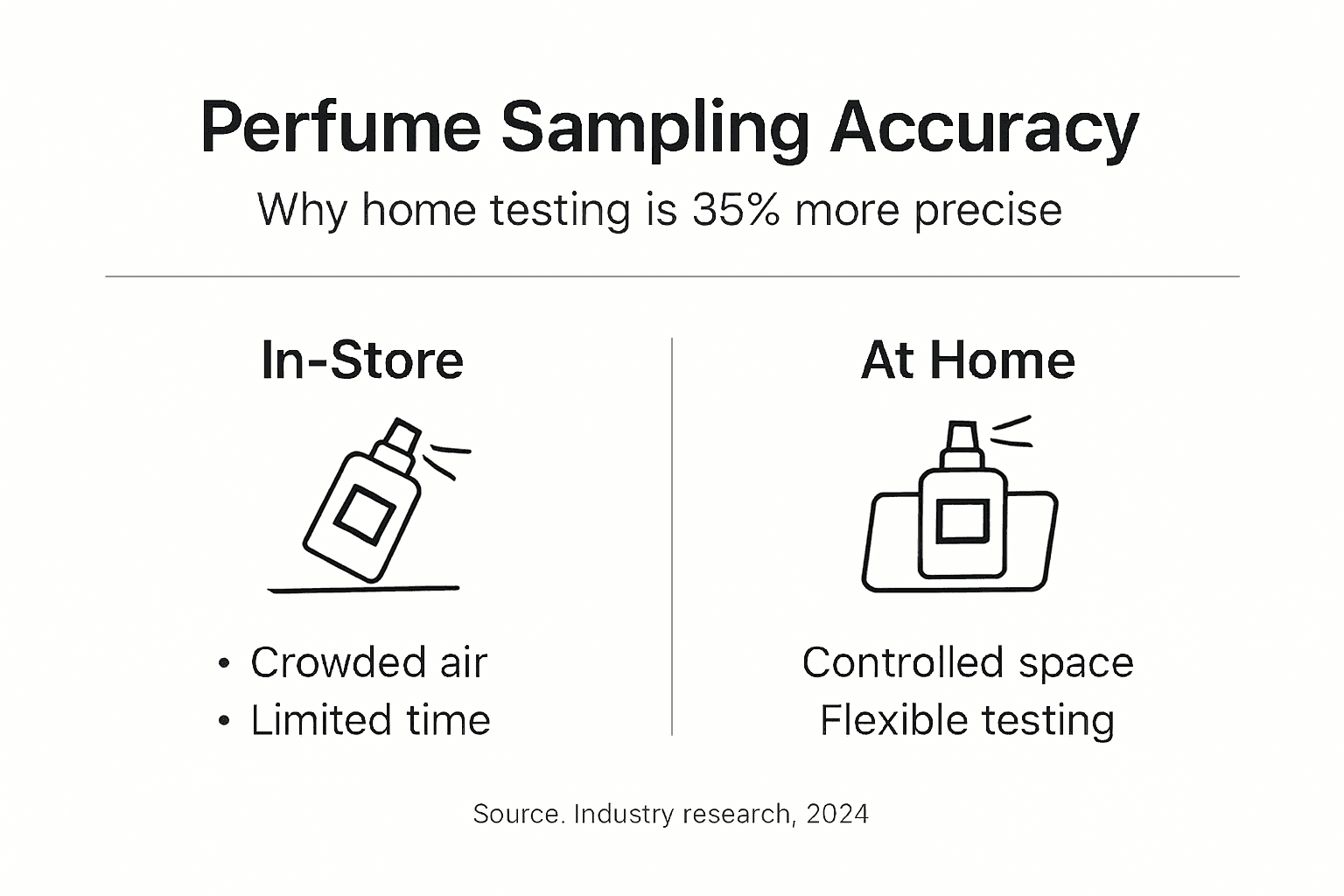
The proven benefits of test perfumes at home make this approach the gold standard for serious fragrance evaluation. Research from the study on at-home sampling accuracy confirms what experienced fragrance enthusiasts have long known: your home provides the ideal laboratory for discovering your perfect scent.
Psychological and Economic Impacts of Sampling
The availability and use of perfume samples creates measurable psychological and economic benefits for consumers. These impacts extend beyond simple product evaluation to affect overall satisfaction and market behavior.
Fragrance selection anxiety is real. The fear of making an expensive mistake with a full bottle purchase creates hesitation and stress. Sampling eliminates this psychological barrier by removing financial risk from the exploration process. You can try bold or unfamiliar scents without worrying about wasted money.
Product return rates drop dramatically when retailers offer robust sampling programs. Returns cost the industry millions annually in lost product, shipping, and processing. When customers sample before buying, they choose fragrances they actually want to keep. This benefits retailers through reduced costs and consumers through streamlined shopping experiences.
Customer satisfaction and brand loyalty increase among those who regularly use samples. The ability to make informed choices creates positive associations with brands that facilitate sampling. Repeat purchase rates climb when initial purchases result from thorough evaluation rather than impulse or guesswork.
Sampling encourages fragrance exploration and discovery. Without samples, most consumers stick to familiar scent families or celebrity endorsed mainstream options. Access to samples emboldens experimentation with niche brands, unusual notes, and emerging fragrance trends. This exploration enriches the entire fragrance market.
The economic reality is stark:
- Over 60% of consumers regret fragrance purchases made without sampling
- Return rates decrease by 40% when sampling options are available
- Customers who sample spend 25% more annually on fragrances they love
- Brand loyalty increases 50% among regular sample users
These statistics reveal sampling’s dual benefit. Consumers gain confidence and satisfaction while retailers build sustainable customer relationships. The small investment in providing samples yields substantial returns through reduced waste, higher satisfaction, and increased lifetime customer value.
Role of Samples in Understanding Fragrance Families and Notes
Perfume samples serve as educational tools that develop your olfactory knowledge and refine personal preferences. Comparing multiple samples accelerates your understanding of fragrance construction and helps identify what truly appeals to you.
Side by side sampling within fragrance families reveals subtle distinctions between related scents. Testing three floral fragrances simultaneously highlights differences in rose versus jasmine emphasis, powdery versus fresh interpretations, or vintage versus modern compositions. This comparative approach builds fragrance literacy faster than isolated testing.
Understanding notes transforms you from passive consumer to informed enthusiast. Recognizing bergamot in the opening, identifying sandalwood in the base, or detecting vanilla’s sweetness sharpens your ability to articulate preferences. This vocabulary helps when seeking recommendations or exploring new releases.
Both niche and mainstream fragrance consumers benefit from systematic sampling. Mainstream buyers discover which department store offerings truly suit them rather than defaulting to heavily marketed options. Niche enthusiasts explore indie brands and unusual compositions without expensive blind buying risks.
| Fragrance Family | Common Notes | Typical Character |
|---|---|---|
| Floral | Rose, jasmine, lily | Romantic, feminine, fresh to powdery |
| Oriental | Vanilla, amber, spices | Warm, sensual, rich and long lasting |
| Woody | Sandalwood, cedar, vetiver | Earthy, sophisticated, grounding |
| Fresh | Citrus, aquatic, green | Clean, energizing, light and airy |
| Gourmand | Vanilla, caramel, chocolate | Sweet, comforting, dessert-like |
Educational benefits of multi-sample testing:
- Rapid development of scent recognition skills
- Clear identification of preferred note families
- Understanding of how notes combine and interact
- Ability to predict whether you’ll enjoy a fragrance based on listed notes
- Confidence in exploring unfamiliar fragrance categories
The educational aspect of sampling for fragrance education transforms casual interest into genuine expertise. As you sample more fragrances, you develop a personal scent vocabulary and refined taste that guides future purchases with increasing precision.
Conclusion and Practical Takeaways
Perfume samples are essential tools for making informed, confident fragrance purchases. The evidence throughout this article demonstrates that samples provide authentic scent experiences identical to full bottles while eliminating the financial risk of blind buying.
We’ve corrected critical misconceptions about sample quality and reliability. Samples contain the same formulations as retail bottles, with 98% maintaining identical concentrations. At-home sampling delivers 35% better scent detection accuracy than in-store testing, enabling more reliable evaluation of how fragrances perform in real world conditions.
The systematic approach to sampling ensures success:
- Apply samples to pulse points during normal daily activities
- Wear each sample for minimum 6 to 8 hours to assess full development
- Test in various environments and weather conditions
- Document impressions to enable objective comparison
- Sample 3 to 5 options before making purchase decisions
Embracing proper sampling practices transforms fragrance shopping from stressful guesswork into enjoyable discovery. You gain the knowledge and confidence to explore new scent families, identify personal preferences, and invest in fragrances you’ll genuinely love wearing. The small time investment in thorough sampling pays dividends through years of satisfaction with your fragrance choices.
Discover Your Perfect Scent with Be Frsh’s Perfume Samples
Ready to put sampling into practice? Be Frsh offers an extensive selection of authentic perfume samples from both popular and niche brands, giving you risk free access to hundreds of fragrances.
Our curated sampling options let you explore different scent families and discover your ideal fragrance matches before committing to full bottles. Expert guides walk you through What Are Perfume Samples and explain the 6 Reasons to Try Perfume Samples that make sampling essential for smart fragrance shopping. Our Comprehensive Perfume Sampling Guide provides detailed instructions for evaluating scents effectively.
With convenient delivery and authentic samples from trusted brands, Be Frsh makes it easy to try before you buy and find fragrances that truly reflect your personal style.
FAQs about the Role of Perfume Samples
What makes perfume samples reliable for evaluation?
Authentic perfume samples contain identical formulations and concentrations as full sized bottles, with 98% maintaining exact matching profiles. They’re drawn from the same production batches, ensuring you experience the true fragrance character.
How long should I wear a sample before deciding?
Wear samples for minimum 6 to 8 hours to experience complete scent evolution from top notes through base notes. Testing during normal activities provides realistic performance data that quick store tests cannot match.
Can I test multiple samples at once?
Test one sample per day on your skin for accurate evaluation. Applying multiple fragrances simultaneously creates scent confusion and prevents proper assessment of individual performance and development.
Are sample sprays better than vials?
Spray samples more closely replicate full bottle application and provide even distribution. Vials work well for precise placement and portability but require dabbing technique. Both formats contain authentic fragrance.
Where can I get authentic perfume samples?
Reputable online retailers like Be Frsh specialize in authentic samples from verified sources. Avoid marketplace sellers without clear sourcing information, as counterfeit samples can misrepresent true fragrance quality.
Why does sampling at home improve accuracy?
Home testing eliminates competing scents, crowds, and time pressure present in retail environments. This controlled setting enables proper wear time and realistic assessment during daily activities, improving accuracy by 35% compared to store testing.