
How to discover niche scents: a complete sampling guide

Finding your signature niche scent shouldn’t feel like gambling with your wallet. Many fragrance enthusiasts waste hundreds on full bottles that smell amazing in stores but disappoint at home. The culprit? Skipping systematic sampling and testing. This guide walks you through proven methods to discover authentic niche perfumes through smart sampling, structured testing techniques, and trusted resources. You’ll learn how to gather quality samples, evaluate scents using expert methodologies, and avoid common pitfalls that lead to buyer’s remorse. By following these steps, you’ll confidently identify fragrances that truly match your chemistry and preferences.
Table of Contents
- Key takeaways
- Gathering your niche scent sampling tools and resources
- Mastering effective scent testing techniques
- Maximizing your niche scent discovery experience and avoiding common pitfalls
- Discover niche scent sets at Be Frsh
- What are the best ways to discover niche scents?
Key Takeaways
| Point | Details |
|---|---|
| Affordable sampling options | Discovery kits decants and subscription services let you test multiple niche scents before buying a full bottle. |
| Four Wear Method | Apply samples on clean moisturized skin and test across four sessions to assess top notes, heart notes, base notes, and overall development. |
| Trusted vendors | Buy from established vendors and official discovery sets to avoid counterfeit decants and diluted samples. |
| Favorites per kit | Most sampling sets yield about one to three favorites, with hit rates varying among fragrance enthusiasts. |
Gathering your niche scent sampling tools and resources
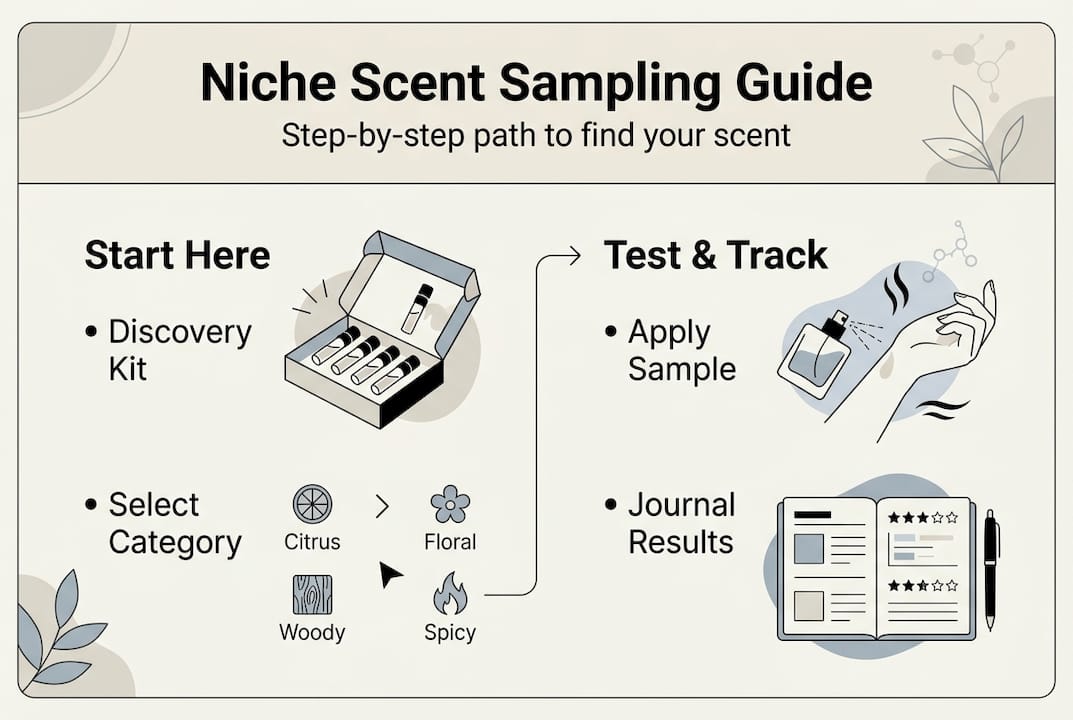
Before diving into niche perfume exploration, you need the right sampling options and preparation tools. The fragrance world offers three primary sample formats, each with distinct advantages. Discovery kits curated by brands typically contain 5-10 samples ranging from $25-75, offering themed collections around specific notes or styles. Decants are portions transferred from full bottles into smaller vials, usually 2-5ml for $5-15 each, available from specialized retailers. Subscription services deliver 1-2 niche samples monthly for $15-20, perfect for ongoing exploration without commitment.
Authenticity matters critically in niche sampling. Counterfeit decants and diluted samples plague budget sellers, wasting your money and skewing your perception of legitimate fragrances. Stick with established vendors like The Fragrance Sample Shop, Scent Split, Scents Angel, LuckyScent, and Scento for decants. For brand-direct options, Le Labo, Officina delle Essenze, and Experimental Perfume Club offer official discovery sets. Subscription services like Scentbird provide monthly niche trials with verified authenticity guarantees.
Your testing toolkit requires minimal but essential items. Clean, unscented skin forms your canvas, so avoid scented lotions or body washes on test days. Pulse points on wrists, inner elbows, and neck provide warmth that develops fragrances naturally. Keep sample vials organized with labels noting the scent name and test date. An unscented moisturizer applied before testing helps fragrances adhere better, especially on dry skin that can make scents fade prematurely.
Pro Tip: Start an olfactory journal using a simple notebook or phone app. Record initial impressions, note evolution over hours, and track which scents you return to mentally throughout the day. This data becomes invaluable when deciding which samples merit full bottle investments.
Comparing sample formats helps you choose the right approach for your budget and exploration style:
| Sample Type | Cost Range | Volume | Best For | Convenience |
|---|---|---|---|---|
| Discovery Kits | $25-75 | 1-2ml each | Themed exploration, brand discovery | High (curated selection) |
| Decants | $5-15 | 2-5ml | Specific scent testing, flexibility | Medium (requires vendor research) |
| Subscriptions | $15-20/month | 1-2ml | Ongoing discovery, surprise element | High (automated delivery) |
| Brand Samples | $0-10 | 0.5-1.5ml | Initial exposure, counter visits | Low (limited availability) |
Start with one discovery kit in a category that appeals to you, whether woody, floral, oriental, or fresh. This focused approach prevents overwhelming your senses while building your reference library of niche perfumes for scent discovery. As you identify preferred note families, expand into targeted decants of specific fragrances that intrigue you.
Mastering effective scent testing techniques
Systematic testing separates confident purchases from disappointing blind buys. The 4-Wear Method provides a rigorous framework used by professional reviewers and experienced enthusiasts. This approach tests each scent over four separate wearing sessions, evaluating performance across different conditions and times.
Follow these steps for each test session:
- Apply samples on clean, moisturized skin at pulse points (wrists, inner elbows, or neck) in the morning
- Note immediate top note impressions within the first 15 minutes, capturing initial brightness or intensity
- Evaluate heart notes after 1-2 hours when the fragrance settles into its core character
- Assess base notes after 4-6 hours, checking longevity and how the scent dries down
- Record sillage (scent trail) and projection (how far the scent radiates) throughout the day
- Test in varied environments like office, outdoors, and social settings to understand versatility
Limit yourself to 2-4 scents per testing session. Your nose fatigues quickly when bombarded with multiple fragrances, making accurate evaluation impossible after the third or fourth sample. Space out testing days by at least 24 hours to reset your olfactory sensitivity.
Skin chemistry dramatically affects how fragrances perform on you versus others. Oily skin amplifies base notes and extends longevity because oils bind fragrance molecules. Dry or acidic skin causes top notes to fade faster and reduces overall wear time. Your skin’s pH level, which averages around 4.7, interacts with fragrance compounds differently than the next person’s. Factors like diet, microbiome composition, and environmental conditions (heat and humidity accelerate evaporation) all influence scent development.
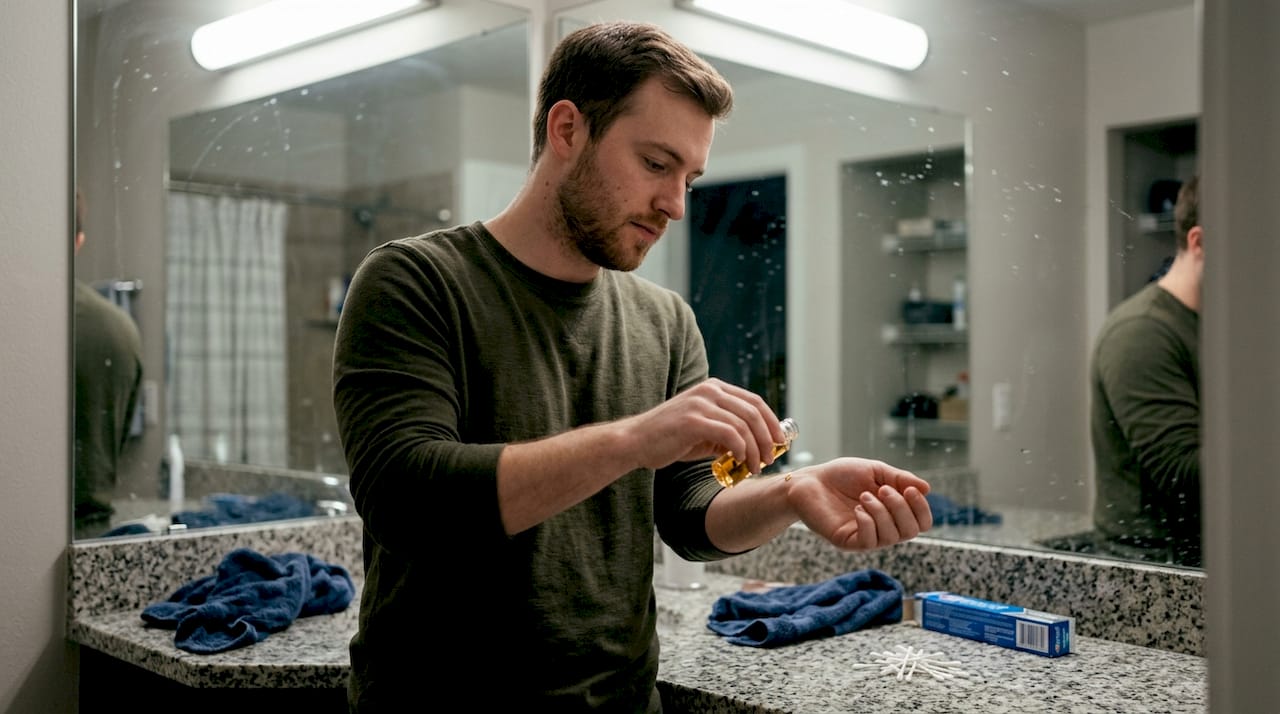
Compensate for your skin type by adjusting application. Dry skin benefits from applying unscented moisturizer first, creating a barrier that holds fragrance longer. Oily skin may need lighter application to prevent overwhelming projection. Acidic skin sometimes requires testing on clothing or hair in addition to skin to get accurate impressions.
Pro Tip: Wear your test scent during normal activities rather than sitting at home analyzing it. Fragrances reveal their true character through movement, temperature changes, and real-world conditions. Notice when you catch whiffs throughout the day and whether those moments please or annoy you.
Understanding note progression helps you evaluate whether a scent truly works for you. Top notes create first impressions but vanish within 15-30 minutes. Heart notes form the fragrance’s personality, lasting 2-4 hours. Base notes provide foundation and longevity, persisting 4-8+ hours. A scent might hook you with bright citrus tops but reveal an unpleasant synthetic heart, or bore you initially but develop into something captivating.
Track these elements in your testing journal for each wearing session. After four wears across different days and conditions, you’ll have comprehensive data showing whether a fragrance deserves full bottle status or should remain a pleasant sample experience. This methodical approach to testing perfumes correctly eliminates guesswork and builds confidence in your purchasing decisions. The time invested in proper testing perfumes before buying saves you from expensive mistakes and accelerates your journey to finding signature scents.
Maximizing your niche scent discovery experience and avoiding common pitfalls
Manage your expectations realistically from the start. Community data reveals that enthusiasts typically convert 10-50% of samples into full bottle purchases, with most discovery kits yielding 1-3 true favorites. This hit rate varies based on how well you understand your preferences and how adventurous your selections are. Testing outside your comfort zone lowers conversion rates but expands your olfactory education.
Compare the economics and success rates of different discovery approaches:
| Method | Average Cost per Test | Hit Rate | Risk Level | Learning Value |
|---|---|---|---|---|
| Blind Full Bottle Buy | $150-300 | 5-15% | Very High | Low (one data point) |
| Counter Spray Test | $0 | 10-20% | Medium (misleading environment) | Low (rushed evaluation) |
| Sample/Decant Testing | $5-15 | 30-50% | Low | High (proper evaluation) |
| Discovery Kit | $3-7 per sample | 25-40% | Low | Very High (comparative learning) |
The data clearly favors systematic sampling over blind buying. Even with a conservative 30% hit rate, spending $50 on a 10-sample discovery kit that yields 3 loves costs far less than one $200 blind buy that disappoints.
Avoid these common mistakes that sabotage discovery efforts:
- Testing too many scents in one session, causing olfactory fatigue and confusion
- Ignoring skin chemistry differences by assuming a scent will perform identically on you as described in reviews
- Buying from unreliable sellers offering suspiciously cheap decants that turn out diluted or counterfeit
- Making snap judgments based solely on top notes without allowing heart and base development
- Skipping the moisturizer step on dry skin, then blaming the fragrance for poor longevity
- Testing only in climate-controlled indoor environments instead of real-world conditions
Edge cases and nuances complicate the discovery process. Some complex fragrances need 2-3 wears before you appreciate their full character. Olfactory fatigue limits most people to 3-4 quality evaluations per session. Authenticity risks increase dramatically with discount decant sellers, making trusted sources worth the premium. Testing in varied conditions matters because a scent that works beautifully in cool weather might become cloying in summer heat.
“The biggest mistake in niche discovery is blind buying based on hype or reviews. What smells divine on someone else might turn acrid on your skin chemistry. Sampling eliminates this expensive gamble while teaching you which note families and compositions truly resonate with your unique biology.”
Rotate through your sample collection strategically to prevent waste and maintain fresh perspective. Test 2-3 samples from different fragrance families each week rather than bingeing through an entire discovery kit in days. This pacing lets each scent receive proper attention while building your comparative knowledge across categories.
Pro Tip: Wait at least one month between major sampling sessions if you’ve been testing heavily. Your nose needs time to reset and clear olfactory memory. This break prevents everything from smelling similar and helps you approach new samples with renewed sensitivity.
When you find a sample you love, resist the immediate full bottle purchase urge. Wear it 4-6 more times over 2-3 weeks in different seasons and situations. Ensure the love persists beyond novelty. Some scents that seem perfect initially lose appeal with familiarity, while others grow more compelling. This extended evaluation through testing perfume samples best results confirms genuine compatibility before significant investment.
Discover niche scent sets at Be Frsh
Now that you understand effective sampling methods, put this knowledge into practice with curated collections designed for serious exploration. Be Frsh offers niche scent sets that eliminate guesswork in vendor selection and authenticity concerns. Each set features genuine samples from respected niche houses, letting you test multiple fragrances affordably before committing to full bottles.
These discovery sets provide several advantages for enthusiasts:
- Authentic samples sourced directly from brands, ensuring accurate representation
- Affordable variety with multiple scents per set, maximizing your exploration budget
- Expert curation grouping complementary fragrances for comparative learning
- Convenient delivery bringing niche discovery directly to your door
Your sampling journey deserves reliable resources that respect your investment. Be Frsh maintains strict privacy compliance while delivering the quality samples you need to make confident fragrance decisions. Start with a curated set matching your preferred fragrance family, apply the testing techniques you’ve learned, and discover which niche scents deserve permanent places in your collection.
What are the best ways to discover niche scents?
How do I find authentic niche perfume samples?
Purchase from established vendors like LuckyScent, Scent Split, The Fragrance Sample Shop, or directly from niche brands offering discovery sets. Avoid suspiciously cheap decants from unknown sellers, as counterfeits and diluted samples are common. Subscription services like Scentbird provide verified monthly samples with authenticity guarantees.
Why does the same perfume smell different on me than on my friend?
Skin chemistry varies dramatically between individuals due to pH levels, oil content, microbiome composition, and diet. Oily skin amplifies base notes and longevity, while dry or acidic skin fades top notes faster. Environmental factors like humidity and temperature also affect scent development, making each person’s experience unique.
How many perfume samples should I test in one day?
Limit yourself to 2-4 samples per testing session to prevent olfactory fatigue. Your nose loses sensitivity after evaluating multiple fragrances, making accurate assessment impossible. Space testing days at least 24 hours apart, and take month-long breaks after heavy sampling periods to reset your olfactory system.
What’s a realistic success rate for samples becoming full bottle purchases?
Community data shows 10-50% of samples convert to full bottles, with most enthusiasts finding 1-3 favorites per discovery kit. Your hit rate depends on how well you understand your preferences and how adventurous your selections are. This range vastly outperforms blind buying, which succeeds only 5-15% of the time.
How can I tell if a decant seller is trustworthy?
Check community forums like Parfumo and Basenotes for vendor reviews and reputation history. Trustworthy sellers provide clear sourcing information, proper labeling, and reasonable prices that reflect authentic product costs. Extremely low prices compared to market rates signal potential counterfeits or diluted samples. Stick with established names that fragrance communities consistently recommend.