Designer vs niche perfumes: how to choose your scent

Most fragrance fans assume niche perfumes are simply better, and that the higher price tag is proof of superior quality. That belief is understandable, but it misses a bigger picture. The truth is that some of the most complex, long-lasting fragrances on the market come from designer houses, while some niche releases are genuinely challenging to wear in public. This guide breaks down the real differences between designer and niche perfumes, covering ingredients, pricing, performance, and wearability, so you can make purchases you’ll actually love rather than ones that just sound impressive.
Table of Contents
- What defines designer and niche perfumes?
- Ingredients, scent character, and performance
- Price, marketing, and value for money
- How to choose: Experience, wearability, and occasions
- Myths, exceptions, and expert insights
- Our perspective: Why real fragrance discovery defies simple labels
- Discover your next signature scent
- Frequently asked questions
Key Takeaways
| Point | Details |
|---|---|
| Brand origins matter | Designer perfumes focus on broad appeal while niche perfumes emphasize creativity and originality. |
| Ingredient quality varies | Niche scents often use rarer materials and higher concentrations but designers offer reliable consistency. |
| Price reflects more than ingredients | Designer perfumes typically spend more on marketing, while niche brands invest more in formula and materials. |
| Performance isn’t guaranteed | Both designer and niche perfumes can excel or disappoint, so always sample before you buy. |
What defines designer and niche perfumes?
Now that we’ve set the stage, let’s examine what truly sets these two perfume worlds apart.
Designer perfumes are produced by fashion houses like Chanel, Dior, and Gucci, aiming for mass appeal. That goal shapes everything: the scent profile, the packaging, the marketing, and the price point. These brands want their fragrance to work on a wide range of people, across different skin types, climates, and occasions. That’s not a flaw. It’s a deliberate design choice.
Niche perfumes are created by independent houses like Amouage, Xerjoff, and Creed, focusing on the perfumer’s artistic vision. The goal shifts from broad appeal to creative expression. Niche houses often explore unusual ingredients, unconventional structures, and scent stories that wouldn’t survive a mass-market focus group.
Some common misconceptions worth clearing up:
- Niche automatically means better quality
- Designer fragrances are just watered-down copies of niche ones
- Higher price always equals a more complex scent
- Niche perfumes are always harder to find
- Designer brands never invest in serious perfumery
“The real divide isn’t quality versus mediocrity. It’s mass appeal versus artistic vision. Both can produce extraordinary results, and both can disappoint.”
For a deeper look at each category, our guide to designer perfumes and guide to niche perfumes cover the history and philosophy behind each world in much more detail.
Ingredients, scent character, and performance
With definitions in mind, the next critical difference lies in the ingredients and scent characteristics.
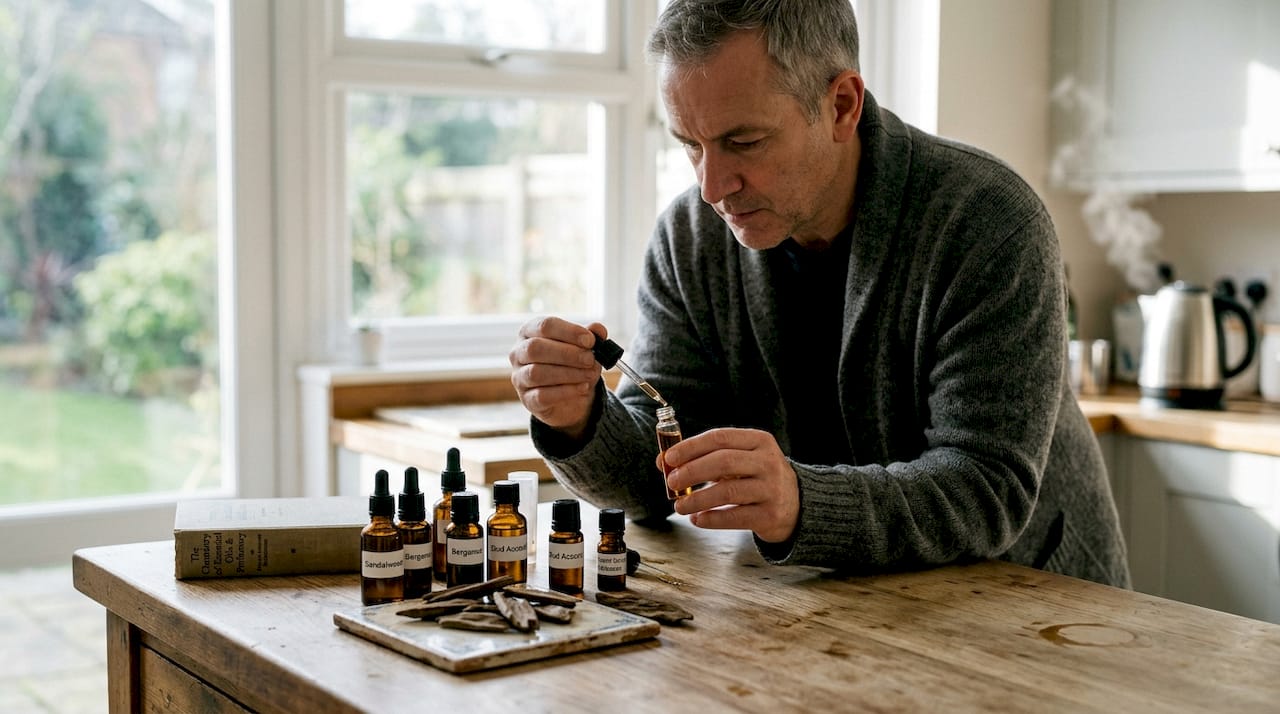
Niche often uses rarer natural materials like oud and ambergris, with higher oil concentrations ranging from 20 to 30 percent or more. Designer fragrances typically use synthetics and sit in the 10 to 20 percent oil range. That gap in concentration matters, but it doesn’t tell the whole story.
Here’s a side-by-side comparison to make it concrete:
| Feature | Designer | Niche |
|---|---|---|
| Oil concentration | 10 to 20% | 20 to 30%+ |
| Key materials | Synthetics, common naturals | Rare naturals, unusual accords |
| Scent character | Crowd-pleasing, familiar | Experimental, distinctive |
| Consistency | High, batch to batch | Can vary with natural materials |
| Longevity | Strong, synthetics help | Variable, often excellent |
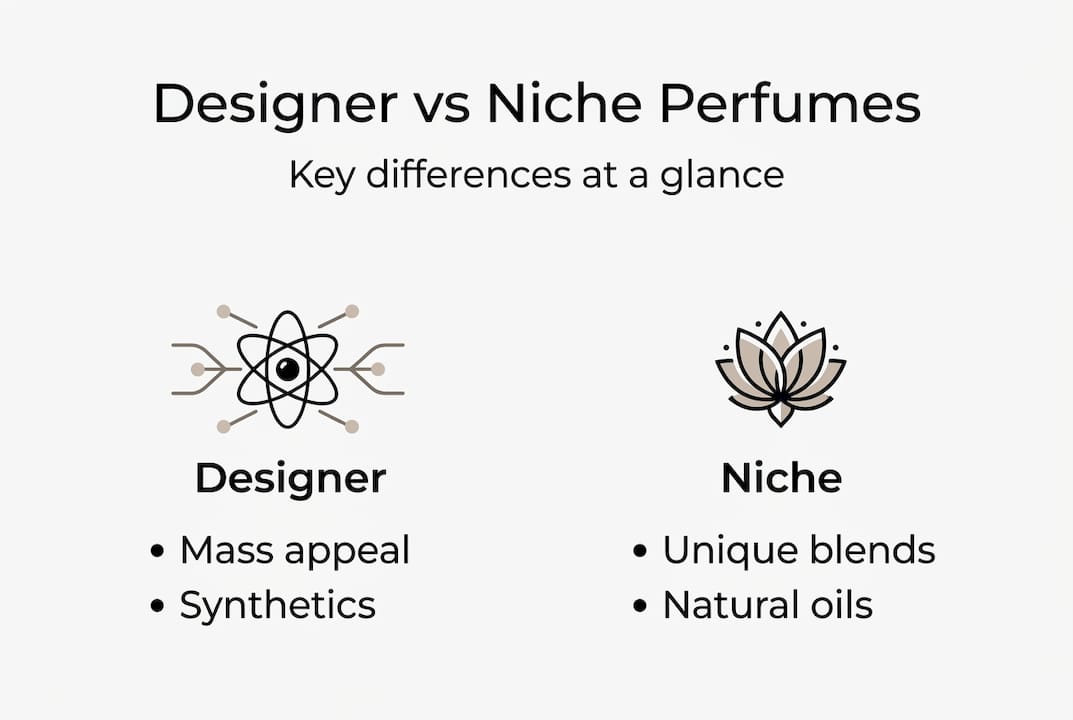
Synthetics get a bad reputation, but they’re genuinely useful. Many synthetic molecules project further, last longer on fabric, and stay consistent across every bottle produced. Natural ingredients, while beautiful, can shift between harvests and are sensitive to temperature and storage.
Niche fragrances often reward patience. A scent that smells sharp or strange in the first 20 minutes can open into something remarkable after an hour. Designer scents tend to be more linear, meaning what you smell at first is largely what you get throughout the day.
For more on how niche fragrance ingredients interact with skin chemistry, and how niche perfume composition differs structurally, those resources go much deeper.
Pro Tip: Always test a fragrance on your skin, not a paper strip, and check back after two to three hours. That’s when the base notes settle and you get the truest sense of how a scent performs on your body.
Price, marketing, and value for money
Understanding ingredients is only part of the equation; let’s talk about the dollars and cents and what they really get you.
Designer fragrances devote 40 to 60 percent of their price to marketing, while niche houses spend only 10 to 20 percent on promotion. That’s a dramatic difference. When you pay $120 for a designer bottle, a significant portion of that cost covers celebrity endorsements, glossy magazine spreads, and prime retail placement.
Here’s how the numbers break down:
| Category | Typical price per 100ml | Marketing share | Ingredient share |
|---|---|---|---|
| Designer | $50 to $200 | 40 to 60% | Lower |
| Niche | $150 to $500+ | 10 to 20% | Higher |
Niche brands invest more of their price into the formula itself. That’s why a $200 niche fragrance often contains materials you simply won’t find in a $200 designer scent. The money goes to the juice, not the billboard.
That said, value is personal. A $60 designer fragrance you wear every single day delivers more real-world value than a $400 niche bottle that sits on your shelf because it’s too unusual for most occasions.
A few buying tips to keep in mind:
- Don’t equate price with wearability
- Factor in how often you’ll actually reach for the bottle
- Consider the cost per wear, not just the sticker price
- Gifting? Designer is usually the safer, more crowd-pleasing choice
- Collecting? Niche offers more variety and conversation-starting potential
The smartest approach is to treat price as one data point among many, not the deciding factor.
How to choose: Experience, wearability, and occasions
With costs and ingredients clear, you’re ready to find your perfect match.
Your choice between designer and niche really comes down to three questions: What do you want the fragrance to do? Where will you wear it? And how much does standing out matter to you?
Niche can be polarizing and sometimes unwearable in certain social settings, while designer fragrances are often better suited for compliments and everyday use. That’s not a knock on niche. It’s just context. Wearing a challenging oud-heavy fragrance to a job interview is a different risk than wearing it on a solo evening walk.
Synthetics in designer scents can actually outperform naturals in consistency and longevity, which matters if you need a fragrance that performs reliably across long days.
Here’s a simple process for finding your match:
- Define your goal: daily wear, special occasions, personal enjoyment, or gifting
- Identify your comfort with risk: do you want something safe and familiar, or are you open to unusual?
- Sample at least three options from each category before deciding
- Wear each sample for a full day, not just a quick sniff
- Notice how people around you respond, and how you feel wearing it
For those curious about exploring niche fragrances for the first time, starting with approachable houses like Maison Margiela or Byredo is a lower-risk entry point than jumping straight to the most avant-garde options.
Pro Tip: Don’t write off designer fragrances because they feel mainstream. Some of the most technically impressive and long-lasting scents in any collection come from major houses. Performance and versatility are real advantages.
Myths, exceptions, and expert insights
Before you decide, let’s correct a few myths and add some final expert nuance.
Niche is not always superior; some designer fragrances outperform niche options in complexity and longevity, and quality should be judged per fragrance, not per category. That’s the most important thing to internalize before spending serious money.
Here are the myths worth dropping:
- Myth: Niche always smells more interesting. Reality: Some niche releases are intentionally abstract and genuinely unpleasant to most noses.
- Myth: Designer fragrances are simple. Reality: Fragrances like Chanel No. 5 or Dior Sauvage are technically sophisticated and built to last.
- Myth: Natural ingredients are always better than synthetics. Reality: Synthetic molecules like Iso E Super or Ambroxan are beloved by perfumers for their unique performance and projection.
- Myth: You need to spend a lot to smell great. Reality: Plenty of sub-$100 designer scents outperform bottles costing five times as much.
“The best fragrance is the one that makes you feel most like yourself. Whether it costs $50 or $500, the label on the box matters far less than the experience on your skin.”
Experts consistently say the same thing: smell everything, judge nothing by its price or origin, and trust your own nose above any review or recommendation. Your skin chemistry is unique, and a fragrance that’s legendary on someone else might fall flat on you.
Our perspective: Why real fragrance discovery defies simple labels
With the facts and myths unpacked, here’s our take on choosing between designer and niche perfumes.
The designer versus niche debate is genuinely useful for understanding the industry, but it becomes a trap when it starts replacing your own sensory experience. We’ve seen fragrance enthusiasts dismiss incredible designer releases because they felt “too mainstream,” and we’ve watched others overpay for niche bottles they never actually enjoyed wearing.
Real fragrance discovery is messier and more personal than any category label allows. It involves wearing something unexpected and being surprised. It means revisiting a scent you dismissed three years ago and suddenly loving it. It’s about layering, seasons, moods, and the strange alchemy between a formula and your skin on a particular day.
Our honest advice: sample widely, from both worlds, without a hierarchy in mind. Some of the most memorable scents we’ve encountered sit in the $70 designer range. Some of the most forgettable cost $400. The category tells you about production philosophy. It doesn’t tell you what will move you.
If you want to go deeper into learning about niche scents, start with curiosity, not expectation.
Discover your next signature scent
Ready to find your own perfume path? Here’s where to start.
At Be Frsh, we believe the best way to navigate both the designer and niche worlds is through sampling. Committing to a full bottle before you’ve lived with a scent for a few days is a gamble most people lose at least once.
Our fragrance discovery at Be Frsh gives you access to samples from both designer and niche houses, so you can test on your own skin, in your own life, before spending serious money. We carry women’s, men’s, and unisex options, with seasonal collections, gift sets, and travel-size bottles that make exploration genuinely easy. Start sampling, trust your nose, and let the right scent find you.
Frequently asked questions
Are niche perfumes always better than designer perfumes?
No. Some designer fragrances outperform niche scents in complexity and longevity, and quality is best judged fragrance by fragrance rather than by category.
Why are designer perfumes often less expensive than niche perfumes?
Designer brands spend 40 to 60 percent of their price on marketing and use less expensive ingredients, while niche houses direct more of their budget toward the formula itself.
Which lasts longer: designer or niche perfumes?
Niche fragrances often have higher oil concentrations of 20 to 30 percent, but synthetics in designer scents can match or exceed naturals in longevity and projection.
Is it worth trying niche perfumes if I only wear fragrances for daily use?
Niche fragrances can be polarizing in everyday settings, so designer options are often more practical for daily wear, though sampling a few approachable niche houses is always worthwhile.