

What Defines a Niche Fragrance? A 2026 Guide

This Be Frsh guide explains what truly defines a niche fragrance, how it differs from designer scents, and how to sample with confidence before you buy.
Think "niche fragrance" just means expensive or exclusive? The reality is more nuanced. Niche perfumes grew out of artisanal independence, creative freedom, and limited production, but today's crowded market has blurred that identity. This guide clarifies the defining traits, from storytelling and unusual ingredients to sustainability, helping you recognise authentic niche fragrances and make confident choices.
The origins and artistic essence of niche fragrances
Understanding niche perfumery starts with its roots. The movement took shape in the late 20th century, with a focus on craft and storytelling. Independent perfumers stepped away from mass-market constraints to pursue an artistic vision, prioritising scent complexity over broad appeal and creating fragrances that challenged conventional formulas.
These early niche houses operated differently from designer brands. Small production runs supported quality control and a sense of exclusivity. Selective distribution through specialised boutiques reinforced their artisanal identity. Founders often worked directly with perfumers to protect creative integrity.
Key founding principles included:
- Creative freedom for perfumers to experiment with unconventional note combinations
- Limited batch production that maintained quality and scarcity
- Direct relationships between founders and fragrance creators
- A focus on storytelling that connected scent to personal or cultural narratives
- A move away from focus-group testing and mass-market formulation
This foundation established niche as a counter-movement to commercial fragrance. The role of niche perfumes in modern scent discovery traces back to these origins, and understanding that heritage helps you recognise authentic niche brands today.
Pro tip: research a brand's founding story and its relationship with perfumers. Genuine niche houses tend to emphasise creative passion and artistic motivation over the latest market trends.
Core characteristics that define a niche fragrance today
Distinguishing niche from designer fragrances comes down to a handful of traits that shape everything from ingredient selection to distribution.
Artisanal craft drives unconventional scent profiles. Niche perfumers often use rare or unusual raw materials, creating compositions that challenge mainstream preferences. You will encounter bold accords and surprising note pairings that designer brands tend to avoid, producing distinctive olfactory signatures.
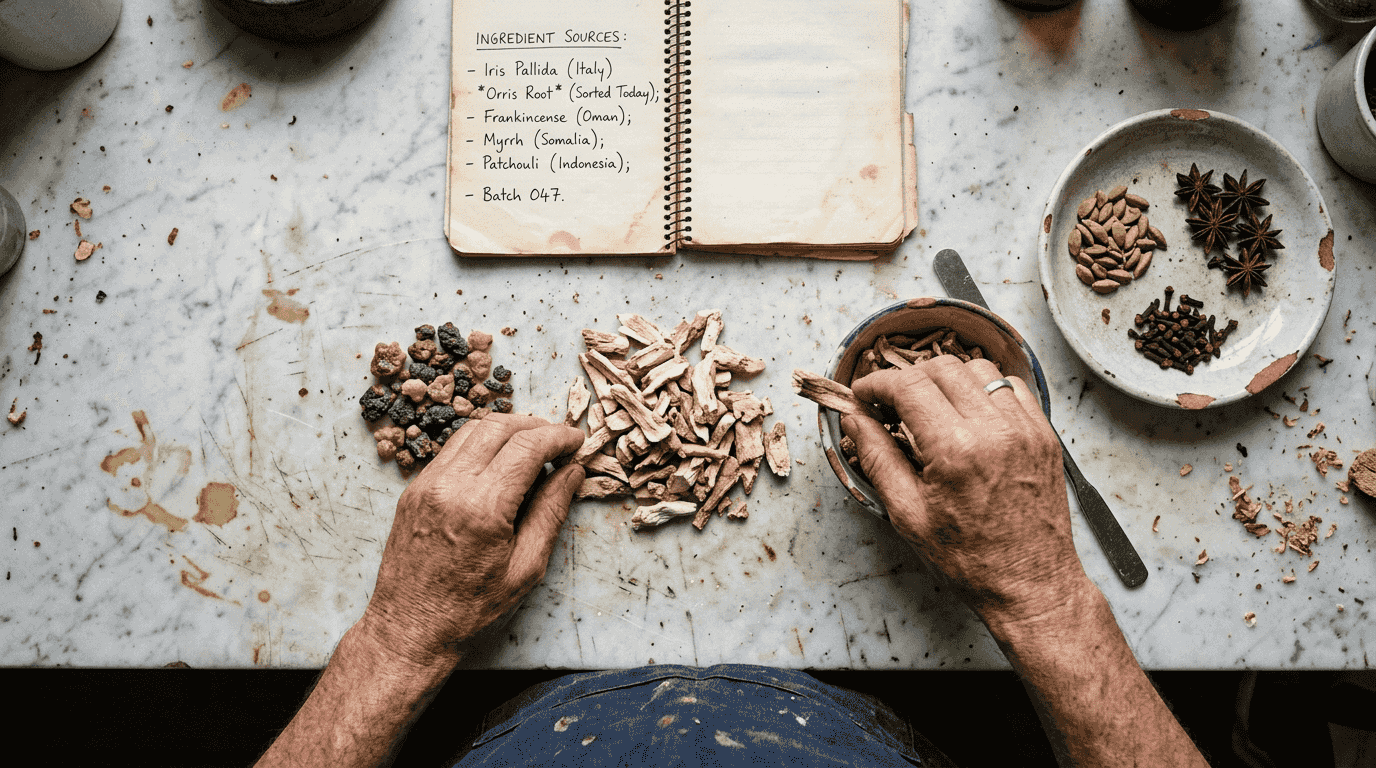
Limited production supports exclusivity but involves trade-offs. Small-batch manufacturing helps with quality control while creating scarcity, though it often means higher per-unit costs and more premium pricing. Distribution tends to stay selective, favouring specialised boutiques and direct-to-consumer channels over large department stores.
Key differentiators include:
- Ingredient sourcing that emphasises rare, high-quality, or sustainably harvested raw materials
- Perfumer autonomy to create without committee approval
- Transparent storytelling connecting scent to an artistic vision or cultural heritage
- Higher concentration levels, often extrait or pure parfum formulations
- Minimal or artistic packaging that reflects brand values over mass appeal
| Characteristic | Niche Fragrances | Designer Fragrances |
|---|---|---|
| Production Scale | Small, limited batches | Large, mass-market volumes |
| Creative Process | Perfumer-driven artistic freedom | Committee-approved commercial formulas |
| Distribution | Selective boutiques, direct sales | Wide retail and department stores |
| Ingredient Focus | Rare, unconventional, high-quality | Cost-effective, broadly appealing |
| Marketing Approach | Storytelling, heritage, craft | Broad brand campaigns |
| Price Point | Typically more premium | Typically more accessible |
Explore unique niche fragrance examples that show these traits in practice.
Pro tip: look for ingredient transparency and perfumer attribution. Authentic niche brands tend to discuss their raw materials openly and credit the people who create the scents.
The evolving niche market: challenges and changing definitions
The niche fragrance landscape has shifted considerably. "Niche" is now often used as a marketing term, drifting from its original meaning of independence and craft. As the market expanded, corporate acquisitions blurred the line between artisanal and commercial.
Oversaturation creates real challenges, from strain on boutiques to a degree of sameness across releases. When larger groups acquire independent houses, preserving artistic integrity can become harder: production scales up, distribution broadens, and creative autonomy can narrow.
As a result, "niche" sometimes functions more as positioning than description. Some brands lean on storytelling and premium pricing while operating at a scale that sits uneasily with the original artisanal idea. That makes it harder to tell genuine niche fragrances from marketed ones.
Things to keep in mind in today's market:
- Corporate ownership of formerly independent houses can change creative processes
- "Niche-inspired" brands sometimes mimic the aesthetic without the artisanal substance
- Pricing can reflect positioning rather than ingredient cost or genuine scarcity
- Distribution sometimes expands into mainstream channels despite exclusivity claims
- Marketing may emphasise lifestyle and image over perfumer craft and ingredient quality
| Original Niche Definition | Modern Market Usage |
|---|---|
| Independent ownership with creative control | Sometimes corporate-owned with artisanal branding |
| Limited production ensuring scarcity and quality | Variable scale, sometimes approaching designer volumes |
| Perfumer-driven artistic vision | Marketing-driven storytelling with perfumer collaboration |
| Selective boutique distribution | Expanding into department stores and mass online retail |
| Transparent craft focus | Lifestyle positioning and aspirational marketing |
Navigating this takes a critical eye. Understanding the wider role of niche perfumes in scent discovery helps you look past marketing and find authenticity.
Pro tip: look into ownership structures and production practices. Brands that genuinely value craft tend to be transparent about their business model and creative process.
How to choose and appreciate niche fragrances
Selecting authentic niche fragrances rewards an informed approach, especially when the market is crowded. Look beyond marketing claims and lean on research and sampling.
Understanding a brand's history, its perfumer relationships, and its ingredient sourcing reveals genuine artisanal commitment. Testing samples before buying full bottles reduces the risk of regret and helps you find scents that actually match your taste.
Prioritise brands that show authentic niche characteristics: limited releases, transparent storytelling, and direct perfumer involvement. Sustainability and ethical sourcing increasingly help distinguish genuine artisanal houses from purely marketing-driven labels.
A practical way to assess a niche fragrance before buying:
- Research the brand's history and ownership to understand its independence or corporate relationships.
- Identify the perfumer and look at their wider work and reputation.
- Examine the ingredients for rare, high-quality, or sustainably sourced materials.
- Read founder interviews or brand narratives to understand the artistic motivation.
- Sample the fragrance on your skin across several hours to assess development and longevity.
- Weigh the price against ingredient quality and production scale rather than marketing alone.
- Check whether distribution matches the brand's claimed exclusivity.
- Read reviews from experienced collectors for an extra perspective.
Balancing rarity with personal enjoyment prevents collection mistakes. A fragrance's exclusivity means little if you do not enjoy wearing it. Focus on scents that resonate with your taste while meeting your authenticity criteria.
Ultimately, niche perfumery is about personal expression. Your collection should reflect your own preferences and values, whether that means supporting sustainable practices, seeking unusual note combinations, or connecting with a brand's story.
Pro tip: explore fragrance communities and events. Conversations with founders, perfumers, and seasoned collectors offer insights no marketing material can.
Discover niche fragrances at Be Frsh
Putting this knowledge into practice is easier with thoughtful curation. Be Frsh focuses on carefully selected niche fragrances, so you can explore authentic scents without navigating the whole market alone.
Explore exclusive fragrances like Parfums de Marly Castley and Creed Millésime Impérial, both examples of refined craftsmanship.
Be Frsh offers several advantages for curious collectors:
- Careful curation of niche fragrances
- Sample sizes that let you test before committing to a full bottle
- Clear product information, including scent details
- Convenient online access with reliable shipping
Visit the Be Frsh fragrance collection to discover scents that reflect true niche values, and let your informed perspective guide your next choice.
Frequently asked questions
What is the main difference between niche and designer fragrances?
Niche fragrances emphasise artisanal craft, creative freedom, and limited production, while designer fragrances prioritise broad appeal and wide distribution. Niche perfumers usually have more autonomy to create unconventional profiles with rare ingredients, whereas designer brands tend to follow committee-approved formulas designed for wide acceptance.
Why do niche fragrances have unique scent profiles?
Niche perfumers often work without the commercial constraints or focus-group testing that shape mass-market scents. That freedom allows experimentation with unusual note combinations and rare materials, resulting in distinctive signatures that challenge convention rather than conform to it.
How does exclusivity affect niche fragrance pricing and availability?
Limited production and selective distribution tend to raise both prices and scarcity. Small-batch manufacturing maintains quality but increases per-unit costs, and distribution through specialised boutiques rather than mass retail limits where you can buy. This generally contributes to more premium pricing.
Are niche fragrances always better quality than designer perfumes?
Not necessarily. While niche fragrances often use rarer or higher-quality ingredients, quality varies across both categories, and some designer fragrances feature excellent craftsmanship. The niche label reflects production approach and creative process more than guaranteed superiority, so it is best to judge each fragrance on its own merits.
Why is storytelling important in niche perfumes?
Storytelling connects a fragrance to an artistic vision, cultural heritage, or personal narrative, which helps distinguish authentic niche brands. In a crowded market, though, storytelling can also be pure marketing, so it is worth checking that a compelling narrative aligns with genuine practices like transparent sourcing and perfumer attribution.
How can I identify truly authentic niche fragrances?
Research brand ownership, perfumer involvement, and ingredient transparency. Authentic niche houses tend to maintain independence, or openly acknowledge corporate relationships while preserving creative autonomy. Look for limited editions, clear perfumer attribution, sustainable sourcing, and selective distribution, and lean on reviews from experienced collectors.
Recommended reading
Avoimuus: tämä artikkeli on laadittu tekoälyavusteisesti, ja sisältö on tarkistettu ennen julkaisua. Kuvituskuvat voivat olla tekoälyllä luotuja.