

What Is Eau de Parfum? Concentration, Longevity & Tips

Testing perfume on your own skin is the most reliable way to understand how it really feels. This guide shows you how to compare samples calmly and avoid rushed choices.
Finding a signature scent can feel like searching for a perfect match: exciting, but full of choices. Eau de parfum offers a useful balance of strength, longevity, and value. With a 15–20% fragrance concentration suspended in alcohol and water, it provides real staying power without being overpowering. This guide clears up common myths and shows you how to sample with confidence before you invest.
Defining eau de parfum and common myths
Eau de parfum is a fragrance classification defined by its concentration level. It contains 15–20% fragrance components suspended in a solvent base, which puts it in a sweet spot between lighter colognes and heavier pure perfumes.
Here is what actually goes into an eau de parfum:
- 15–20% fragrance concentration (the aromatic compounds)
- A solvent base, mostly alcohol with a little water
- The alcohol evaporates quickly, leaving scent molecules on your skin
- Your body chemistry then interacts with those molecules, creating a scent trail that is uniquely yours
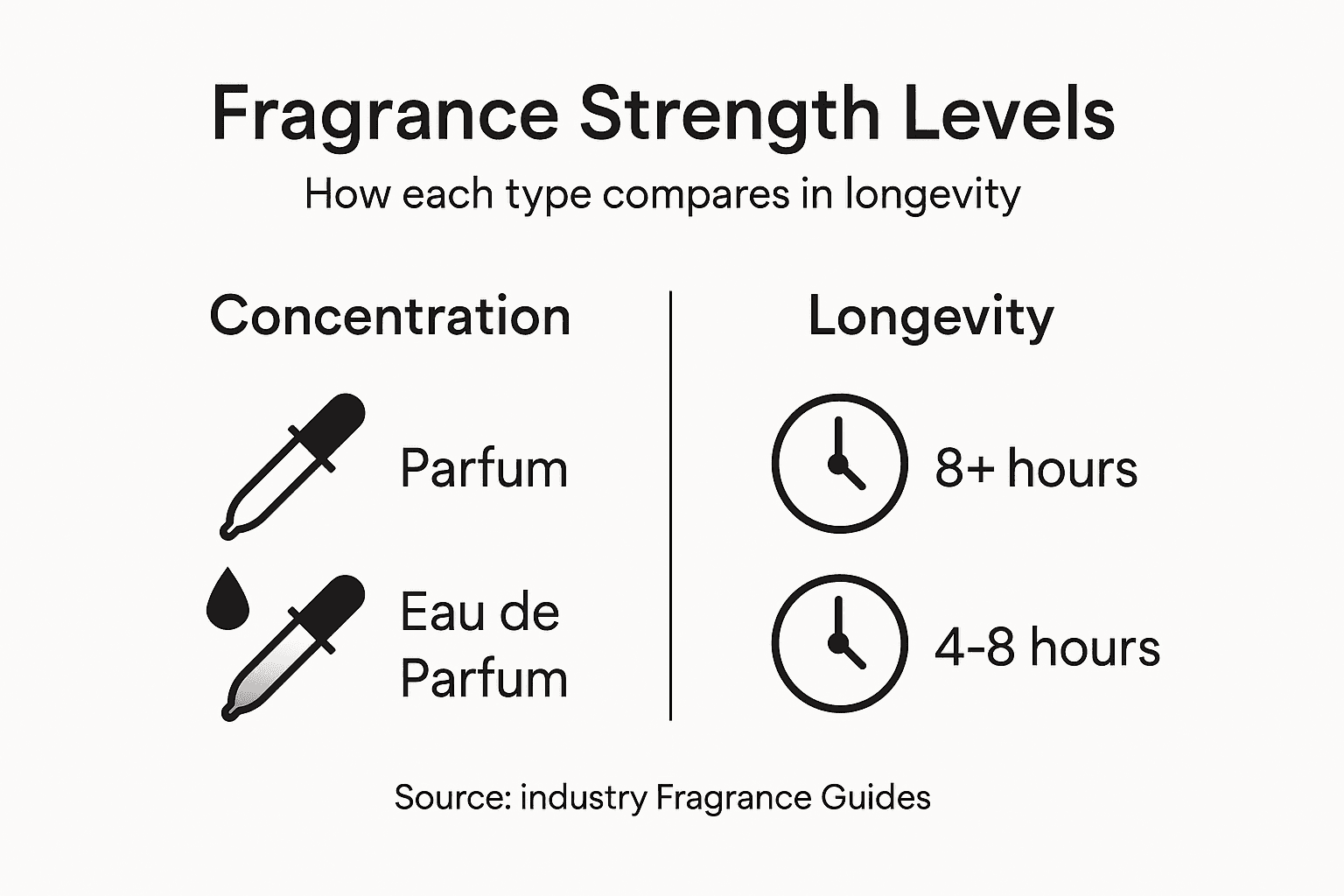
Why this matters: at 15–20% concentration, eau de parfum typically lasts several hours on skin. It is stronger than cologne, often more affordable than pure parfum, and versatile enough for daily wear.
Common myths, debunked
Myth: all perfumes are basically the same. Not true. The concentration of fragrance components directly affects longevity, projection, and price. Eau de parfum sits at a level that suits a lot of people for everyday use.
Myth: higher concentration always means better quality. Not quite. Pure parfum (20%+ concentration) can feel intense and heavy on skin. Eau de parfum often hits the balance most people actually want.
Myth: eau de parfum is too expensive to sample. This is exactly why sampling matters. Rather than committing to a full bottle, testing first lets you make a confident choice. Services offering fragrance sample testing let you explore options before you buy.
Myth: designer fragrances are always better than niche brands. Not so. Both categories have excellent options. What matters is finding the scent that works with your skin chemistry.
Pro tip: test eau de parfum on your inner wrist or behind your ears, where the skin is thinner and warmth helps diffusion. Wait around 15 minutes before deciding, since the true scent emerges only after the initial alcohol evaporates.
Fragrance concentration levels compared
Fragrance is not one-size-fits-all. The concentration level shapes how long it lasts, how strongly it projects, and roughly what you will pay. Understanding these tiers helps you pick the right type for your lifestyle.
| Fragrance Type | Concentration (%) | Typical Longevity |
|---|---|---|
| Parfum (Extrait) | 20–30 | Longest-lasting |
| Eau de Parfum | 15–20 | Several hours |
| Eau de Toilette | 5–15 | A few hours |
| Eau de Cologne | 2–5 | Short, fades quickly |
- Parfum (Extrait): 20–30% fragrance concentration, the strongest and most concentrated option
- Eau de Parfum: 15–20% fragrance concentration, the practical sweet spot for most people
- Eau de Toilette: 5–15% fragrance concentration, lighter and often more affordable
- Eau de Cologne: 2–5% fragrance concentration, very light and fades quickly
Why concentration matters
The concentration of fragrance compounds directly affects longevity, projection, and price. Higher concentration generally means the scent lasts longer and projects further, but it also costs more per bottle.
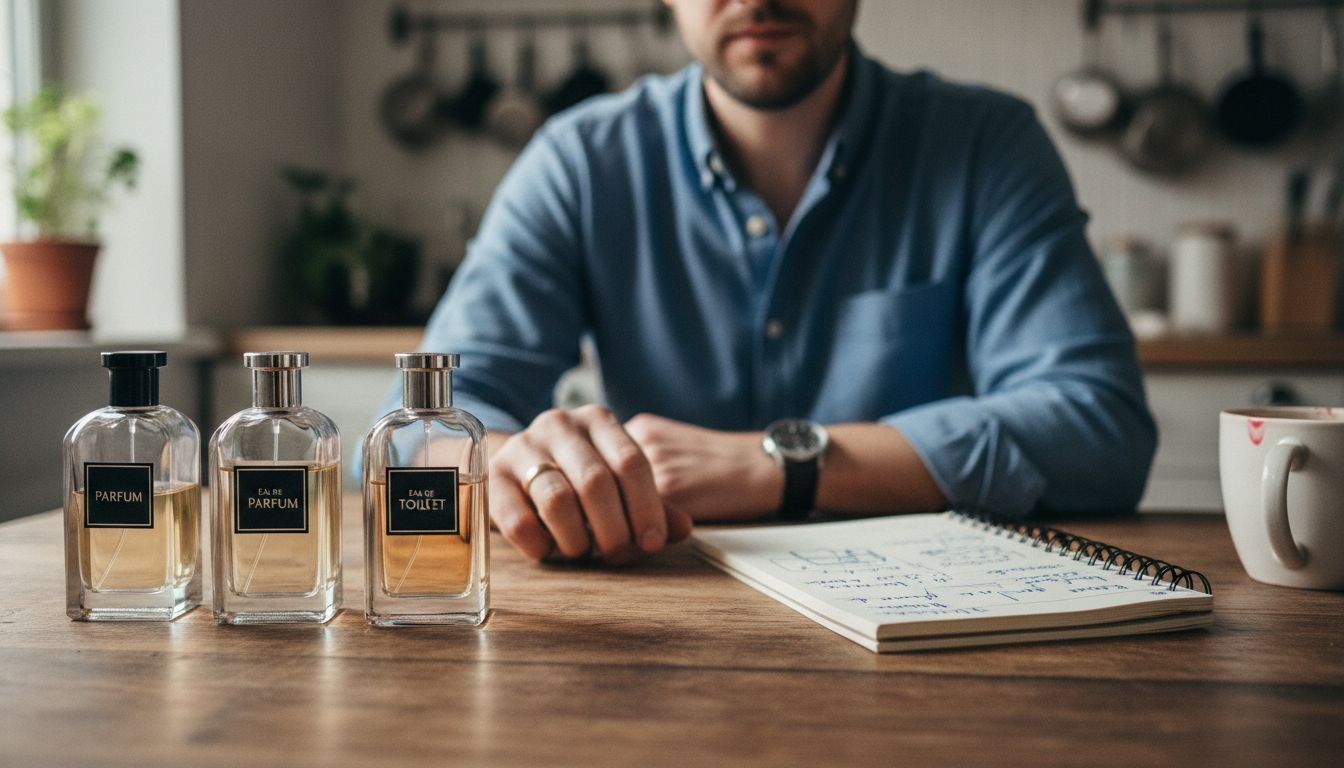
Parfum is the luxury tier: potent and long-lasting, but a single bottle is a significant investment. For most people, eau de parfum hits the practical balance, with solid longevity and projection at a more accessible price. Eau de toilette is lighter and works well in warm weather or when you prefer a subtler scent. Eau de cologne is lighter still and best for a quick, fresh lift.
Making the right choice for you
Your climate matters. Warmer weather suits lighter concentrations, while colder seasons carry heavier scents well. Your budget matters too.
Need longevity? Eau de parfum is a reliable choice. Want to test several scents first? Start with fragrance samples in eau de parfum strength so you experience real performance without the full-bottle commitment.
Pro tip: if you prefer eau de toilette but want it to last longer, apply to pulse points and layer over an unscented moisturiser, which helps the scent hold a little longer.
Longevity, strength, and the scent experience
Eau de parfum delivers real performance. You spray it once in the morning and it stays with you through the day. But longevity is not only about duration; it is also about how the scent evolves.
Scent strength depends on three things: concentration, formulation, and your body chemistry. Fixatives such as resins and musks are added to many fragrances to extend longevity and shape how the scent diffuses.
Here is what you experience over time:
- First 15 minutes (top notes): brightest and most volatile, fading quickly
- 30 minutes to a few hours (heart notes): the core scent emerges, the main event
- Later hours (base notes): deeper and warmer, lasting longest thanks to fixatives
Because the 15–20% concentration maintains heart and base notes effectively, eau de parfum gives you more than just the fleeting top notes you get from a lighter cologne.
The body chemistry factor
Here is something often overlooked: the same fragrance smells different on every person. Your natural skin scent blends with the fragrance to create something entirely your own.
Skin type, natural oils, and other personal factors all influence how a fragrance performs. One person's "lasts all day" can be another's "fades by noon."
This is exactly why sampling matters. Testing fragrances before committing shows you real performance on your own skin. What works beautifully on a friend might behave differently on you.
Getting the most from your eau de parfum
Want eau de parfum to perform at its best? Apply strategically. Pulse points such as wrists, neck, and behind the ears generate warmth that helps diffusion.
Slightly damp skin holds fragrance a little longer, so applying right after a shower can help. Layering over an unscented moisturiser first gives the scent a base to cling to. And do not rub your wrists together, since that breaks down the fragrance and can shorten its life. Just spray and let it settle.
Pro tip: apply eau de parfum to your chest and behind your ears as well as your wrists. Chest warmth helps project the scent gently through the day.
Choosing eau de parfum for your needs
Choosing the right eau de parfum is not about finding the "best" one; it is about finding what works for you. Your lifestyle, climate, budget, and preferences all matter.
Start by asking yourself a few questions:
- Do you want something for daily wear or special occasions?
- Do you prefer subtle or bold scents?
- How sensitive is your skin to fragrance?
- What is your realistic budget?
- Are you drawn to specific scent families (floral, woody, fresh, oriental)?
Climate shapes the choice too. Colder weather suits richer, warmer fragrances, while summer calls for fresher, lighter options. Eau de parfum works year-round because its 15–20% concentration adapts well to changing temperatures.
Safety and quality
If you have sensitive skin or known allergies, check product labelling for ingredient information. Some people react to specific fragrance components, so testing a sample first is a sensible way to avoid an uncomfortable surprise with a full bottle. Reputable brands follow established industry guidelines for fragrance ingredients.
Finding your match through sampling
Do not commit to a full bottle without testing. Sampling lets you experience how fragrances perform on your own skin over several days.
Test a few scents, wearing one sample per day. Notice how it smells at different times, how long it lasts, and whether you still enjoy it hours later. Your preferences might surprise you: a scent you expected to love can feel off, while an unexpected option becomes a favourite. That is normal, because fragrance is deeply personal.
Pro tip: start with two or three eau de parfum samples in different scent families rather than one full bottle. This gives you versatility and helps you discover your true preferences before investing in a larger size.
Discover your eau de parfum with confidence
Choosing the right eau de parfum can feel overwhelming because every scent interacts uniquely with your body chemistry and lifestyle. You want a fragrance that lasts, fits your personal style, and suits your budget.
Be Frsh makes that easier. We offer a wide selection of eau de parfum samples from both popular and niche brands, so you can explore how each scent performs on your own skin before investing in a full bottle. Sampling takes the guesswork out of fragrance shopping and keeps discovery enjoyable.
Start experiencing real fragrance performance by trying eau de parfum samples from Be Frsh. With easy ordering and fast delivery, you can find your signature scent without the commitment of a full bottle.
Frequently asked questions
What is an eau de parfum?
Eau de parfum is a type of fragrance containing 15–20% aromatic compounds suspended in a solvent base, making it stronger than cologne and often more affordable than pure parfum. It typically lasts several hours on skin.
How does concentration affect fragrance performance?
Concentration affects longevity, projection, and cost. Higher concentrations like parfum last longer but cost more. Eau de parfum strikes a practical balance, offering strong performance at a moderate price.
Why should I sample an eau de parfum before buying?
Sampling lets you test how a fragrance interacts with your body chemistry and whether you still enjoy it over time, reducing the risk of investing in a full bottle you do not end up wearing.
What are the benefits of eau de parfum over other types?
Eau de parfum offers a good balance of longevity, a rich scent profile thanks to its concentration, and versatility for both daily wear and special occasions, which is why it is such a popular choice.
Recommended reading
Avoimuus: tämä artikkeli on laadittu tekoälyavusteisesti, ja sisältö on tarkistettu ennen julkaisua. Kuvituskuvat voivat olla tekoälyllä luotuja.