

Perfume Longevity Explained: How Scent Lasts

Many people assume a perfume's longevity comes down to its price, but skin and chemistry tell a more nuanced story. A pricey bottle can fade within hours while a more affordable one lingers, simply because of how each is built. Understanding what makes a scent last helps you choose fragrances that match your lifestyle, test samples wisely and get more from every spray. This guide covers the molecular factors, real-world variables and practical strategies behind how long a scent stays with you.
What perfume longevity really means
Perfume longevity is how long a scent stays detectable on your skin after application. It is not purely a matter of duration, though – your own perception plays a large role. Nose-blindness, where you stop noticing a fragrance you are wearing, can trick you into thinking a scent has vanished when others still smell it clearly.
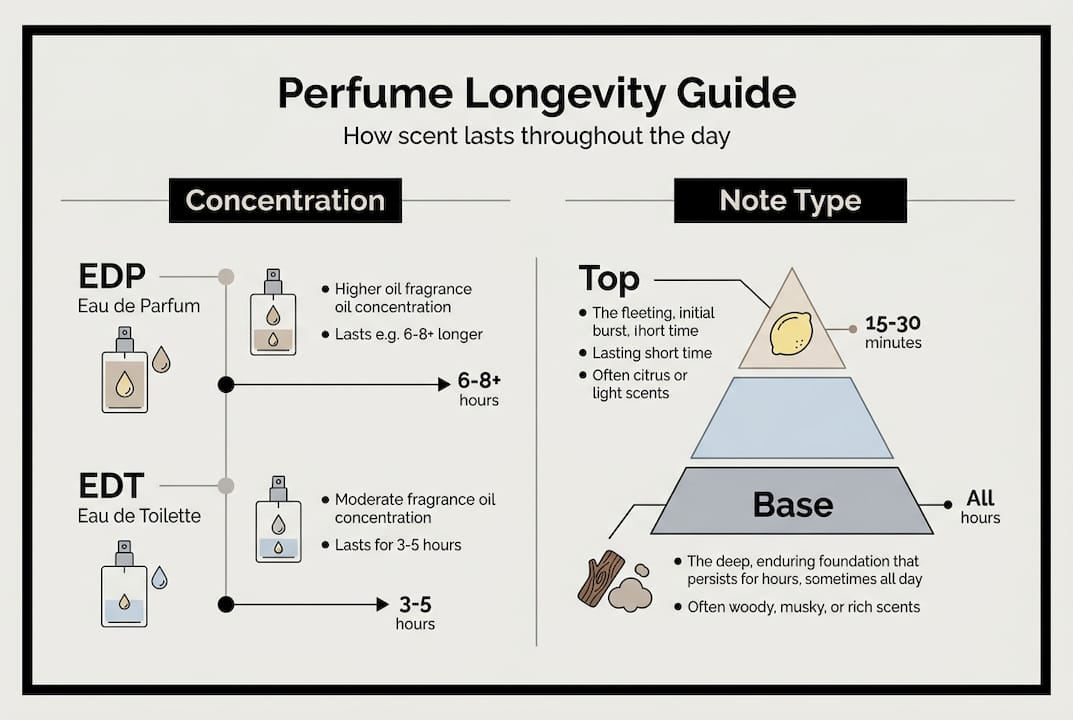
Benchmarks help set expectations. As a rough guide, many long-lasting fragrances sit around 6 to 8 hours (considered good), with 10 or more hours regarded as exceptional. These figures shift with skin type, environment and application method.
As a general guide: around 6 to 8 hours is good, and 10 or more hours is exceptional.
Several factors shape how you perceive longevity:
- Skin chemistry: oily skin tends to hold scent longer than dry skin
- Projection: strong projection can mask fading longevity
- Environment: heat and humidity speed up evaporation
- Application: pulse points and moisturised skin help extend wear
Understanding the difference between EDP and EDT clarifies why concentration matters. Eau de Parfum usually lasts longer than Eau de Toilette because it contains more fragrance oil – but concentration alone does not guarantee staying power. The molecular structure of the scent itself sets the ceiling, which brings us to the science.
The science behind longevity
Perfume molecules vary in size and weight, which dictates how quickly they evaporate. Light, volatile molecules in the top notes vanish fast, while heavier base-note molecules cling to skin for hours. This behaviour sets the limit for how long any fragrance can last.
Top notes tend to evaporate within roughly 15 to 60 minutes, while base notes can persist for hours. Middle notes bridge the gap. A perfume's composition determines its overall longevity profile.
| Note type | Evaporation time | Common ingredients |
|---|---|---|
| Top notes | About 15–60 minutes | Citrus, herbs, light florals |
| Middle notes | A few hours | Rose, jasmine, spices |
| Base notes | Several hours and beyond | Amber, musk, woods, vanilla |
Skin chemistry has a strong effect on duration. Oily or well-moisturised skin creates a barrier that slows evaporation, while dry skin absorbs fragrance faster and shortens longevity. Your skin's pH and natural oils interact with the perfume's compounds, shaping how they develop and fade.
Environmental factors play a part too:
- Heat: warmth speeds up evaporation
- Humidity: moisture in the air can soften a scent
- Air circulation: wind disperses fragrance faster
- Fabric vs skin: clothing tends to hold scent longer than skin
Pro tip: Apply fragrance to moisturised skin and pulse points for the best longevity. The warmth of pulse points activates the scent, while moisturiser gives it a base to hold onto.
Mastering fragrance layering lets you build a foundation that extends wear. Layering unscented lotion, matching body products or complementary scents adds depth that outlasts a single spray.
Benchmarks and examples
Real-world longevity varies widely. Many everyday fragrances last a handful of hours, good performers reach into the 6 to 8 hour range, and a few exceptional scents push beyond 10. These benchmarks help you set realistic expectations.
Some base-heavy, highly concentrated fragrances are well known for lasting much of the day, combining high concentration with rich base notes. But longevity is not always about strength – some fragrances project softly yet linger for hours.
Concentration affects duration, though it is not the only factor:
| Type | Fragrance oil concentration | Typical character | Best for |
|---|---|---|---|
| Parfum / Extrait | 20–30 % | Long-wearing, intense | All-day wear, special occasions |
| Eau de Parfum | 15–20 % | Balanced, versatile | Daily wear |
| Eau de Toilette | 5–15 % | Lighter, fresher | Casual wear, warm weather |
| Eau de Cologne | 2–5 % | Light, brief | Quick refresh, hot days |
Nose-blindness complicates self-assessment. You might think your perfume faded after a few hours, while others still notice it later in the day. This perceptual gap is one reason community ratings on sites like Fragrantica vary so widely.
Natural and synthetic compositions behave differently. Synthetics are often engineered for stability and can last longer, while natural ingredients may fade faster – though base-heavy natural perfumes with resins and woods can perform well. There are always edge cases: scents with strong projection but modest longevity, or subtle fragrances that cling for many hours.
Comparing options ultimately requires testing on your own skin. EDP versus EDT matters, but so does your body chemistry. A fragrance that lasts all day on a friend might fade much sooner on you, which is exactly why sampling is essential before committing to a full bottle.
Real-world factors: skin, environment and application
Benchmarks mean little if your skin, climate or routine works against them. Real-world performance depends on variables you can control and some you cannot.
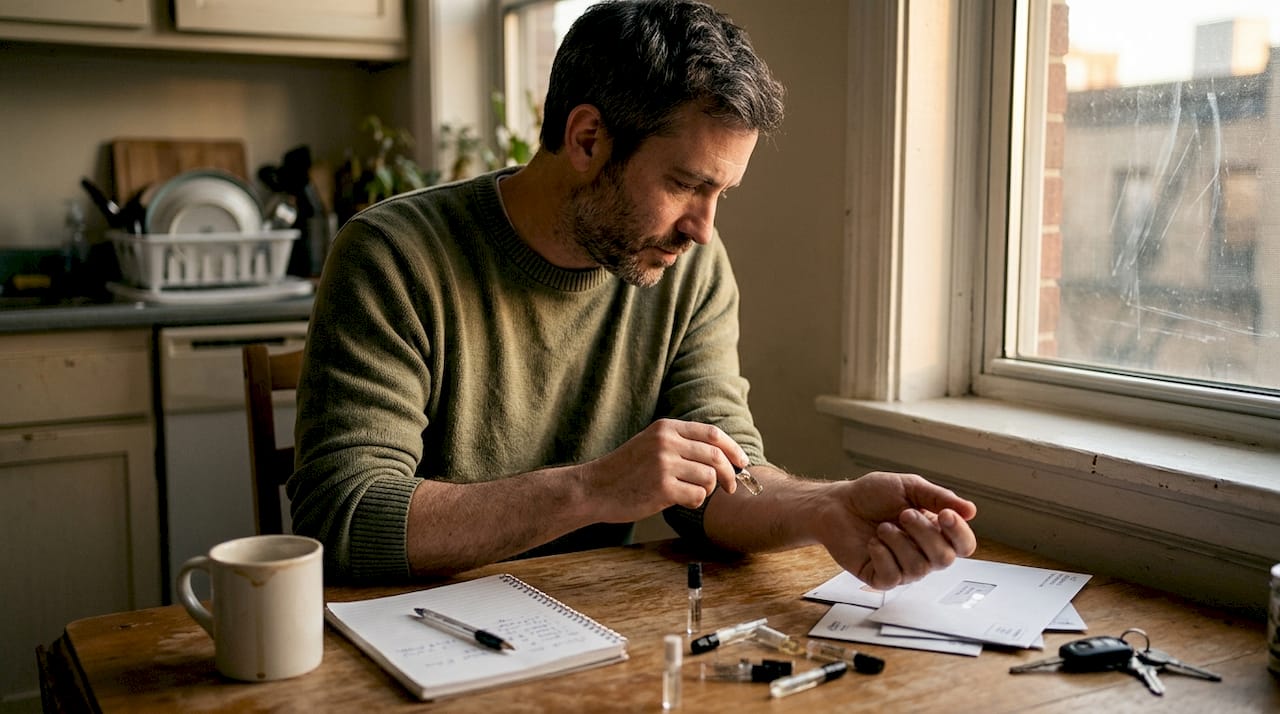
Skin type shapes scent retention. Oily or moisturised skin holds perfume longer, while dry skin shortens it. Fragrance often performs better on fabric, which is why a light mist on clothing can extend wear – though fabric does not let a scent develop the way skin does.
Heat and humidity speed up evaporation, so even long-lasting perfumes can fade faster in summer. Cold, dry winter air slows evaporation but can also mute projection. It is worth adjusting your application to the season.
Application technique matters more than most people realise. To get the most from a fragrance:
- Moisturise first: apply unscented lotion to create a hydrated base
- Target pulse points: wrists, neck, behind the ears, inner elbows
- Do not rub: rubbing can disturb how the scent develops
- Layer thoughtfully: use matching body products or complementary scents
- Mist clothing: a light spray on fabric extends wear
Pro tip: Test perfume samples on your skin across a full day before buying. A scent that smells wonderful in the store might fade within hours on you – or it might surprise you and last until bedtime.
Layering and moisturising before application can meaningfully improve longevity. This simple prep step creates a foundation that holds fragrance longer, and pairing it with pulse-point application makes the most of every spray.
To go further, master perfume layering techniques to build custom profiles that last – it is as much about complementary products and method as about mixing scents. And when you travel, these travel perfume tips help you keep your signature scent without carrying full bottles.
How to optimise longevity in practice
Knowing the science is one thing; applying it is another. If you want strong longevity before committing to a purchase, a strategic approach helps.
It starts with sampling. Test on your own skin and lean toward EDP or parfum concentrations with base-heavy compositions. Samples reveal how a fragrance performs on your unique skin over a full day – what works for someone else may not work for you.
Layering then extends duration beyond a single application. Begin with a moisturising base, apply your fragrance to pulse points, then add a complementary scent or matching body product so the layers unfold over time.
Test samples on your skin – your chemistry can turn a short-lived scent into something that lasts.
Practical steps to maximise longevity:
- Moisturise first: hydrated skin holds scent longer
- Apply to pulse points: warmth activates the fragrance
- Cross-check community ratings: use Fragrantica longevity notes as a starting point, not gospel
- Test in your environment: climate and season affect performance
- Layer thoughtfully: combine scents or products for depth
Community scales like Fragrantica ratings are useful but subjective, so cross-reference them with your own testing. One person's "eternal" can be another's "moderate."
Favouring base-heavy compositions gives you a head start. Fragrances built on amber, musk, woods and vanilla naturally tend to last longer than citrus-forward scents, so if longevity is your priority, scan the note pyramid before sampling. Layering complementary base notes amplifies the effect.
Enhance your fragrance journey with Be Frsh
Understanding longevity changes how you explore and choose fragrances. Instead of guessing from price or brand, you can test strategically and pick scents that suit your lifestyle. Be Frsh makes this easier with high-quality samples that let you judge longevity on your own skin before committing to a full bottle.
Explore layering guides and a curated selection of fragrance samples made for people who value informed choices. Whether you are testing a new niche scent or building a signature layering routine, sampling first gives you the confidence to choose well.
Frequently asked questions
What affects how long a perfume lasts on skin?
Longevity depends on the fragrance's composition, your skin chemistry, the environment and your application method. Oily or moisturised skin and base-heavy fragrances extend duration, while heat and dry skin shorten it.
Why does the scent fade for me but others still notice it?
This is nose-blindness – your olfactory receptors adapt to a familiar scent, making it seem weaker to you even while others can still smell it.
Are natural perfumes less long-lasting than synthetic ones?
Synthetics are often engineered for stability and can last longer, but some natural perfumes with strong base notes like resins and woods perform well.
How can I extend the longevity of my perfume?
Moisturise your skin, apply to pulse points and consider layering. Avoid rubbing your wrists together, and a light mist on clothing can extend wear.
How long should a good perfume last?
Around 6 to 8 hours is generally considered good, with 10 or more hours exceptional. It depends on concentration, composition and how the scent interacts with your skin.
Recommended reading
Avoimuus: tämä artikkeli on laadittu tekoälyavusteisesti, ja sisältö on tarkistettu ennen julkaisua. Kuvituskuvat voivat olla tekoälyllä luotuja.