Why perfume samples lead to smarter scent choices

TL;DR:
- Sampling offers a wide variety of scents without long-term commitment.
- It saves money by reducing buyer’s remorse and avoiding blind purchases.
- Sampling enables personalized discovery for finding your unique signature scent.
Most fragrance enthusiasts assume that buying a full bottle is the only way to truly experience a perfume. That assumption costs people real money every year. The truth is that scent discovery kits offer access to variety, seasonal switching, and non-committal exploration that full bottles simply cannot match. Perfume samples let you test dozens of options across different moods, seasons, and occasions before spending a dollar on a full-size purchase. This guide walks you through the advantages of sampling, practical strategies for finding your signature scent, common pitfalls to avoid, and an honest perspective on why smart fragrance enthusiasts always start small.
Table of Contents
- The variety advantage: Exploring scents without limits
- Cost and commitment: Why sampling saves money
- Discovery and personalization: How to find your signature scent
- Pitfalls and edge cases: Making the most of your samples
- Our take: Why smart fragrance enthusiasts start with samples
- Ready to start your fragrance journey?
- Frequently asked questions
Key Takeaways
| Point | Details |
|---|---|
| Broader fragrance options | Perfume samples allow access to a wide range of scents, including niche brands, for endless exploration. |
| Cost-effective discovery | Sampling perfumes minimizes financial risk and reduces regret over unsuitable purchases. |
| Personalized scent selection | Testing samples helps identify your signature scent in real-life scenarios before buying full bottles. |
| Smart sampling strategies | Intentional sampling, proper storage, and trusted sources make the experience more rewarding. |
The variety advantage: Exploring scents without limits
Imagine walking into a fragrance store with hundreds of bottles on the shelves. You can smell a few on paper strips, maybe one or two on your wrist, and then you’re expected to commit. That’s not discovery. That’s guesswork. Perfume sampling flips this entirely.
According to fragrance experts, samples give access to hundreds of scents and help you build a diverse fragrance wardrobe without any long-term commitment. This matters because your scent preferences are not static. What you love in winter may feel completely wrong in summer. A fragrance that suits a boardroom meeting may clash with a beach vacation. Sampling lets you build a collection that actually fits your life.
Here’s what variety through sampling really unlocks:
- Niche and limited-edition scents you would never risk buying blind
- Seasonal rotation across warm, spicy winter scents and fresh, airy summer ones
- Mood-based options for work, evenings, travel, and weekends
- Designer and indie brands side by side, without brand bias
- Rare or discontinued fragrances that are hard to find in stores
The benefits of perfume samples go well beyond just saving money. They change how you relate to fragrance altogether.
Comparison: Sampling vs. buying full bottles upfront
| Factor | Sampling first | Full bottle upfront |
|---|---|---|
| Scents explored per month | 5 to 15 | 1 to 2 |
| Financial risk | Very low | High |
| Seasonal flexibility | Easy to rotate | Expensive to rotate |
| Access to niche brands | Wide | Limited by budget |
| Discovery of hidden favorites | Frequent | Rare |
Pro Tip: Rotate three to five samples at a time, one for morning, one for evening, and one for weekends. This gives you a real-life comparison across different contexts without overwhelming your nose.
The variety that sampling provides is not just convenient. It is transformative. You start to understand your own preferences in a way that no single bottle purchase could ever teach you.
Cost and commitment: Why sampling saves money
While variety is exciting, smart fragrance enthusiasts also appreciate the financial perks of sampling before buying. A designer perfume bottle can cost anywhere from $80 to over $400. Buying one that turns out to be wrong for your skin chemistry or lifestyle is a painful mistake.
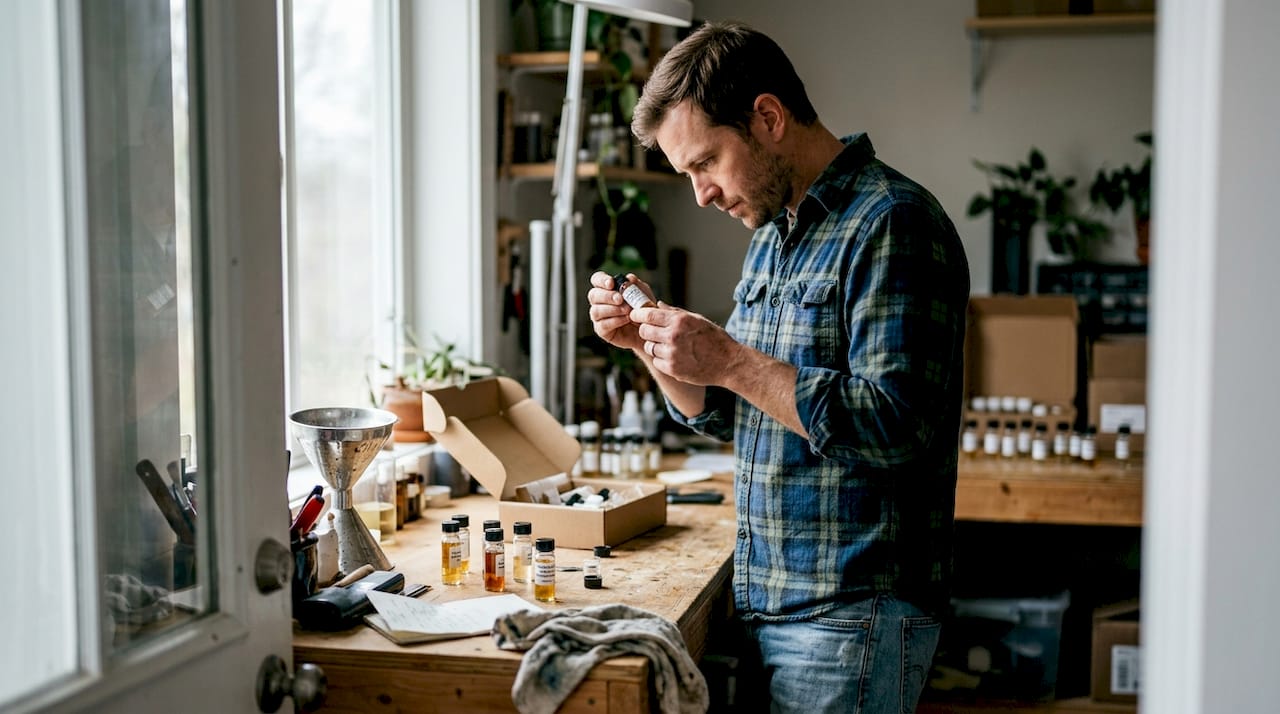
Sampling is a low-risk, cost-effective way to explore fragrances before committing to larger purchases. The numbers back this up clearly. Research shows that trying scents through samples can lead to 52% less buyer’s remorse compared to buying full bottles without testing first.
Here is where sampling saves you the most:
- Avoiding blind buys on hyped fragrances that don’t work on your skin
- Skipping duplicate purchases of scents that smell similar to ones you already own
- Narrowing your wishlist before seasonal sales so you buy only what you love
- Testing longevity and sillage (how far a scent projects) before committing
Cost comparison: Sampling vs. blind buying
| Scenario | Average spend | Satisfaction rate |
|---|---|---|
| Blind full-bottle purchase | $120 to $300 | Low to moderate |
| Sample first, then buy | $5 to $20 per sample | High |
| Subscription sample set | $15 to $40 per month | High |
| Gifting without sampling | $80 to $250 | Unpredictable |
The hybrid approach works best: try samples, identify your favorites, then invest in the full bottle with total confidence. You stop gambling and start shopping with purpose.
Pro Tip: Keep a simple notes app log of every sample you try. Rate each one from 1 to 5 after wearing it for a full day. After a month, your top-rated scents become your shortlist for full-bottle purchases.
This approach also changes how you think about fragrance as a category. Instead of treating it as a luxury splurge, you start treating it as a curated personal investment.
Discovery and personalization: How to find your signature scent
Beyond saving money, sampling unlocks a path to true scent personalization and the discovery of your unique style. Most people settle for a signature scent by accident. They smell something they like in a store, buy it, and wear it for years without ever knowing what else might suit them better. Sampling removes that ceiling.
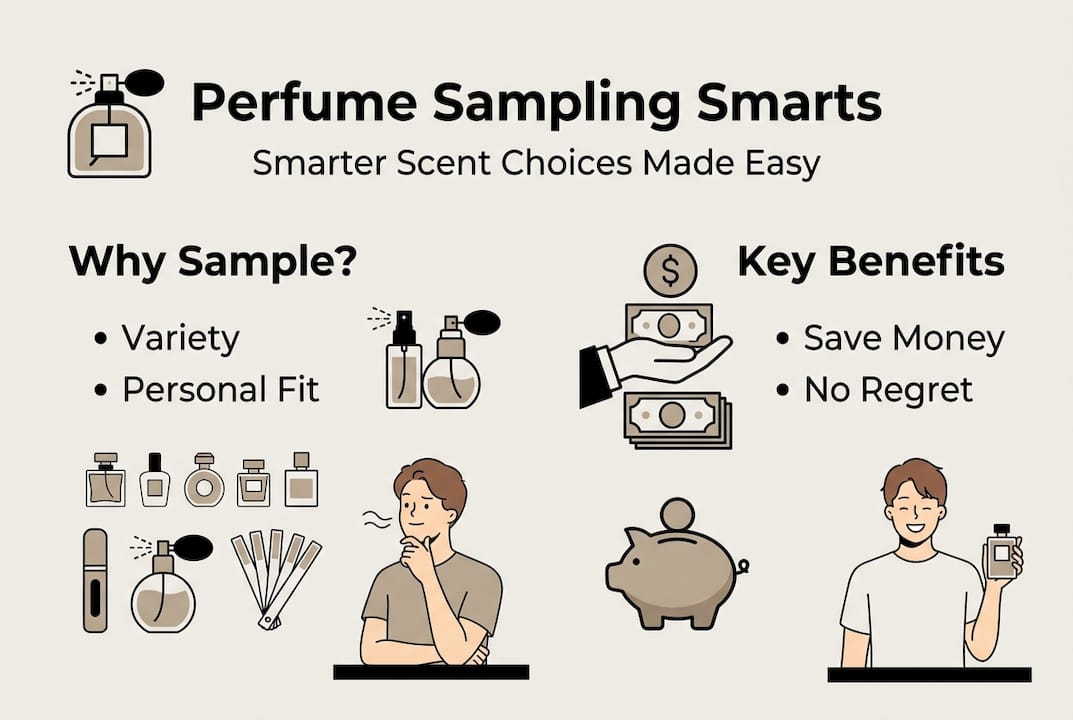
Fragrance experts confirm that samples make it convenient to explore and test scents in real-life situations before buying. Real-life testing is the key phrase here. A perfume smells different on paper, on your skin, after two hours, and after eight hours. You need all of those data points.
Follow this process to make sampling work for real discovery:
- Smell on paper first to get a general impression of the top notes
- Apply to your wrist or inner elbow and wait 20 minutes for the heart notes to develop
- Wear it for a full day before making any judgment on longevity and dry-down
- Test the same sample on different days to account for skin hydration and temperature changes
- Wear it in real situations like work, exercise, or a social event to see how it performs
- Revisit samples you initially dismissed because first impressions are often misleading
Learning how to test perfumes correctly is a skill that pays off every time you shop. The perfume sampling guide from Befrsh goes deeper into this process with practical steps for every experience level.
“Your signature scent is not the one you liked most in the store. It’s the one you kept reaching for three weeks later.”
Pro Tip: After testing a sample for a full day, ask someone close to you what they think. Fragrance is partly about how others perceive you, and outside feedback often reveals things your nose adapts to over time.
Tracking your reactions over weeks also shows how your preferences shift with seasons, stress levels, and lifestyle changes. That awareness is what separates a casual buyer from a true fragrance enthusiast.
Pitfalls and edge cases: Making the most of your samples
No sampling journey is complete without understanding the hiccups and edge cases every enthusiast may encounter. Sampling is not flawless, and knowing the common problems ahead of time helps you avoid them entirely.
One of the most important facts to understand is that samples degrade faster than full bottles. A sample vial typically stays fresh for 6 to 12 months, compared to 3 to 5 years for a sealed full bottle. This happens because small vials expose more surface area to air and light, which accelerates oxidation.
Here’s how to protect your samples and get the most from them:
- Store samples in a cool, dark drawer away from sunlight and heat
- Use samples regularly rather than letting them sit for months
- Keep vials tightly sealed between uses to minimize air exposure
- Label samples with the date received so you know when to prioritize them
- Avoid bathroom storage where humidity and temperature fluctuate
“A sample that sits unused for a year is not a bargain. It’s a missed experience.”
Authenticity is another real concern. The fragrance market includes counterfeit products, and samples are not immune. Always buy from reputable retailers. The perfume sampling guide recommends sourcing samples only from verified vendors who work directly with brands or authorized distributors.
Subscription models can also create unintended buildup. If you subscribe to a monthly sample service but don’t test consistently, you accumulate vials faster than you use them. Sample intentionally. Choose scents that match your current season or mood rather than collecting for the sake of it.
Pro Tip: Limit yourself to four to six active samples at a time. Testing more than that simultaneously makes it hard to form accurate impressions, and your nose fatigues quickly when switching between strong fragrances.
Our take: Why smart fragrance enthusiasts start with samples
Conventional wisdom in the fragrance world still puts full bottles on a pedestal. The idea is that a real perfume lover owns bottles, not vials. We think that’s completely backwards.
The enthusiasts who build the most interesting, personal, and satisfying fragrance collections are the ones who sample relentlessly. They don’t buy bottles to prove they love a scent. They buy bottles because they already know they love it, because they’ve worn it in real life, across different seasons, and it still made them reach for it every morning.
Sampling is not a shortcut or a compromise. It is the most honest way to interact with fragrance. A sample removes the pressure of a purchase, the influence of beautiful packaging, and the bias of an expensive brand name. You’re left with just the scent and your genuine reaction to it.
We also believe that samples are a toolkit for style evolution. Your preferences will change. The scent you loved at 25 may feel wrong at 35. Sampling keeps you open to that evolution instead of locking you into a single identity. The benefits of perfume samples aren’t just financial. They’re about staying curious, staying open, and building a relationship with fragrance that grows with you.
Ready to start your fragrance journey?
Now that you’re equipped with expert insights and practical tips, the right samples can spark your next signature scent. Everything covered in this guide, from variety and cost savings to smart testing and avoiding pitfalls, becomes real the moment you start exploring.
At Befrsh.com, we’ve curated a wide selection of authentic, high-quality samples across designer and niche categories. Whether you’re brand new to fragrance or refining a collection you’ve built over years, our fragrance sample sets make it easy to try before you commit. No guesswork. No regret. Just great scents that actually fit your life. Start sampling today and discover what your next favorite fragrance smells like.
Frequently asked questions
Are perfume samples authentic and safe to use?
When purchased from trusted retailers, perfume samples are authentic and completely safe to use. Always buy from verified sources, since authenticity risks are real in the online fragrance market.
How long do perfume samples last compared to full bottles?
Sample vials typically stay fresh for 6 to 12 months, while full bottles can last 3 to 5 years when stored properly. Store samples in a cool, dark place and use them regularly to get the most out of them.
Can I find my signature scent just by using samples?
Yes, testing multiple samples over time is one of the most effective ways to identify your ideal scent. Samples support convenient exploration and give you the real-life data you need to choose with confidence.
Is sampling more cost-effective than buying full bottles?
Absolutely. Sampling first helps you avoid expensive mistakes on full bottles and leads to purchases you’ll actually love. Research shows it results in 52% less buyer’s remorse compared to buying blind.