Guide to perfume layering: master scent combinations in 2026

Finding a signature scent that feels uniquely yours can be frustrating. Off-the-shelf perfumes rarely capture your personality or last through the day. Perfume layering solves this by letting you blend fragrances to create a custom scent profile that reflects your style and lasts longer. This guide walks you through understanding fragrance notes, selecting compatible perfumes, applying them strategically, and troubleshooting common mistakes so you can master the art of scent layering.
Table of Contents
- What You Need: Preparation For Successful Perfume Layering
- How To Layer Perfumes: Step-By-Step Execution
- Troubleshooting And Common Mistakes In Perfume Layering
- What To Expect: Results And How To Enjoy Your Layered Perfume
- Explore Premium Perfumes And Layering Sets At Be Frsh
- Frequently Asked Questions
Key takeaways
| Point | Details |
|---|---|
| Layering customizes your scent | Combining perfumes creates unique, personalized fragrance profiles that stand out. |
| Preparation is essential | Understanding fragrance notes and selecting compatible perfumes ensures successful layering. |
| Follow a step-by-step method | Applying scents in the right order and quantity builds balanced, long-lasting combinations. |
| Testing prevents mistakes | Skin testing and adjusting your layers avoids overpowering or clashing scents. |
| Expect richer results | Layered perfumes offer greater complexity, longevity, and uniqueness than single fragrances. |
What you need: preparation for successful perfume layering
Before you start blending fragrances, you need to understand how perfumes are structured. Every perfume has three note layers: top notes appear immediately and fade within 15 minutes, middle notes emerge next and last several hours, and base notes anchor the scent for the longest duration. Recognizing these layers helps you predict how two perfumes will interact when layered.
Selecting perfumes with compatible fragrance notes improves layering success. Start by choosing perfumes from complementary note families. Citrus and woody combinations work beautifully, as do floral and vanilla pairings. Avoid clashing families like heavy oud with delicate aquatic notes, which can create muddy or overwhelming results.
Gather these basic tools before you begin:
- Fragrance tester strips or blotter paper for initial scent trials
- Cotton pads to test combinations on non-skin surfaces
- A clean wrist or inner elbow area for final skin testing
- A notebook to record successful combinations and ratios
This table shows common fragrance families and their ideal layering partners:
| Fragrance Family | Best Layering Match | Example Combination |
|---|---|---|
| Citrus | Woody, Oriental | Bergamot with sandalwood |
| Floral | Vanilla, Musk | Rose with vanilla |
| Woody | Citrus, Spicy | Cedarwood with cardamom |
| Oriental | Floral, Amber | Patchouli with jasmine |
| Fresh Aquatic | Light Florals | Marine notes with lily |
Pro Tip: Avoid overpowering combinations by selecting one strong base note perfume and pairing it with a delicate top note fragrance. This balance prevents sensory overload and creates a harmonious blend that evolves naturally throughout the day.
Once you understand note structures and have your tools ready, you can move confidently into the layering process itself. The preparation phase sets you up for experimentation without wasting expensive perfumes or creating unwearable combinations.
How to layer perfumes: step-by-step execution
Layering perfumes requires a methodical approach to build balanced scent profiles. Follow these numbered steps to achieve professional results:
-
Apply your base scent first to clean, moisturized skin on pulse points like wrists, neck, and inner elbows. Choose a perfume with strong base notes such as sandalwood, amber, or musk. This foundation anchors your layered fragrance.
-
Wait 30 to 60 seconds for the base scent to settle and begin its initial dry-down. This pause prevents the two perfumes from mixing too quickly, which can create an unbalanced blend.
-
Apply your secondary scent lightly over the same pulse points or slightly offset from the base application. Use one or two sprays maximum. This top layer should feature lighter notes like citrus, green tea, or soft florals.
-
Allow both layers to dry naturally without rubbing your wrists together. Rubbing breaks down fragrance molecules and shortens wear time. Let the scents meld on their own for at least five minutes.
-
Test the combination by smelling your wrist at intervals: immediately after application, at 15 minutes, and at one hour. This reveals how the layered scent evolves and whether adjustments are needed.
-
Adjust intensity by varying spray counts and application order in future attempts. If the combination feels too heavy, reduce the base scent to one spray. If it fades quickly, increase the base or switch the layering order.
Smart layering techniques can boost confidence and reduce perfume returns by ensuring lasting and pleasant scent blends. When you layer strategically, you create a signature scent that adapts to your body chemistry and lasts through your daily activities.
Pro Tip: For maximum longevity, layer your perfumes in order of intensity rather than note type. Start with the most potent fragrance as your base, then add progressively lighter scents. This method ensures the strongest notes don’t overpower delicate top layers.
The key to successful layering is patience and experimentation. No two skin chemistries react identically to perfume combinations, so what works for someone else may need adjustment for you. Keep notes on your favorite ratios and pairings to replicate successful blends.
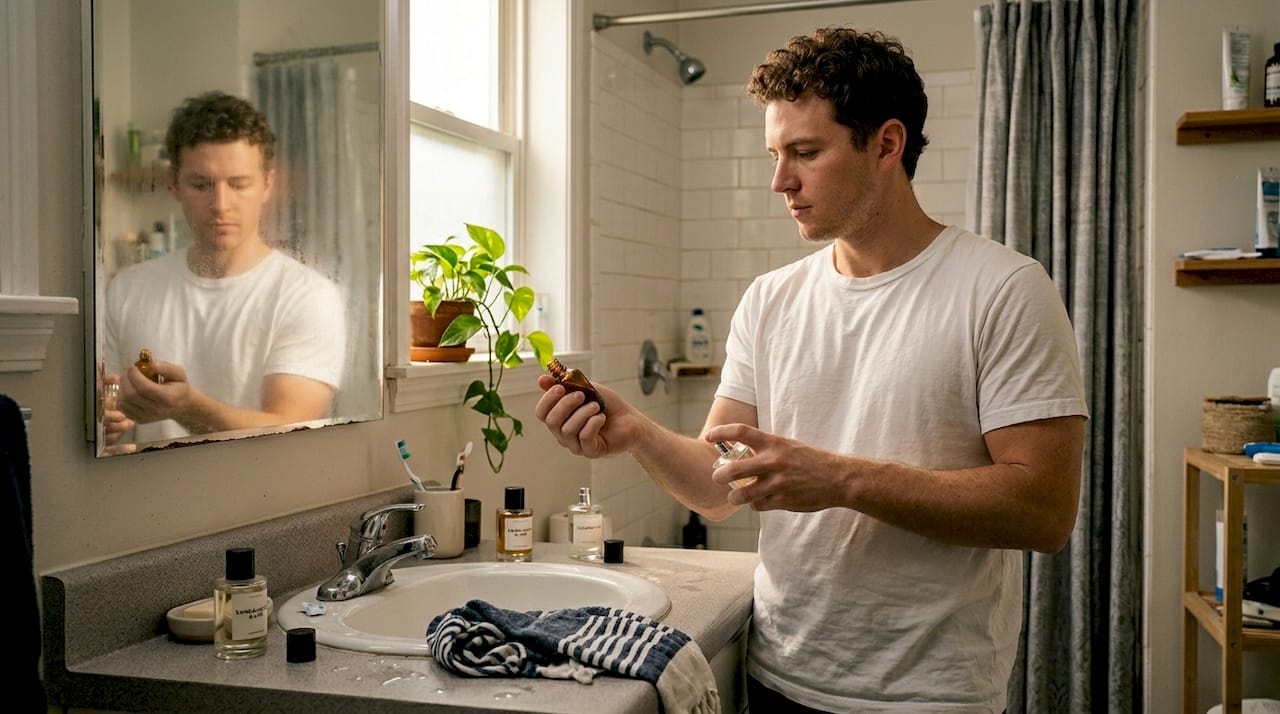
Troubleshooting and common mistakes in perfume layering
Even experienced fragrance enthusiasts encounter layering challenges. Recognizing and fixing these issues quickly saves you from wasting product and wearing unpleasant scents.
Common mistakes include:
- Layering too many scents at once, which creates a chaotic, unreadable fragrance profile
- Ignoring perfume note compatibility and mixing clashing families like heavy leather with sweet gourmands
- Applying perfumes in the wrong order, such as placing a strong oriental over a delicate citrus
- Skipping skin tests and relying only on tester strips, which don’t reveal how your body chemistry affects the blend
- Using equal amounts of both perfumes instead of balancing a dominant base with a lighter accent
How do you detect scent conflicts? Pay attention to these warning signs: a sharp, unpleasant smell immediately after application, a muddy or indistinct scent profile, or rapid fading within 30 minutes. These indicators suggest incompatible notes or poor application technique.
Testing perfumes correctly helps avoid unpleasant layering results and ensures lasting fragrance. Always test combinations on your skin rather than relying solely on paper strips. Your natural oils and pH levels dramatically influence how layered scents develop.
To fix overpowering combinations, try these methods:
- Reduce the number of sprays for the dominant perfume
- Switch the layering order so the lighter scent goes first
- Add a neutral base like unscented lotion between layers to soften intensity
- Test the combination on a small area before full application
Expert fragrance blenders emphasize the importance of stepwise testing and patience when creating layered scents. Rushing the process or skipping skin tests leads to disappointing results and wasted product. Give each combination time to develop fully before making final judgments.
When a layered combination fails, don’t try to fix it by adding more perfume. Instead, wash the area gently and start fresh. Layering more scents on top of a failed blend only compounds the problem. Learn from each unsuccessful attempt by noting which combinations didn’t work and why.
What to expect: results and how to enjoy your layered perfume
Layered perfumes evolve through distinct stages throughout the day. In the first 15 minutes, top notes dominate and create the initial impression. Between 30 minutes and four hours, middle notes emerge as the top notes fade, revealing the heart of your layered blend. After four hours, base notes anchor the scent and provide lasting depth. Understanding this evolution helps you appreciate how your custom fragrance transforms.
This comparison shows how layered perfumes differ from single fragrances:
| Characteristic | Single Perfume | Layered Perfume |
|---|---|---|
| Longevity | 4 to 6 hours average | 6 to 10 hours with proper layering |
| Complexity | Linear scent profile | Multi-dimensional, evolving profile |
| Uniqueness | Mass-market similarity | Personalized, distinctive signature |
| Adaptability | Fixed composition | Adjustable to mood and occasion |
| Cost per wear | Higher for premium scents | Lower by extending wear time |
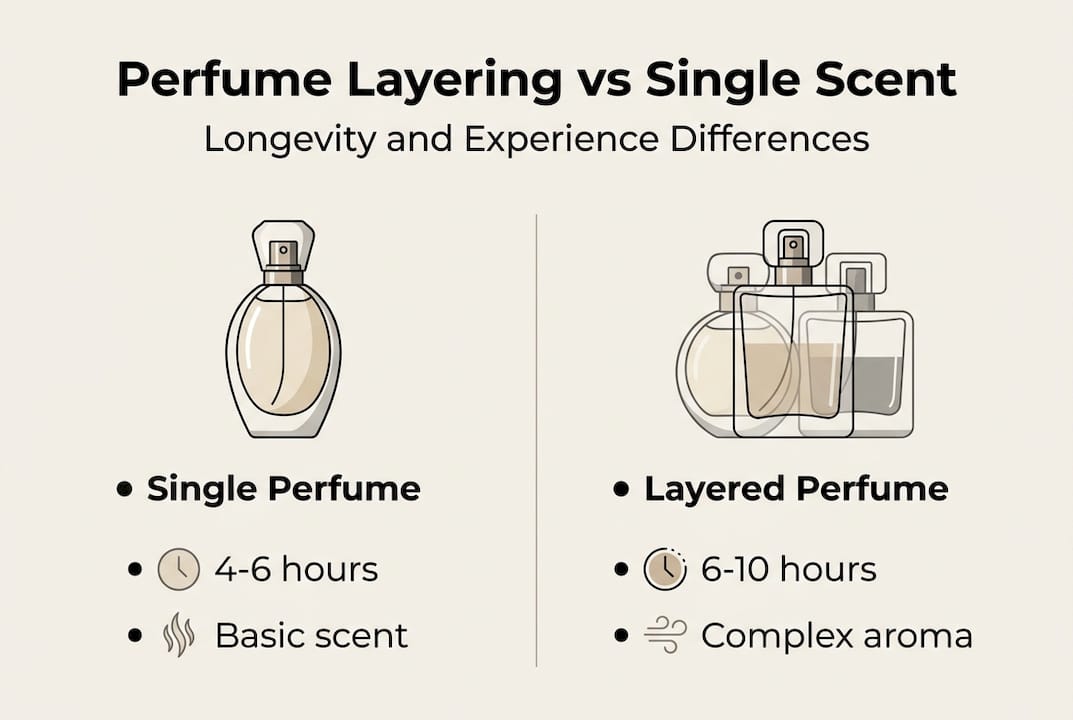
Layered fragrances presented well throughout the day offer a unique and richer scent experience. The complexity you create through layering can’t be replicated by any single bottle, making your scent truly one of a kind.
To refresh layers throughout the day without overwhelming your senses, carry a travel-size version of your lighter top note perfume. Apply one spray to your wrists or clothing at midday. Avoid reapplying the base scent, which typically lasts longer and doesn’t need refreshing. This strategic touch-up maintains balance without creating heaviness.
Ideal scenarios for perfume layering include:
- Special events where you want a memorable, signature scent
- Seasonal transitions when you’re moving between warm and cool weather fragrances
- Professional settings requiring subtle but distinctive presence
- Personal expression moments like dates or creative projects
- Daily wear when you want to elevate your fragrance experience beyond basic application
Layered perfumes adapt to your body chemistry more dynamically than single scents. You might notice the same combination smells slightly different on various days depending on your diet, stress levels, and hormones. This natural variation adds to the personalized nature of layering.
Maximize your enjoyment by documenting successful combinations in a fragrance journal. Note the perfumes used, application order, spray counts, and how the blend evolved. This record becomes your personal layering guide and helps you recreate favorite combinations or adjust them for different occasions.
Explore premium perfumes and layering sets at Be Frsh
Ready to create your signature layered scent? Be Frsh offers a curated collection of high-quality perfumes perfect for experimenting with layering techniques. Whether you’re new to fragrance blending or an experienced enthusiast, you’ll find complementary scents that work beautifully together.
Our perfume sets and layering strategies guide helps you select compatible fragrances and avoid common mistakes. You’ll discover practical approaches to building balanced combinations that last all day. Plus, our sample sizes let you test layering ideas without committing to full bottles.
Start exploring perfume notes to understand which families complement your favorites. With the right knowledge and quality fragrances, you’ll master the art of perfume layering and create scents that truly represent your unique style.
Frequently asked questions
What is perfume layering and why do people do it?
Perfume layering is the technique of combining two or more fragrances to create a unique, personalized scent. People layer perfumes to express individuality, enhance scent complexity beyond what single perfumes offer, and improve fragrance longevity throughout the day. This method transforms mass-market perfumes into distinctive signatures.
How do I choose perfumes that layer well together?
Choose perfumes with complementary or non-conflicting notes, such as pairing citrus top notes with woody base notes. Start by testing small combinations on tester strips before applying to skin. Focus on one dominant scent with a lighter accent rather than mixing two equally strong perfumes.
Can layering perfumes make a scent last longer?
Yes, layering base notes with lighter scents can increase wear time significantly. Applying perfumes in the right order and using appropriate quantities is key to lasting fragrance. Base notes anchor lighter top notes, preventing rapid evaporation and extending overall wear from four to six hours up to ten hours.
What mistakes should I avoid when layering perfumes?
Avoid layering too many strong scents or mixing incompatible note families like heavy oud with delicate aquatics. Test combinations on skin before committing to full application, as paper strips don’t reveal how your body chemistry affects the blend. Allow 30 to 60 seconds of drying time between application layers to prevent muddled scents.