
Understanding fragrance notes: perfume composition guide 2026

Choosing a perfume can feel overwhelming when you’re faced with descriptions like “bergamot top notes” or “sandalwood base.” Many people struggle to decode these terms, leading to disappointing purchases that smell nothing like expected after the first hour. Understanding fragrance notes transforms this confusion into confidence, helping you select perfumes that truly match your style and occasions. This guide breaks down the essentials of perfume composition, from note categories to practical testing strategies, so you can make informed choices whether buying for yourself or selecting the perfect gift.
Table of Contents
- What Are Fragrance Notes? A Beginner’s Guide
- How Fragrance Notes Combine: The Art of Perfume Composition
- Tips For Using Fragrance Note Knowledge When Choosing Perfumes
- Explore Curated Fragrance Sets At Be Frsh
- Frequently Asked Questions
Key takeaways
| Point | Details |
|---|---|
| Three note layers | Top, middle, and base notes create a perfume’s complete character and evolution over time |
| Scent development | Fragrances transform on your skin as different note layers emerge throughout the day |
| Composition balance | Perfumers carefully blend note types to achieve harmony, longevity, and desired fragrance families |
| Testing strategy | Proper perfume testing reveals the full note spectrum and helps predict how scents will wear |
| Personal matching | Understanding note families guides selection based on preferences, occasions, and seasons |
What are fragrance notes? A beginner’s guide
Fragrance notes are individual scent components that perfumers combine to create complex perfumes. Think of them as musical notes in a symphony, each contributing to the overall experience. Fragrances are composed of top, middle, and base notes that unfold over time, creating a dynamic scent journey from first spray to final dry down.
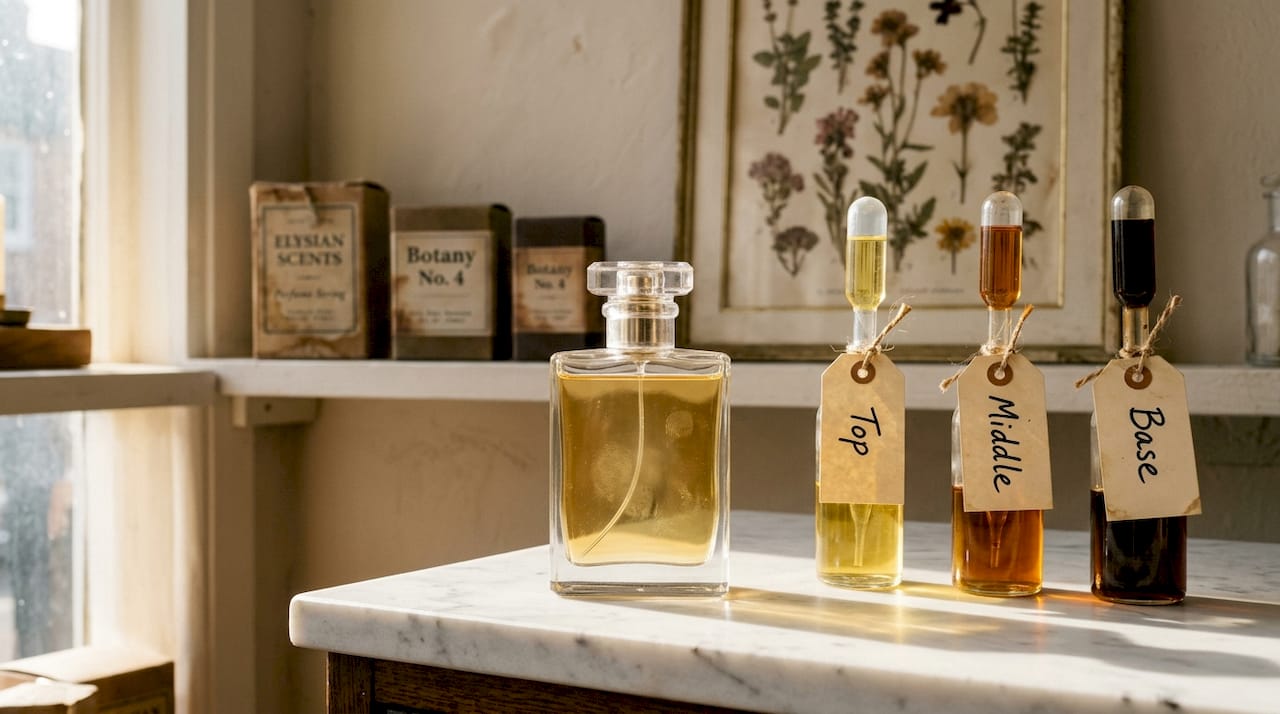
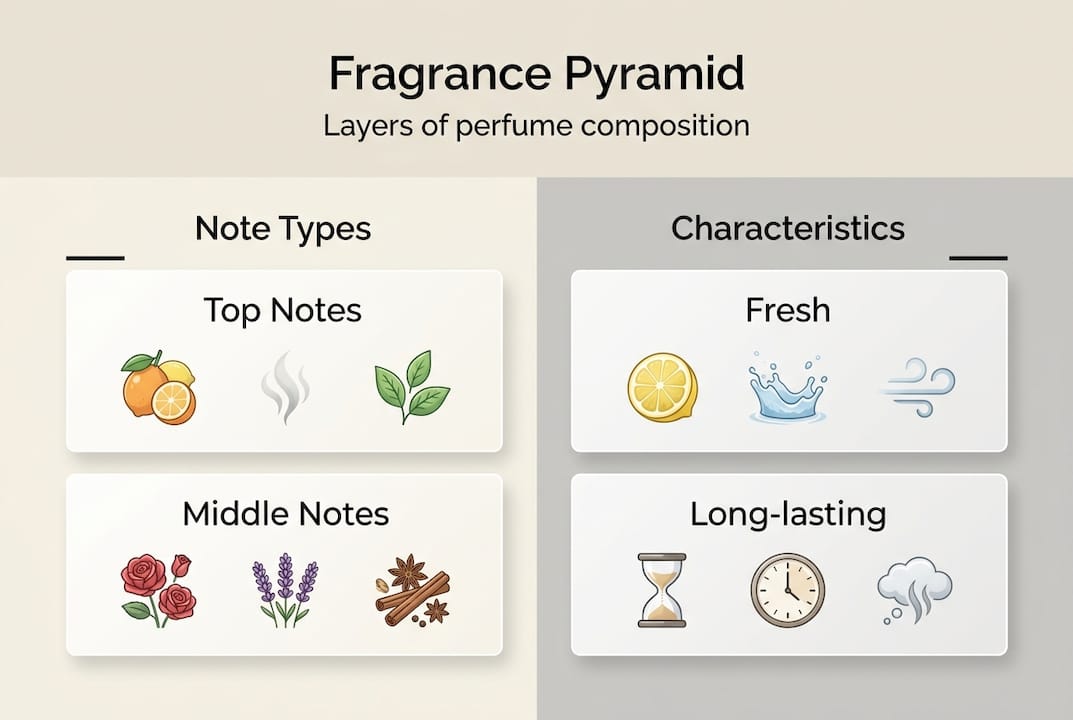
Top notes form your first impression when you spray a perfume. These light, volatile ingredients evaporate quickly, typically lasting 5 to 15 minutes. They’re designed to capture attention and entice you to keep smelling. Common top notes include citrus fruits like bergamot and lemon, fresh herbs like mint and basil, and light florals like lavender. These bright, energetic scents create the opening chapter of your fragrance story.
Middle notes, also called heart notes, emerge as top notes fade. They form the core character of the perfume and typically last 20 minutes to several hours. This is where the perfume’s true personality shines through. Popular middle notes include:
- Floral scents like rose, jasmine, and ylang ylang
- Spicy notes such as cinnamon, cardamom, and black pepper
- Fruity accords like peach, plum, and berries
- Green notes including geranium and violet leaf
Base notes provide the foundation that anchors the entire composition. These heavy, long lasting ingredients can persist for six hours or more, sometimes lingering until the next day. They add depth, richness, and staying power. Common base notes include woody scents like sandalwood and cedar, warm vanilla and amber, earthy patchouli, and sensual musks. Understanding these categories helps you anticipate how a perfume will develop on your skin throughout the day.
When exploring perfume notes, remember that each person’s skin chemistry affects how notes smell and last. The same perfume can smell slightly different on two people due to factors like skin pH, moisture levels, and natural oils. This makes testing on your own skin essential before committing to a full bottle.
How fragrance notes combine: the art of perfume composition
Perfumers are artists who carefully balance fragrance notes to craft harmonious scents that tell a story. Perfume compositions involve carefully balancing fragrance notes for harmony and longevity. This balancing act requires deep knowledge of how different ingredients interact, which notes complement each other, and how to create smooth transitions between layers.
Fragrance families group perfumes by their dominant note characteristics. Understanding these families helps you identify scents you’ll likely enjoy:
- Floral: dominated by flower notes, ranging from single florals to complex bouquets
- Oriental: warm and spicy with notes like vanilla, amber, and exotic spices
- Woody: featuring cedar, sandalwood, vetiver, and other tree derived scents
- Fresh: clean and energizing with citrus, aquatic, or green notes
- Fruity: sweet and juicy with berry, stone fruit, or tropical accords
The fragrance pyramid illustrates how notes layer over time. Picture an actual pyramid with top notes at the peak, middle notes in the center, and base notes forming the wide foundation. This visual representation shows both the evaporation timeline and the proportional importance of each layer. Top notes might comprise 10 to 20 percent of the formula, middle notes 40 to 60 percent, and base notes 20 to 40 percent.
Pro Tip: Most people focus on top notes when testing perfumes, but lasting base notes actually define how long a perfume stays noticeable on your skin. Always wait at least 30 minutes to evaluate the true character.
In 2026, perfume trends reflect evolving tastes and innovative ingredients. According to the popular perfume notes guide, unexpected notes like pistachio have surged in popularity, bringing creamy, nutty warmth to modern compositions. Other trending notes include sustainable synthetics that mimic rare natural ingredients, gourmand accords that smell edible, and gender neutral combinations that blur traditional boundaries.
Perfumers also consider how notes interact chemically. Some ingredients enhance each other, a phenomenon called synergy. For example, vanilla amplifies floral notes, making them smell richer and more pronounced. Other combinations create contrast, like pairing sweet notes with bitter or smoky elements to add complexity. Master perfumers spend years learning these interactions to create balanced, memorable fragrances that evolve beautifully from spray to dry down.
Tips for using fragrance note knowledge when choosing perfumes
Applying your understanding of fragrance notes transforms perfume shopping from guesswork into strategic selection. Knowing that top, middle, and base notes unfold sequentially helps you predict how a scent will evolve throughout your day. A perfume that smells citrusy and fresh initially might develop into a warm, woody scent hours later, so patience during testing is crucial.
Testing perfumes correctly helps you experience the full spectrum of fragrance notes and make better choices. Follow these steps for effective testing:
- Spray perfume on your inner wrist or inner elbow where skin is warm and pulse points enhance scent development
- Wait at least 10 minutes for top notes to settle before making judgments
- Smell the perfume again after 30 minutes to experience middle notes fully
- Check back after 2 to 3 hours to evaluate base notes and longevity
- Test only 2 to 3 perfumes per session to avoid overwhelming your nose
- Take notes on your phone about which stages you enjoyed most
When selecting perfumes, consider these factors based on note composition:
- Occasion: lighter, fresher top notes work well for daytime and office settings, while richer base notes suit evening events
- Season: citrus and aquatic notes feel refreshing in summer, while warm spices and woods comfort in winter | Personal style: your clothing and aesthetic preferences often align with certain note families
- Longevity needs: if you need all day wear, prioritize perfumes with strong, lasting base notes
- Skin chemistry: oily skin holds fragrance longer, while dry skin may need richer, more concentrated formulas
Understanding the difference between perfume vs eau de toilette helps you choose the right concentration. Here’s how concentration affects note experience:
| Concentration Type | Fragrance Oil Content | Note Longevity | Best For |
|---|---|---|---|
| Parfum/Extrait | 20 to 30 percent | 8+ hours, strong base notes | Special occasions, evening wear |
| Eau de Parfum | 15 to 20 percent | 6 to 8 hours, balanced notes | Daily wear, versatility |
| Eau de Toilette | 5 to 15 percent | 3 to 5 hours, prominent top notes | Casual use, warmer weather |
| Eau de Cologne | 2 to 4 percent | 2 to 3 hours, mostly top notes | Refreshing splash, layering |
Pro Tip: When gifting perfumes, identify the recipient’s favorite note families by observing their current fragrances or asking about scent preferences in candles, lotions, or environments they enjoy. Someone who loves vanilla lattes probably appreciates gourmand base notes, while a gardening enthusiast might prefer green and floral middle notes.
Don’t rush perfume decisions. Your nose adapts to scents quickly, a phenomenon called olfactory fatigue, making it hard to smell a perfume you’ve been wearing for hours. This is why testing over multiple hours or even days gives you the most accurate impression. Consider getting samples or discovery sets that let you live with a fragrance before investing in a full bottle. This approach ensures you experience how notes develop in your real life, not just in a store environment.
Explore curated fragrance sets at Be Frsh
Now that you understand how fragrance notes create complex perfume compositions, you’re ready to explore scents with newfound confidence. Be Frsh offers curated fragrance sets designed with expertly balanced notes across top, middle, and base layers. These collections let you experience multiple note combinations before committing to full sized bottles, reducing purchase risks while expanding your scent knowledge.
Each set showcases different fragrance families and note structures, helping you discover which compositions resonate with your personal style. Whether you’re building your fragrance wardrobe or searching for the perfect gift, these curated selections take the guesswork out of finding harmonious, well crafted perfumes that develop beautifully throughout the day.
Frequently asked questions
What are fragrance notes?
Fragrance notes are individual scent ingredients that perfumers blend to create complete perfumes. They’re categorized into top notes (initial impression), middle notes (heart character), and base notes (lasting foundation). Each category evaporates at different rates, creating a dynamic scent experience that evolves on your skin over several hours.
How long does each type of note last on skin?
Top notes typically last 5 to 15 minutes, providing the first impression. Middle notes emerge next and persist for 20 minutes to several hours, forming the perfume’s core character. Base notes anchor the composition and can last 6 hours or more, sometimes lingering until the next day depending on concentration and your skin chemistry.
What’s the difference between perfume and eau de toilette in note concentration?
Perfume contains 20 to 30 percent fragrance oils, emphasizing rich base notes with 8 plus hour longevity. Eau de toilette has 5 to 15 percent oils, featuring more prominent top notes with 3 to 5 hour wear time. This concentration difference affects both scent intensity and how note layers develop throughout the day.
What are the best ways to explore unfamiliar perfume notes before buying?
Start with sample sets or discovery collections that let you test multiple fragrances at home over several days. Spray perfumes on your skin rather than paper strips to experience how notes interact with your chemistry. Keep a scent journal noting which note families you enjoy at different times of day, and revisit samples after 30 minutes and 3 hours to evaluate full note development.
How do I identify which fragrance families match my preferences?
Reflect on scents you already enjoy in other products like candles, lotions, or teas. If you love citrus flavors, fresh fragrance families with bergamot or grapefruit top notes might appeal to you. Vanilla latte fans often enjoy oriental fragrances with gourmand base notes. Visit fragrance counters and ask to smell different families, noting which immediate impressions and dry downs you prefer. Your instinctive reactions reveal your natural note preferences.