

What Are Eau de Parfums and Why Choose Them

Finding a signature scent can feel like searching for a perfect match—exciting, but full of choices and uncertainties. For fragrance lovers in the Nordic region, the world of eau de parfum offers a unique balance of strength, longevity, and value. With a 15–20% fragrance concentration suspended in alcohol and water, eau de parfum provides real staying power without being overpowering or breaking the bank. This guide clears up common myths and shows you how to sample with confidence before you invest.
Table of Contents
- Defining Eau de Parfum and Common Myths
- Fragrance Concentration Levels Compared
- Longevity, Strength, and Scent Experience
- Choosing Eau de Parfum for Your Needs
- Alternatives and Mistakes to Avoid
Key Takeaways
| Point | Details |
|---|---|
| Eau de Parfum Concentration | Contains 15–20% fragrance components, balancing longevity and intensity perfectly for daily wear. |
| Longevity and Performance | Eau de parfum typically lasts 4–8 hours, benefiting from the interaction with individual body chemistry for a unique scent. |
| Myths and Realities | Popular myths include misconceptions about perfume quality based on concentration, highlighting the importance of personal testing before buying. |
| Sampling Importance | Always sample fragrances before committing to a full bottle to avoid potential buyer’s remorse and understand how a scent performs on your skin. |
Defining Eau de Parfum and Common Myths
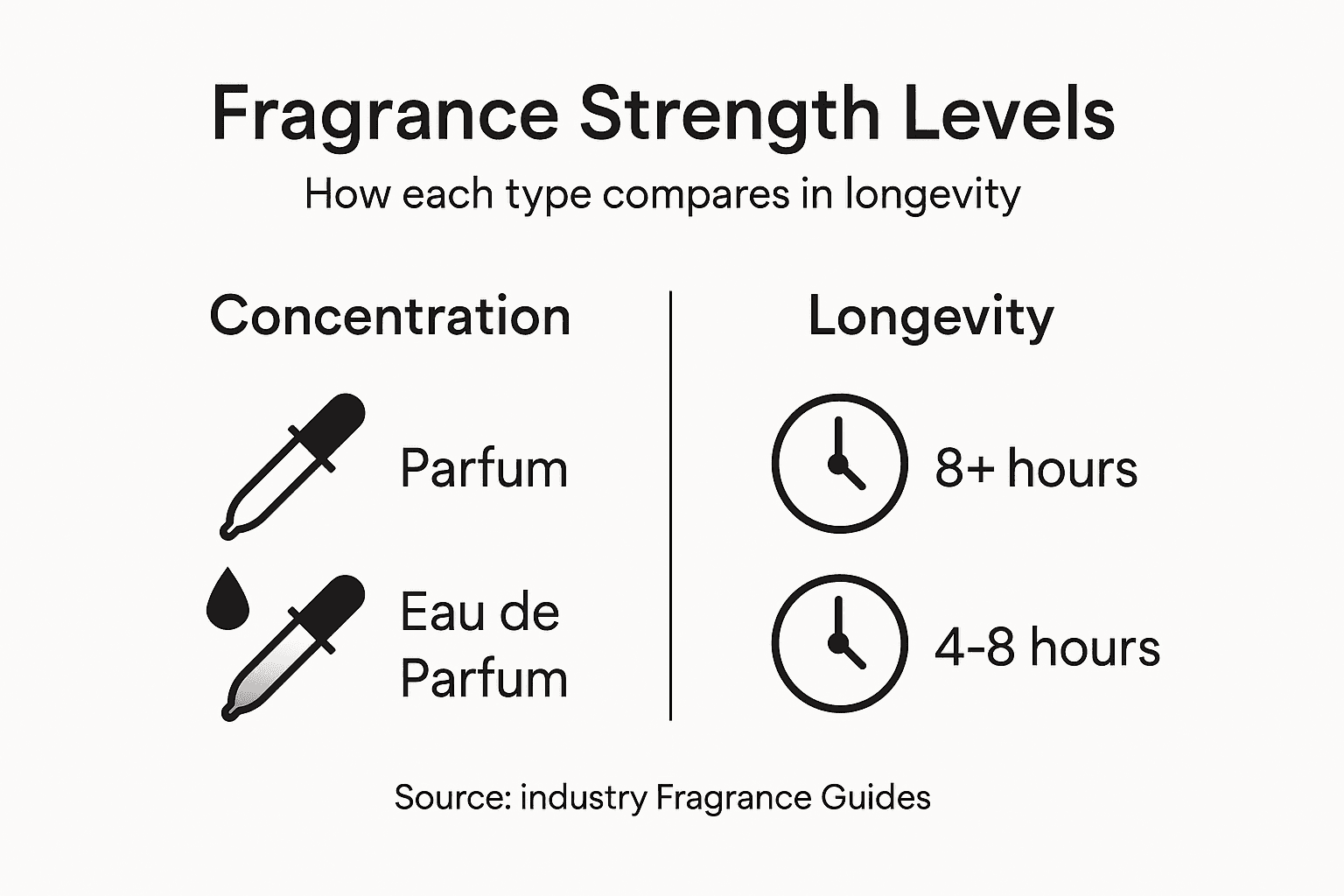
Eau de parfum is a fragrance classification defined by its concentration level. Specifically, it contains 15–20% fragrance components suspended in a solvent base. This puts it in a sweet spot between lighter colognes and heavier pure perfumes.
The name comes from the French tradition of scent dispersion. The term “parfum” historically derived from Latin meaning “through smoke,” referencing how traditional perfumes were dispersed into the air.
Here’s what actually goes into an eau de parfum:
- 15–20% fragrance concentration (the aromatic compounds)
- 80–85% solvent base (alcohol and water)
- The alcohol evaporates quickly, leaving scent molecules on your skin
- Your body chemistry then interacts with these molecules, creating a unique scent trail
Why the Nordic fragrance enthusiast should care: This concentration level means eau de parfum lasts 4–8 hours on your skin. It’s stronger than cologne, more affordable than pure parfum, and versatile enough for daily wear.
Common Myths Debunked
Myth #1: “All perfumes are basically the same.” Not true. The concentration of fragrance components directly affects longevity, projection, and price. Eau de parfum sits as the industry standard for good reason.
Myth #2: “Higher concentration always means better quality.” Wrong. Pure parfum (20%+ concentration) can feel overwhelming on skin. Eau de parfum hits the balance most people actually want.
Myth #3: “Eau de parfum is too expensive for sampling.” This is exactly why sample testing matters. You’re investing €50–120 in a full bottle—testing first eliminates buyer’s remorse. Services offering fragrance sample testing let you explore options before committing.
Myth #4: “Designer fragrances are always better than niche brands.” False. Both categories have excellent options. What matters is finding the scent that works with your skin chemistry.
Eau de parfum is the most common fragrance type you’ll encounter—and for good reason. It delivers real longevity without the intensity of pure parfum.
Pro tip: Test eau de parfum on your inner wrist or behind your ears where skin is thinner and warmth helps diffusion. Wait 15 minutes before deciding if you like it—the true scent emerges after initial alcohol evaporation.
Fragrance Concentration Levels Compared
Fragrance isn’t one-size-fits-all. The concentration level determines everything: how long it lasts, how strong it smells, and what you’ll pay. Understanding these differences helps you pick the right type for your lifestyle.
Fragrances are classified into five main tiers based on aromatic compound concentration. Each tier has distinct characteristics and use cases. Here’s the breakdown:
Here’s a comparison of fragrance concentration levels and their performance factors:
| Fragrance Type | Concentration (%) | Longevity (Hours) | Typical Price (50ml) |
|---|---|---|---|
| Parfum (Extrait) | 20–30 | 8+ | €100–300+ |
| Eau de Parfum | 15–20 | 4–8 | €50–120 |
| Eau de Toilette | 5–15 | 2–4 | €30–80 |
| Eau de Cologne | 2–4 | 1–2 | €20–60 |
| Eau Fraiche | 1–3 | <1 | €10–40 |
- Parfum (Extrait): 20–30% fragrance concentration—the strongest option
- Eau de Parfum: 15–20% fragrance concentration—the sweet spot for most people
- Eau de Toilette: 5–15% fragrance concentration—lighter and more affordable
- Eau de Cologne: 2–4% fragrance concentration—very subtle, fades quickly
- Eau Fraiche: 1–3% fragrance concentration—barely-there scent, mostly for refreshing
Why Concentration Matters
The concentration of fragrance compounds directly impacts longevity, projection, and price. Higher concentration means the scent lasts longer and projects further—but costs significantly more.
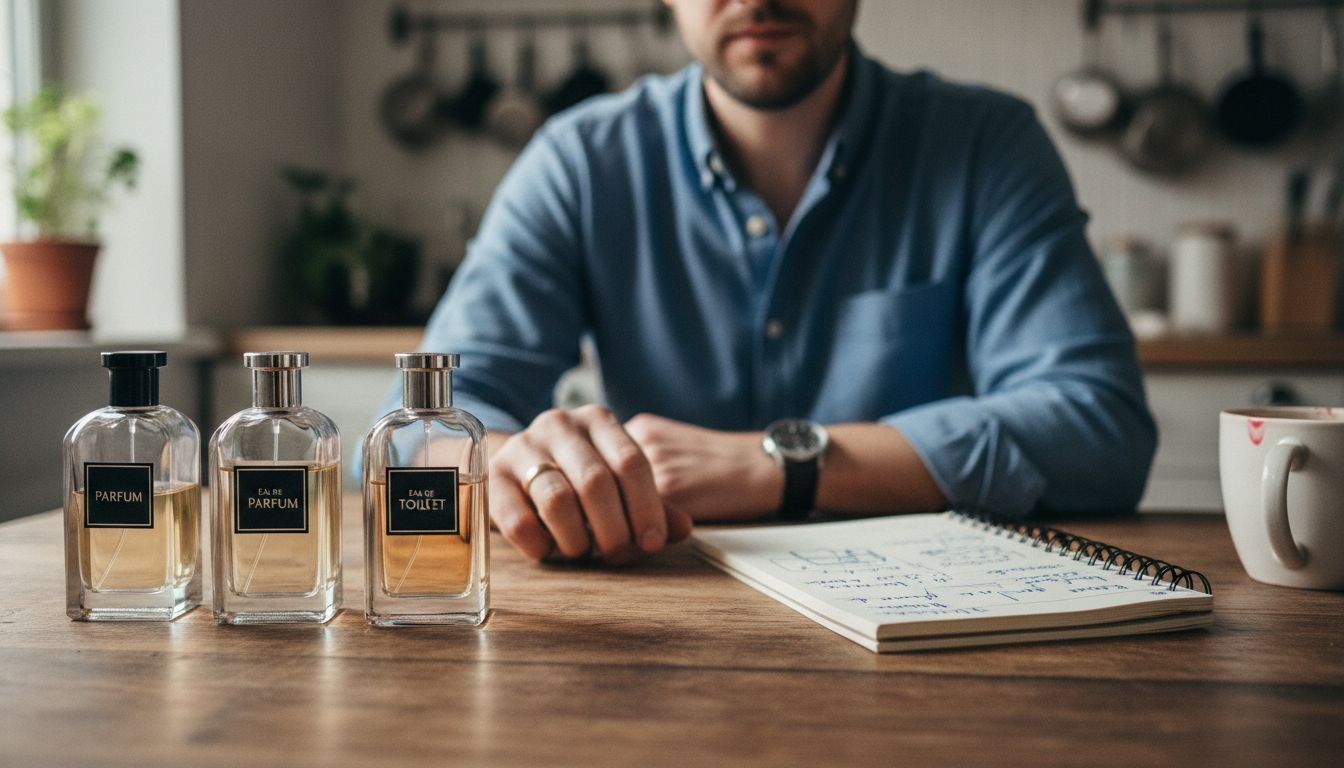
Parfum is the luxury tier. It’s incredibly potent and can last 8+ hours. However, a single bottle costs €100–300+. For most people, this is overkill.
Eau de parfum hits the practical balance. It lasts 4–8 hours with solid projection and costs €50–120. This is why it’s the industry standard.
Eau de toilette is lighter and better for warm weather. It lasts 2–4 hours but costs less. Perfect for day wear or if you prefer subtle scent.
Eau de cologne and eau fraiche are niche products. They’re too light for most people seeking real fragrance performance.
Higher concentration means more money upfront—but also means you’re applying less per wear, so bottles last longer.
Making the Right Choice for You
Your climate matters. Nordic summers call for lighter concentrations; winter supports heavier scents. Your budget matters too.
Need longevity? Go eau de parfum. Want to test multiple scents? Start with fragrance samples in eau de parfum strength. You’ll experience real performance without the full bottle commitment.
Pro tip: If you prefer eau de toilette but want it to last longer, apply to pulse points (wrists, neck, behind ears) and layer with an unscented moisturizer—this extends longevity by 1–2 hours.
Longevity, Strength, and Scent Experience
Eau de parfum delivers real performance. You spray it once in the morning and it stays with you through lunch, through work, through evening plans. But longevity isn’t just about duration—it’s about how the scent evolves.
Scent strength depends on three factors: concentration (which we covered), formulation, and your body chemistry. Fixatives like resins and synthetic musks are added to fragrances to extend longevity and control how the scent diffuses.
Here’s what you experience over time:
- First 15 minutes (top notes): Brightest, most volatile—fades quickly
- 30 minutes to 4 hours (heart notes): The core scent emerges—this is the main event
- 4+ hours (base notes): Deeper, warmer—lasts longest due to fixatives
Eau de parfum typically lasts 4–8 hours because the 15–20% concentration maintains heart and base notes effectively. You’re not getting just the fleeting top notes like with cologne.
The Body Chemistry Factor
Here’s the thing nobody tells you: the same fragrance smells different on every person. Your natural body odor blends with the fragrance to create a unique scent that’s entirely yours.
Skin pH, natural oils, hormones, diet, and even stress levels affect how a fragrance performs on your skin. One person’s “lasts all day” is another person’s “fades by noon.”
This is why sampling matters. Testing fragrances before committing shows you real performance on your specific skin chemistry. What works brilliantly on your friend might perform differently on you.
Your body chemistry is unique—what performs amazingly on one person may feel weaker or stronger on you, making sample testing essential.
Maximizing Strength and Longevity
Want eau de parfum to perform even better? Apply strategically. Pulse points (wrists, neck, behind ears) generate heat that amplifies diffusion.
Humid skin holds fragrance longer than dry skin. Apply right after showering when skin is still slightly damp. Layer with an unscented moisturizer first—it creates a base that extends longevity by hours.
Don’t rub your wrists together. It breaks down fragrance molecules and reduces longevity. Just spray and let it settle.
Pro tip: Apply eau de parfum to your chest and behind your ears rather than just wrists—chest warmth projects scent naturally throughout the day without you constantly smelling it yourself.
Choosing Eau de Parfum for Your Needs
Choosing the right eau de parfum isn’t about finding the “best”—it’s about finding what works for you. Your lifestyle, climate, budget, and preferences all matter.
Start by asking yourself these questions:
- Do you want something for daily wear or special occasions?
- Do you prefer subtle or bold scents?
- How sensitive is your skin to fragrance ingredients?
- What’s your realistic budget for fragrance?
- Are you drawn to specific scent families (floral, woody, fresh, oriental)?
Your climate shapes your choice too. Nordic winters suit richer, warmer fragrances. Summer calls for fresher, lighter options. Eau de parfum works year-round because its 15–20% concentration adapts well to temperature changes.
When selecting a fragrance, consider the following factors for an optimal match:
| Personal Factor | Why It Matters | Practical Tip |
|---|---|---|
| Skin Sensitivity | Some ingredients cause irritation | Test on a small area first |
| Climate | Scent strength changes with temperature | Choose lighter scents for summer |
| Usage Frequency | Daily or special occasion use impacts cost | Start with samples for daily wear |
| Scent Family Preference | Different notes suit different tastes | Sample across floral, woody, fresh types |
Safety and Quality Standards
Fragrance products are regulated as cosmetics and meet safety standards for consumer use. Check product labeling for ingredient lists, especially if you have sensitive skin or known allergies.
Some people react to specific fragrance components. Common irritants include certain essential oils or synthetic aldehydes. Testing samples first prevents costly mistakes with full bottles.
Global standards ensure safe fragrance ingredients are used across the industry. Reputable brands follow these guidelines. When choosing eau de parfum, look for transparent ingredient information.
Finding Your Match Through Sampling
Don’t commit to a full bottle without testing. Sampling lets you experience how fragrances perform on your specific skin chemistry over several days.
Test multiple scents. Wear one sample per day for at least 24 hours. Notice how it smells at different times, how long it lasts, and whether you still like it after 8 hours.
Your preferences might surprise you. Scents you expected to love might feel off. Unexpected options might become favorites. This is normal—fragrance is deeply personal.
Sampling before buying saves money and reduces the risk of owning a full bottle you don’t actually want to wear.
Budget Considerations
Eau de parfum typically costs €50–150 per 50ml bottle. A 30ml bottle costs less but offers fewer sprays. Calculate cost-per-wear: if a bottle lasts 6 months and you wear it 4 times weekly, that’s roughly €0.50 per wear.
Samples cost far less upfront. You’re investing €3–10 to test something before committing €80–120. The math favors sampling.
Pro tip: Start your collection with 2–3 eau de parfum samples in different scent families rather than one full bottle—this gives you versatility and helps you discover your true preferences before investing in larger sizes.
Alternatives and Mistakes to Avoid
Eau de parfum is excellent, but it’s not the only option. Understanding alternatives and common pitfalls helps you make informed choices that actually align with your values and skin.
The biggest mistake? Assuming fragrance is inherently safe just because it’s widely used. Many fragrances contain undisclosed chemical compositions protected as trade secrets. Some fragrance ingredients pose potential health risks including skin sensitization and respiratory issues.
Here are the mistakes to avoid:
- Buying full bottles without sampling first
- Trusting marketing claims without checking actual ingredients
- Assuming “unscented” means fragrance-free (many unscented products still contain masking fragrances)
- Ignoring ingredient transparency
- Overlooking skin sensitivity patterns
- Thinking all natural-sounding ingredients are automatically safe
Understanding Fragrance Labeling
The word “fragrance” on ingredient lists is vague. Manufacturers don’t have to disclose individual fragrance components due to trade secret protection. This lack of transparency creates genuine consumer concerns about potential health impacts.
If you want full ingredient disclosure, look for products using certified natural fragrance components or fragrance-free formulations.
“Unscented” and “fragrance-free” aren’t identical. Unscented products may contain masking fragrances that neutralize odor. Fragrance-free products contain zero added fragrance.
Cleaner Alternatives
If you prefer transparency, consider these options:
- Certified natural fragrances: Made from disclosed essential oils and plant extracts
- Tuoksuttomat tuotteet: Ei lisättyä tuoksua – sopii herkälle iholle
- Pienemmät merkit täydellisillä ainesosaluetteloilla: Tarjoavat usein täydellisen läpinäkyvyyden
- Alkoholittomat edp-vaihtoehdot: Öljypohjaiset koostumukset herkälle iholle
- Yhden nuotin tuoksut: Yksinkertainen koostumus – helpompi tunnistaa mahdolliset ärsyttäjät
Nämä vaihtoehdot uhraavat hieman kestoa tai leviämistä, mutta tarjoavat mielenrauhaa sen suhteen, mitä ihollesi levität.
Kaikki eivät tarvitse perinteistä eau de parfumia. Jos ainesosien läpinäkyvyys tai ihoherkkyys huolestuttaa, on olemassa vaihtoehtoja, jotka toimivat kunnioitettavasti samalla kun ne vastaavat erityistarpeisiisi.
Testaaminen ihollesi
Ennen kuin sitoudut mihinkään tuoksutyyppiin, testaa sitä ensin pienelle ihoalueelle. Levitä sisäkyynärpäähän tai korvan taakse, odota 24 tuntia ja tarkkaile reaktioita. Tämä yksinkertainen vaihe havaitsee mahdolliset herkkyydet ennen kuin niistä tulee ongelmia.
Jos koet päänsärkyä, huimausta, hengitysteiden ärsytystä tai ihon punoitusta mistä tahansa tuoksusta, lopeta sen käyttö välittömästi. Kehosi välittää tärkeää tietoa.
Pro vinkki: Jos perinteinen eau de parfum ärsyttää ihoasi, testaa ensin hajusteettomia vaihtoehtoja tai sertifioituja luonnollisia vaihtoehtoja – saatat huomata pitäväsi niistä joka tapauksessa, ja ne poistavat epävarmuuden ainesosista.
Löydä täydellinen Eau de Parfum luottavaisin mielin
Oikean eau de parfumin valitseminen voi tuntua ylivoimaiselta, koska jokainen tuoksu vaikuttaa ainutlaatuisesti kehon kemiaasi ja elämäntyyliisi. Artikkeli korostaa haasteita, kuten kestävyyden löytämistä ilman ylivoimaa, kalliiden virheiden välttämistä ja tuoksutiheyden ymmärtämistä. Haluat tuoksun, joka todella kestää ja sopii henkilökohtaiseen tyyliisi ja budjettiisi.
Befrsh.com ymmärtää nämä kamppailut ja tarjoaa älykkään ratkaisun. Tarjoamme laajan valikoiman korkealaatuisia eau de parfum -näytteitä sekä suosituilta että pienemmiltä merkeiltä. Tämä antaa sinun tutkia, miten kukin tuoksu toimii ihollesi, ennen kuin investoit täyteen pulloon. Näytteiden otto poistaa arvailun ja riskin tuoksushopailusta ja antaa sinun nauttia löytämisen ilosta.
Aloita todellisen tuoksukokemuksen saaminen nyt kokeilemalla tyylikkäitä eau de parfum -näytteitä. Helpon tilaamisen ja nopean toimituksen ansiosta Befrsh.com-sivustolta voit luottavaisesti löytää nimikkotuoksusi ilman sitoutumista. Avaa kestävä luottamus tuoksuvalintaasi tänään.
Usein kysytyt kysymykset
Mikä on eau de parfum?
Eau de parfum on tuoksutyyppi, joka sisältää 15–20 % aromaattisia yhdisteitä liuotinpohjassa, mikä tekee siitä vahvemman kuin kölninvesi ja edullisemman kuin puhdas hajuvesi. Se kestää tyypillisesti 4–8 tuntia iholla.
Miten pitoisuus vaikuttaa tuoksun suorituskykyyn?
Tuoksuyhdisteiden pitoisuustaso vaikuttaa sen kestävyyteen, leviämiseen ja hintaan. Korkeammat pitoisuudet, kuten hajuvesi, kestävät pidempään, mutta ovat kalliimpia. Eau de parfum tarjoaa käytännöllisen tasapainon, tarjoten vahvan suorituskyvyn kohtuulliseen hintaan.
Miksi minun pitäisi kokeilla eau de parfumia ennen ostamista?
Näytteiden ottaminen antaa sinun testata, miten tuoksu reagoi kehon kemiaasi, ja nähdä, pidätkö tuoksusta ajan mittaan, mikä vähentää ostajan katumuksen riskiä investoitaessa täyteen pulloon.
Mitkä ovat eau de parfumin valinnan edut muihin tuoksutyyppeihin verrattuna?
Eau de parfum tarjoaa 4–8 tunnin keston, täyteläisen tuoksuprofiilin pitoisuutensa ansiosta ja monipuolisuuden päivittäiseen käyttöön tai erikoistilaisuuksiin, mikä tekee siitä suositun valinnan tuoksuharrastajien keskuudessa.
Leave a comment