Fragrance Top Notes: Why They Matter Most

Finding the perfect perfume can be challenging when the first impression means everything. For fragrance lovers and curious gift seekers, the fleeting nature of top notes makes sampling high-quality scents essential before buying. These bright and volatile molecules create the immediate burst of aroma that shapes your perception and influence your choices. Discover how understanding top notes empowers you to make confident sample selections and appreciate the artistry behind each fragrance.
Table of Contents
- What Are Fragrance Top Notes?
- Common Types And Scent Families
- How Top Notes Affect First Impressions
- The Transition From Top To Heart Notes
- Choosing Perfume Samples By Top Notes
Key Takeaways
| Point | Details |
|---|---|
| Understanding Top Notes | Top notes create the first aromatic impression, lasting 5-15 minutes, and set the stage for deeper scent layers. |
| Importance of Scent Families | Different scent families like Citrus, Green, Herbal, and Aromatic define the characteristics of top notes and influence fragrance perception. |
| First Impressions Matter | Top notes trigger immediate emotional responses and impact initial purchase decisions, making them crucial for capturing attention. |
| Sampling Strategy | When selecting perfumes, focus on top notes and sample multiple fragrances to find those that align with personal preferences and body chemistry. |
What Are Fragrance Top Notes?
Fragrance top notes represent the initial aromatic impression you experience when first applying a perfume. These volatile scent molecules create the critical first wave of olfactory sensation that determines your immediate perception of a fragrance. Volatile compounds rapidly evaporate within minutes of application, setting the stage for deeper scent layers.
When a perfumer crafts a fragrance, top notes serve as the sensory introduction - like the opening scene of a captivating movie. These initial scents are strategically designed to be bright, assertive, and attention-grabbing. Common top note characteristics include:
- Citrus elements like lemon, bergamot, and orange
- Light herbal notes such as lavender and rosemary
- Sharp botanical extracts including ginger and mint
- Clean, crisp aromatic compounds
Understanding top notes requires recognizing their ephemeral nature. Top notes consist of small, light molecules) that quickly dissipate, typically lasting between 5-15 minutes after initial application. Their primary purpose is to create an immediate sensory impact and entice the wearer into experiencing the fragrance’s deeper heart and base notes.
Pro tip: When sampling a new fragrance, wait at least 15-20 minutes to experience its full olfactory complexity beyond the initial top notes.
Common Types and Scent Families
Fragrance top notes represent a diverse landscape of aromatic profiles, each belonging to specific scent families that define their characteristic qualities. Citrus notes dominate the top note category, bringing vibrant and energetic impressions to perfume compositions. These initial scents provide the first olfactory experience and set the stage for the fragrance’s evolving character.
The primary scent families for top notes include several distinctive categories:
- Citrus Family: Bright, zesty notes like lemon, bergamot, orange, and grapefruit
- Green Family: Fresh, crisp botanical scents reminiscent of grass, leaves, and herbs
- Herbal Family: Light, clean aromas such as lavender, rosemary, and basil
- Aromatic Family: Sharp, clean scents with hints of spice and botanical extracts
Citrus notes remain exceptionally versatile, seamlessly blending with floral, spicy, and woody base notes. Their lightweight molecular structure allows them to create an immediate burst of freshness, making them a cornerstone in perfume design. These top notes typically last between 5-15 minutes, providing a dynamic and engaging initial impression.
Understanding these scent families helps fragrance enthusiasts appreciate the complexity and artistry behind perfume creation, revealing how perfumers strategically combine different aromatic elements to craft unique sensory experiences.
Here’s a handy overview of top note scent families and their distinguishing features:
| Scent Family | Common Notes | Key Sensory Effect |
|---|---|---|
| Citrus | Lemon, bergamot | Bright and energizing |
| Green | Grass, leaves | Fresh and airy |
| Herbal | Lavender, rosemary | Clean and soothing |
| Aromatic | Mint, ginger | Sharp and invigorating |
Pro tip: When exploring new fragrances, pay attention to the top notes’ initial burst and how they transition into deeper, more complex scent layers.
How Top Notes Affect First Impressions
First impressions in fragrance are everything), with top notes serving as the critical sensory gateway that determines whether a perfume captures or loses a potential wearer’s attention. These initial volatile compounds create an instantaneous emotional and psychological response, essentially acting as the fragrance’s opening argument in a complex olfactory conversation.
The psychological impact of top notes is profound and multifaceted:
- Trigger immediate emotional reactions
- Create expectations about the fragrance’s overall character
- Influence initial purchase decisions
- Determine whether someone continues sampling the scent
- Provide a preview of the fragrance’s underlying personality
Volatile ingredients engage sensory responses that can evoke memories, moods, and subconscious associations within seconds of application. A bright citrus top note might remind someone of a sunny morning, while a sharp herbal note could transport them to a garden. These instantaneous connections make top notes powerful marketing tools and critical components of fragrance design.

Perfume designers understand that consumers typically make snap judgments about a fragrance within the first 30 seconds of application. The complexity of these initial notes determines whether a potential buyer will explore further or immediately dismiss the scent. This makes top notes not just an aromatic introduction, but a strategic sensory invitation.
Pro tip: Test fragrances on your skin and wait at least five minutes to experience how the top notes transition and interact with your personal body chemistry.
The Transition From Top to Heart Notes
Fragrance notes evolve dynamically) through a carefully choreographed transformation that turns an initial burst of scent into a complex sensory experience. The journey from top to heart notes represents a delicate molecular ballet, where volatile initial compounds gracefully give way to more nuanced aromatic layers.
The transition typically involves several key characteristics:
- Gradual fading of initial bright, sharp top notes
- Emergence of more complex, richer middle notes
- Smoothing of initial aromatic intensity
- Revealing deeper fragrance personality
- Creating a harmonious scent progression
Perfumers craft this transition meticulously, ensuring a seamless development that captures the wearer’s imagination. The heart notes, appearing approximately 20-60 minutes after application, serve as the fragrance’s narrative core. They bridge the gap between the ephemeral top notes and the long-lasting base notes, creating a sophisticated olfactory story.
Understanding this transition requires recognizing the intentional design behind fragrance composition. Each note is strategically selected and balanced to create a sensory journey that unfolds gradually, transforming from an initial bright impression to a more complex, emotionally resonant experience.
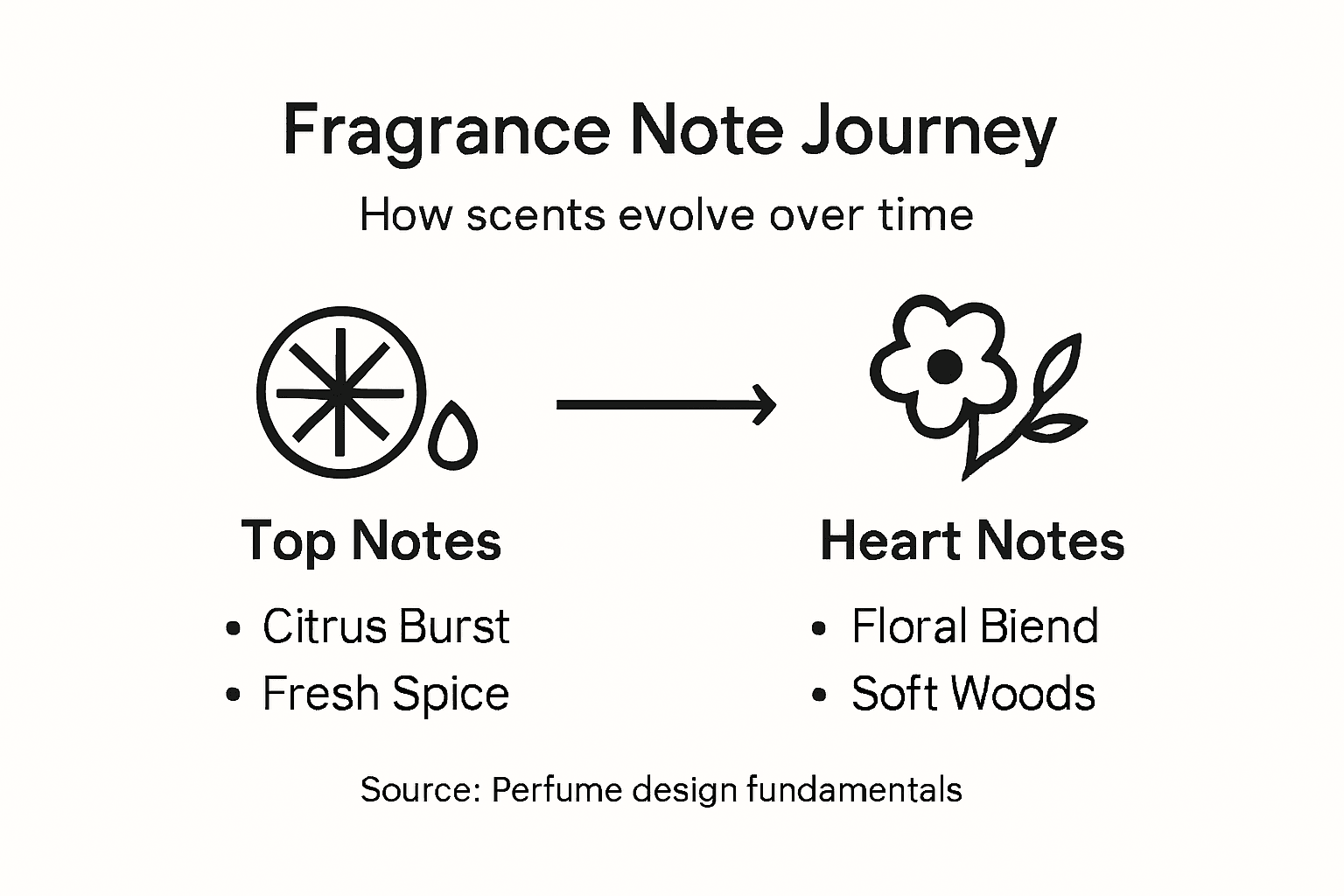
The following table summarizes how top notes transition to deeper fragrance layers:
| Stage | Timing After Application | Main Characteristics |
|---|---|---|
| Top Notes | 0–15 minutes | Volatile, fresh, attention-grabbing |
| Heart (Middle) Notes | 20–60 minutes | Rich, balanced, reveal fragrance’s core |
| Base Notes | 1–3 hours and beyond | Deep, long-lasting, foundation aroma |
Pro tip: Wait at least 30 minutes after applying a fragrance to experience its true character, as the heart notes reveal the perfume’s genuine personality.
Choosing Perfume Samples by Top Notes
Selecting perfume samples strategically requires understanding how top notes influence your initial sensory experience. These first aromatic impressions are critical in determining whether a fragrance will resonate with your personal preferences and body chemistry.
When exploring perfume samples, consider these key evaluation strategies:
- Sample multiple fragrances from different scent families
- Apply perfume on clean skin, avoiding other competing scents
- Test fragrances during different times of day
- Observe how top notes interact with your natural body chemistry
- Allow sufficient time for scent evolution
Choosing perfumes involves understanding individual scent preferences, which means identifying the top note families that consistently attract you. Some individuals are drawn to bright citrus notes, while others prefer green, herbal, or woody initial impressions. Recognizing your preferred aromatic profiles can significantly streamline your sampling process.
The art of selecting perfume samples requires patience and a systematic approach. By focusing on top notes as your initial screening mechanism, you can efficiently narrow down fragrances that merit deeper exploration through extended wear and testing.
Pro tip: Collect sample strips or small vials to test fragrances multiple times in different environments before making a final selection.
Discover Your Perfect Scent Starting With the Top Notes
Understanding the importance of fragrance top notes is the first step toward finding a perfume that truly speaks to you. These fleeting, vibrant scents create your initial emotional connection to a fragrance but can be tricky since they evaporate quickly and reveal deeper layers over time. If you have ever felt unsure about buying a perfume because you couldn’t experience its full complexity in-store or worried your choice might not suit your unique chemistry, you are not alone.
Befrsh.com offers a practical solution by providing high-quality perfume samples that let you explore a wide range of top notes and scent families at your own pace. Whether you want to experience fresh citrus bursts, soothing herbal hints, or sharp aromatic touches before committing to a full bottle, our diverse selection enables confident discovery. You can sample popular and unique fragrances from trusted brands with no risk and the convenience of fast delivery.
Start your scent journey today at Befrsh.com and experience firsthand how top notes evolve on your skin. Take control of your fragrance choices with sample sets, travel-size bottles, and special offers designed for easy and enjoyable testing. Don’t let fleeting first impressions stop you from finding a signature scent. Explore now and transform your fragrance routine with confidence.
Frequently Asked Questions
What are fragrance top notes?
Fragrance top notes are the initial scents you experience when applying a perfume. They consist of volatile scent molecules that create an immediate impression, lasting approximately 5-15 minutes before transitioning to deeper notes.
Why are top notes important in perfumes?
Top notes set the stage for the overall fragrance experience. They create the first emotional and psychological response, influencing a potential wearer’s decision to explore the fragrance further.
How do top notes evolve into heart notes?
Top notes gradually fade to reveal heart notes, which appear 20-60 minutes after application. This transition involves a shift from bright, volatile scents to more complex, richer aromas that define the fragrance’s core character.
How should I choose a perfume based on its top notes?
When choosing a perfume, sample scents from different fragrance families to identify the top notes that appeal to you. Test fragrances on clean skin, observe how they interact with your body chemistry, and allow time for the scent to evolve before making a selection.