

Product Quality in Perfumes – How to Recognize Genuine Quality

Finding the right fragrance can feel challenging with countless options available and the authenticity of quality not always obvious. For a young adult living in Finland, trying a perfume sample before buying offers an opportunity to test different options without risk. By examining, for example, the origin of ingredients, fragrance concentrations, and manufacturing methods, you learn what true perfume quality consists of and can more easily find a fragrance that suits you.
Contents
- What Constitutes Product Quality in Perfumes
- Quality Categories, Fragrance Concentrations, and Fragrance Families
- Origin of Raw Materials and Production Process
- How to Identify True Quality in Perfume Samples
- Common Risks and Misleading Purchases Online
Key Takeaways
| Point | Details |
|---|---|
| Authenticity of Perfume | Identifying a quality perfume is influenced by the clarity of the scent pyramid, the quality of raw materials, and the development of the fragrance. |
| Raw Materials | Choose a perfume with high-quality natural or synthetic raw materials. |
| Fragrance Concentrations | Different fragrance concentrations affect the intensity, longevity, and purpose of the scent. |
| Online Shopping Risks | Pay attention to counterfeits and low-quality products when shopping online. |
What Constitutes Product Quality in Perfumes
Identifying quality perfumes is important for every fragrance enthusiast. Perfume quality is made up of several factors that affect both the product's characteristics and the user experience.
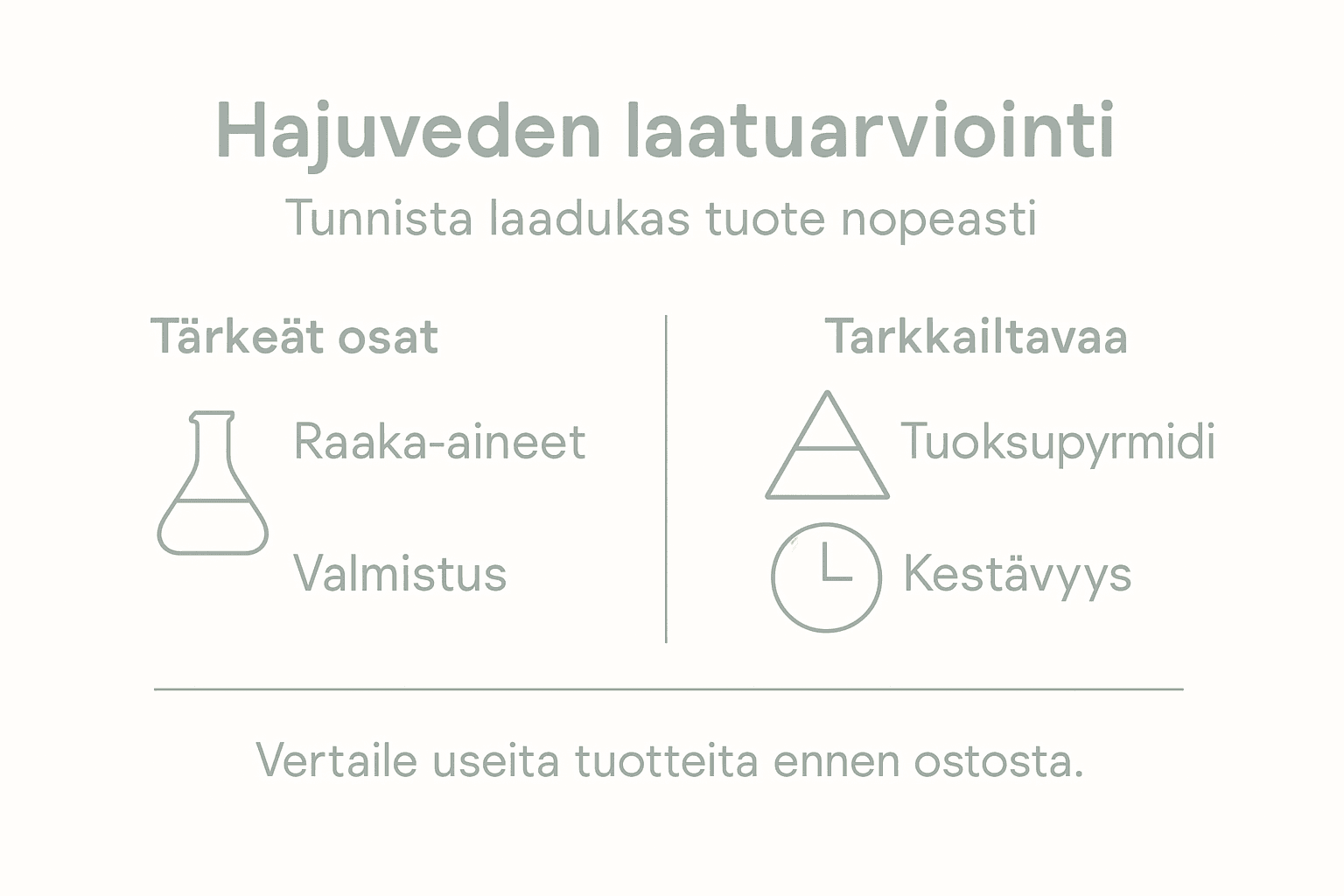
Quality in perfumes is built upon three key elements:
- Origin of Raw Materials: High-quality fragrances use pure and carefully selected ingredients.
- Fragrance Concentrations: Professional blending ratios affect the depth and longevity of the scent.
- Production Process: The product's manufacturing method and standards determine the final quality.
From the consumer's perspective, assessing quality means a comprehensive understanding of the product's characteristics. According to ISO standards, quality refers to the extent to which a product meets its specified requirements.
The following criteria are also emphasized in fragrance quality:
- Chemical safety
- Fragrance intensity
- Longevity and evaporation rate
- Compatibility with skin
Overall, a quality perfume results from a professional manufacturing process where every detail has been carefully considered. The selection of raw materials, blending ratios, and manufacturing methods are key.
Pro-tip: Always check the perfume's ingredient list and find out the origin of the raw materials before making a purchase decision.
Quality Categories, Fragrance Concentrations, and Fragrance Families
The world of perfumes is a multifaceted and interesting entity, where fragrance concentrations and families determine the inherent quality of the product. The scent pyramid perfectly illustrates the layered nature and evolution of a fragrance.
Fragrance concentrations are divided into five main categories:
- Parfum/Extrait (20-40% oil concentration)
- Eau de Parfum (15-20% oil concentration)
- Eau de Toilette (5-15% oil concentration)
- Eau de Cologne (2-5% oil concentration)
- Perfume Mist (less than 2% oil concentration)
Fragrance families, in turn, offer an interesting way to classify and understand different olfactory experiences. The main fragrance families are:
Below is a comparison of the differences in fragrance experience and purpose across perfume categories:
| Perfume Category | Longevity on Skin | Fragrance Intensity | Suitability for Occasions |
|---|---|---|---|
| Parfum/Extrait | 8-12 hours | Very strong | Parties, important events |
| Eau de Parfum | 6-8 hours | Strong | Work, evening events |
| Eau de Toilette | 3-5 hours | Medium strength | Daytime use, spring/summer |
| Eau de Cologne | 1-2 hours | Light | Refreshing, quick use |
| Perfume Mist | Less than 1 hour | Very mild | Instant refreshment, travel |
- Fresh: Lemon, sea breeze, green leaves
- Floral: Rose, jasmine, ylang-ylang
- Woody: Sandalwood, cedar, patchouli
- Oriental: Vanilla, nutmeg, musky
- Animalic: Amber, velvety musk notes
Each fragrance has its own scent pyramid, which consists of three layers:
- Top note (first few minutes)
- Heart note (1-4 hours)
- Base note (4-8 hours)
Fragrance concentration directly affects the scent's intensity, longevity, and price.
Pro-tip: Experiment with different fragrance concentrations and families to find your personal favorite.
Origin of Raw Materials and Production Process
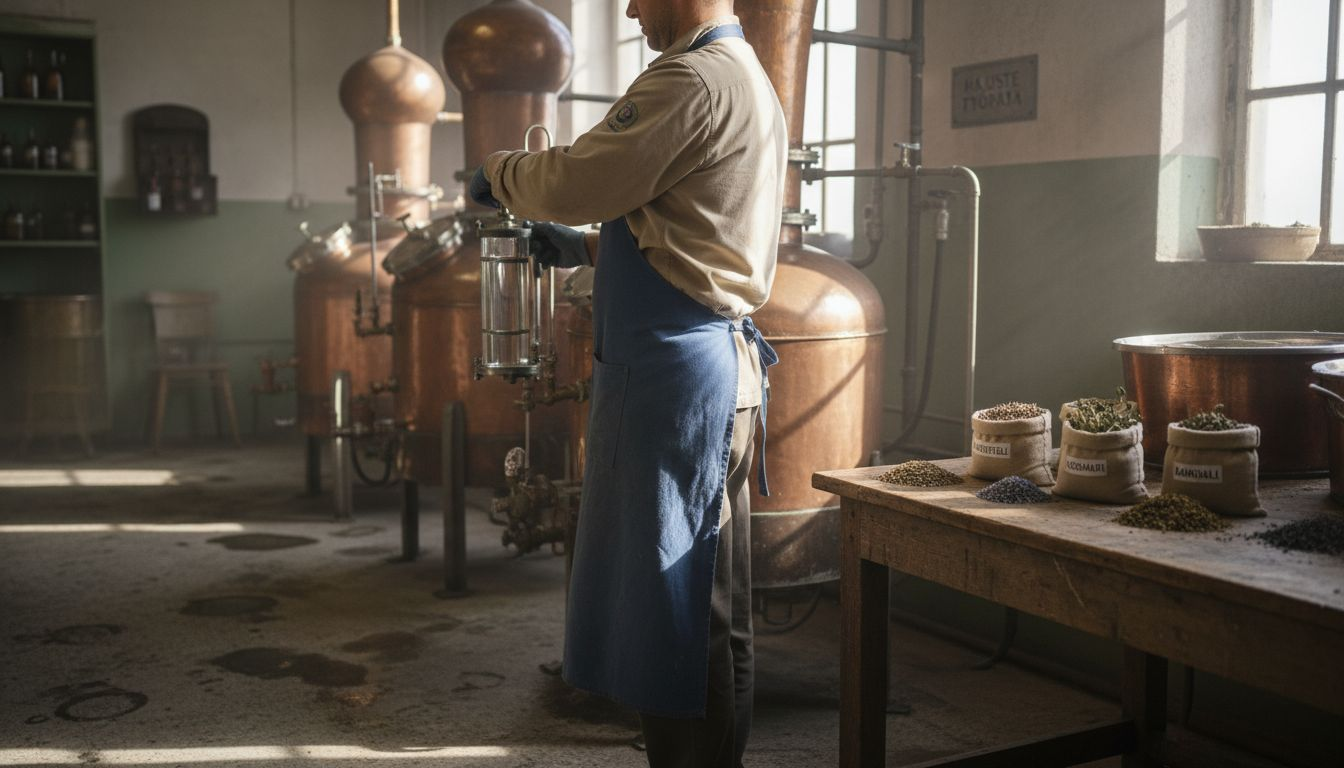
The perfume manufacturing process is a complex art form that combines chemistry, creativity, and precise craftsmanship. The work of a perfumer requires a deep understanding of raw materials and their properties.
The origin of raw materials can be divided into two main categories:
- Natural raw materials: Authentic flower extracts, wood oils, fruit essences
- Synthetic raw materials: Chemical compounds developed in laboratories
Up to 60-70% of the price of luxury perfumes comes from the acquisition of raw materials and the production process. This highlights their importance in the quality of the final product.
The following table summarizes the characteristics of natural and synthetic raw materials:
| Characteristic | Natural Raw Materials | Synthetic Raw Materials |
|---|---|---|
| Sustainability in nature | Less sustainable | Often more environmentally friendly |
| Versatility in scents | Natural nuances | Most easily modifiable |
| Price | Higher | More affordable |
| Allergy risk | Potentially higher | More controlled composition |
The production process involves several critical steps:
- Careful selection of raw materials
- Precise blending ratios
- Extensive shelf-life and durability tests
- Finishing and bottling
Each fragrance is like a work of art, where raw materials are the painter's colors.
Pro-tip: Examine the perfume's ingredients and find out if it contains more natural or synthetic raw materials.
How to Identify True Quality in Perfume Samples
Assessing the authenticity of perfume samples requires careful observation and an understanding of the complex structure of a fragrance. The layered development of a scent is one of the most important indicators of quality.
When identifying a truly high-quality perfume, it's worth paying attention to the following criteria:
- Scent pyramid: Genuine perfumes have clear top, heart, and base notes.
- Quality of raw materials: Pure and high-quality natural or synthetic components.
- Fragrance development: Diverse and profound transformation of aromas on the skin.
- Packaging quality: Carefully designed and finished.
Identifying fragrance raw materials is a crucial skill in assessing quality. A good perfume develops in stages and maintains its appeal for a long time.
Practical testing helps to evaluate the authenticity of the sample:
- Apply a small amount to the skin.
- Observe the fragrance development for 4-6 hours.
- Pay attention to the depth and versatility of the scent.
A genuine quality perfume is like a multi-movement musical piece where each note complements the others.
Pro-tip: Don't make a final decision based on the first few minutes—allow the fragrance to develop on your skin.
Common Risks and Misleading Purchases Online
The online perfume market is full of both opportunities and pitfalls. The risks of online shopping require precision and consideration from the consumer before making a purchase decision.
The most common risks in buying perfumes online fall into the following categories:
- Counterfeits: Non-genuine products that appear authentic.
- Low-quality samples: A significant deterioration in fragrance quality.
- Incorrect storage: Poor transport conditions that affect product properties.
- Deceptive descriptions: Product descriptions that do not match reality.
To ensure the security of your purchase decision, we recommend the following measures:
- Check the seller's reliability.
- Read customer reviews carefully.
- Compare prices from multiple sources.
- Pay attention to return policies.
Too low a price is often a sign of a potential scam or counterfeit.
Pro-tip: Always use reliable payment methods that offer protection against misuse.
Discover the Secrets of True Quality with Befrsh Samples
Identifying product quality in perfumes is a challenge for every fragrance lover, and the goal is to find that perfect scent whose scent pyramid, raw materials, and longevity meet expectations. Trying high-quality perfume samples helps you make a carefree and precise choice without unnecessary risks.
Explore our diverse selection of women's, men's, and unisex perfume samples at Befrsh.com and experience the layered nature of fragrances and the distinguishing features of quality in practice. Don't let counterfeits or low-quality products deceive you—the right solution for your beloved scent can be easily found when you try first. Act now and ensure the authenticity and personal suitability of your fragrance easily and safely with Befrsh perfume samples.
Frequently Asked Questions
How can I identify true quality in perfume samples?
To identify a truly high-quality perfume, pay attention to the scent pyramid, the quality of raw materials, and how the fragrance develops on your skin.
What are the fragrance concentrations of perfumes and their effects?
Perfume fragrance concentrations vary and affect the scent's intensity and longevity. For example, Eau de Parfum products contain 15-20% oil concentration, while Eau de Cologne products contain only 2-5%.
What is the significance of the origin of raw materials in perfumes?
The origin of raw materials affects the quality of a perfume; high-quality fragrances use pure and carefully selected ingredients that enhance the depth and longevity of the scent.
What is the perfume scent pyramid and why is it important?
The scent pyramid describes the layered structure of a perfume, which includes top, heart, and base notes. This structure is important for the development and quality of the fragrance.
Leave a comment