

How to compare perfumes for a 30% better choice in 2026

Many people buy a perfume that disappoints them on their own skin after a few uses. Such a misguided purchase can feel frustrating and expensive. This guide introduces a systematic method for comparing perfumes, helping you confidently choose a scent for yourself or as a gift. You will learn to evaluate fragrances through their structure, sensory testing, and optimal testing conditions.
Table of Contents
- Key Learnings for Perfume Comparison
- Initial Preparations and Necessary Tools
- Step 1: Acquiring and Selecting Samples
- Step 2: Understanding and Using the Fragrance Pyramid in Comparison
- Step 3: Order and Quantity of Fragrance Testing
- Step 4: Breaks and Ventilation Between Tests
- Common Mistakes and Necessary Corrections
- Comparing Fragrances for Gift Purchases
- Expected Results and Evaluation Times
- Discover Quality Fragrance Samples from Befrsh
- Frequently Asked Questions about Perfume Comparison
Key Learnings for Perfume Comparison
| Point | Details |
|---|---|
| Systematic Comparison | Improves perfume purchasing success by over 30% compared to impulse choices |
| Testing Environment | Use a neutral, odorless space and clean skin for reliable results |
| Testing Quantity | Test only three or four perfumes per session with sufficient breaks to avoid olfactory fatigue |
| Fragrance Pyramid | Evaluate top, heart, and base notes separately to understand the complete perfume profile |
| Common Mistakes | Avoid overlooking skin chemistry and neglecting breaks between tests |
Initial Preparations and Necessary Tools
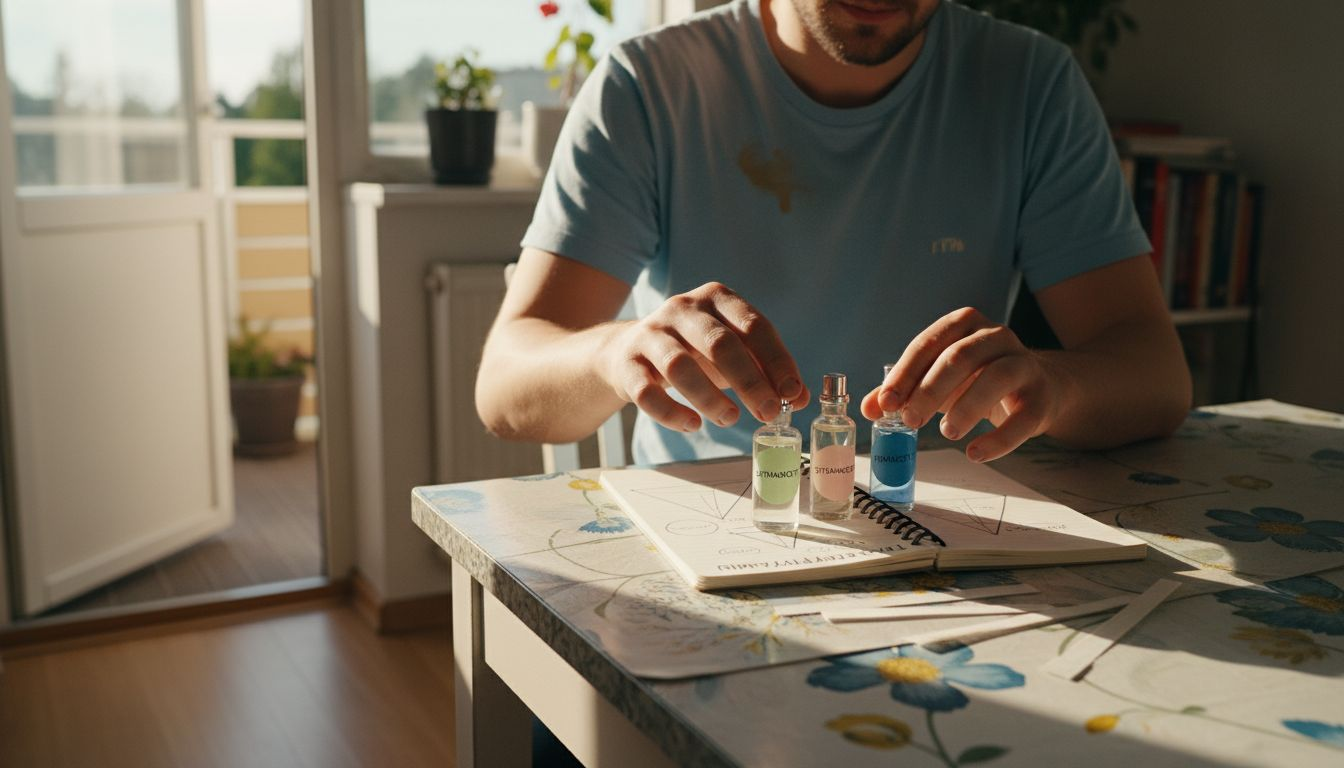
Before you start comparing perfumes, you need the right conditions and tools. Acquire fragrance samples or travel-sized bottles instead of full-sized ones. This saves you money and avoids significant waste if the scent doesn't suit you. Always test in an odorless, visually neutral space. Strong environmental odors, colors, or noise can subconsciously affect your scent experience and distort your evaluation.
Clean your hands and skin thoroughly before testing. Your skin should be free of other scents, lotions, or chemicals that could mix with the perfume. The testing environment should be neutral and free from distracting odors to ensure reliable perfume evaluation. Avoid exposure to strong odors such as food, smoke, or scented candles before testing.
Make sure you have the following:
- Perfume samples or travel-sized bottles
- An odorless space with good ventilation
- Clean, unmoisturized skin at the time of testing
- Note-taking materials to record observations
- Enough time to monitor the scent's development over several hours
Step 1: Acquiring and Selecting Samples
Acquiring samples is the foundation of comparison. Utilize online stores like Befrsh.com, which offers a wide selection of affordable fragrance samples from various categories. Samples cost a fraction of full-sized bottles, allowing you to test multiple options without significant financial risk. Choose a diverse range of samples: unisex, feminine, masculine scents. This way, you'll discover your true preferences across a broader spectrum.
Professional tip: Always order at least three samples at a time from different fragrance types. It's difficult to understand your preferences based on just one scent.
Using perfume samples can increase user satisfaction by 30% because they allow for realistic testing before a full-sized purchase. Samples significantly reduce the risk of a wrong purchase and offer the flexibility to try a scent in different situations and times of day. You save money and are more likely to find a scent that suits you.
Select samples according to the following criteria:
- Budget in relation to the price of a full-sized bottle
- Fragrance type: fresh, woody, floral, spicy
- Purpose: daily wear, special occasions, summer, winter
- Recipient's gender and age for gift purchases
Step 2: Understanding and Using the Fragrance Pyramid in Comparison
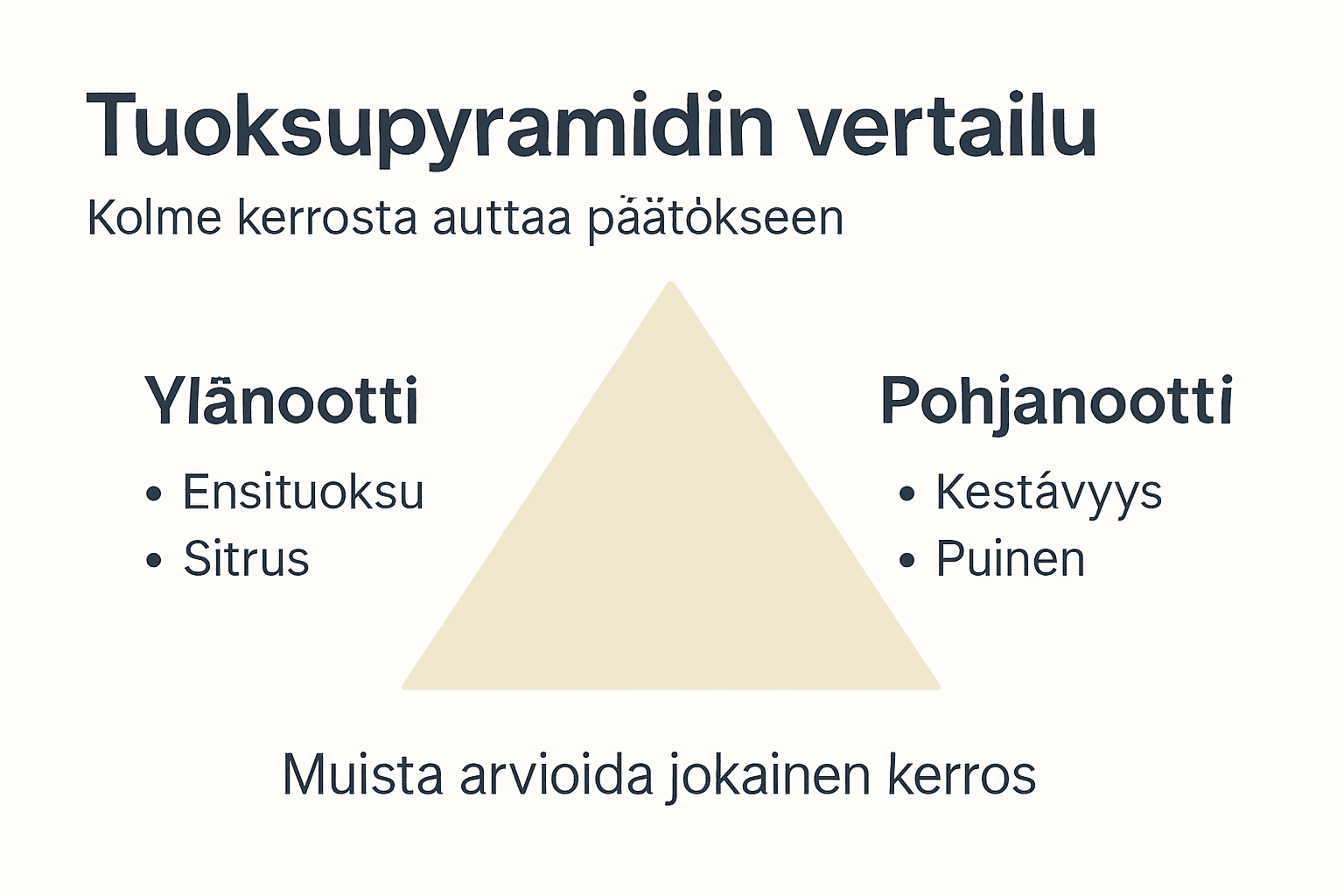
Every perfume consists of three layers, forming a fragrance pyramid. These layers develop at different times on the skin and create the overall impression of the scent. Top notes are the initial impression, felt immediately after application. They evaporate quickly, usually within 15 minutes. Heart notes appear next and last for a few hours. They define the character and personality of the perfume. Base notes emerge last and linger the longest, even up to a day. They create a lasting memory.
Professional tip: Record the development of each layer at 15 minutes, one hour, and four hours. This way, you'll notice how the scent changes on your skin.
Evaluate each layer separately to compare perfumes accurately:
- Apply a sample to your wrist and immediately smell to identify the top notes
- Wait 15 minutes and assess the emergence of the heart notes
- Check the scent after two hours for the full development of the heart notes
- Smell again after four hours to evaluate the base notes
- Record observations, pleasantness, and intensity of each stage
Understanding the fragrance pyramid ensures a nuanced evaluation between top, heart, and base notes, improving the accuracy of perfume selection. Do not make a decision based solely on the initial impression. The scent can change radically within the first hour.
Step 3: Order and Quantity of Fragrance Testing
Test a maximum of three or four perfumes in one session. Testing more scents will overwhelm your sense of smell and impair your judgment. Limiting to three or four perfumes per session prevents olfactory fatigue and maintains reliable sensory evaluation. Apply the scents simultaneously to different areas, for example, both wrists and inner elbows. This allows for fair side-by-side comparison.
Follow this order:
- Select three or four samples for the session
- Mentally mark each test spot on your body
- Apply all samples simultaneously
- Wait 15 minutes before the first evaluation
- Systematically record observations for each scent
Do not test many perfumes on the same skin area. The scents will mix and prevent a clear evaluation. Keep systematic notes during testing. Record the initial impression, development over time, and overall pleasantness. Do not read external reviews before forming your own opinion. Others' views can color your experience and distort your authentic reaction.
Practical tips:
- Test perfumes in the correct order from lightest to strongest
- Start with fresh citrus or aquatic scents
- Test heavier, woody, or spicy scents last
- Use a separate notepad for each perfume
Step 4: Breaks and Ventilation Between Tests
Breaks are critical for reliable comparison. Allow at least 30 minutes between tests for your skin to recover and the scent to dissipate. 30-minute breaks between perfume tests improve memory accuracy and reduce the effects of scent mixing. Naturally ventilate the testing area by opening windows. A closed space where scents accumulate will distort the evaluation of new samples.
Professional tip: If you are testing multiple sessions on consecutive days, shower in the evening and use unscented soap. This way, you start the next day with a clean slate.
During breaks, you can lightly clean your skin if necessary. Use unscented soap and water if the scent feels too strong. However, do not rub the skin too vigorously, as irritation can alter the reaction to the next sample. Proper breaks significantly reduce the risk of olfactory confusion and improve the clarity of your evaluation.
During breaks:
- Go outside for a few minutes for fresh air
- Drink water to refresh your senses
- Avoid strong odors like coffee or food
- Relax and let your sense of smell recover
- Follow breaks consistently in each test
Common Mistakes and Necessary Corrections
Many people make mistakes in perfume comparison that undermine the reliability of the results. Nearly half of perfume testers make the mistake of overlooking skin contact, leading to inaccurate scent evaluation. Skin significantly influences how a scent develops and lasts. Smelling a test strip or paper blotter does not tell you how a perfume will perform on your own skin.
Avoid these common pitfalls:
- Do not skip skin testing; skin chemistry is a crucial factor for the true scent
- Do not test too many perfumes at once to avoid olfactory fatigue
- Do not read reviews or external opinions before your own evaluation
- Ensure sufficient breaks between tests to prevent scents from mixing
- Use a neutral environment to avoid bias caused by other odors
- Actively record observations to overcome memory biases
True understanding of a scent requires time, patience, and a systematic approach. Rushing leads to disappointments.
Correct these errors by implementing a clear testing protocol. Always use skin as the testing surface and give each scent enough time to develop. Record your own observations before reading others' opinions. Observe breaks and limit the number of perfumes to be tested. Correct evaluation errors with a systematic and patient approach.
Comparing Fragrances for Gift Purchases
Choosing a gift requires a different approach than finding your own scent. Opt for unisex fragrances or popular classics when the recipient's preferences are unclear. Universal scents, such as combinations of fresh citruses and woody notes, appeal to a wider audience. Use samples to test multiple gift options before making a purchase. This ensures that your chosen scent is high-quality and versatile.
Consider the longevity of the fragrance and skin compatibility when giving gifts. Some scents fade quickly, which can disappoint the recipient. Others may cause irritation on sensitive skin. Set a budget and stick to it when choosing a gift. Perfumes vary greatly in price, and it's easy to exceed your plan. Gather clues about the recipient's taste through conversations or by observing their current fragrances.
When comparing gifts, focus on the following:
- Choose unisex or widely loved scents for recipients whose preferences are unknown
- Test samples yourself to understand the nature of the scent
- Evaluate the scent's longevity over several hours
- Subtly inquire about the recipient's fragrance preferences
- Explore gift fragrance selection guides for additional tips
Expected Results and Evaluation Times
A realistic timeline is key to successful perfume comparison. Allow three to five days for each perfume to observe its full development on the skin. First-impression decisions yield only a 48% satisfaction rate, while a systematic approach significantly increases it. Systematic perfume comparison over three to five days increases selection satisfaction by over 30%.
Keeping detailed notes improves decision-making confidence. When you revisit your notes a week later, you'll clearly see which scent developed best and pleases you most. Patience in testing leads to long-term enjoyment of the perfume. Rushing often leads to a purchase decision you later regret.
| Testing Time | Evaluation Phase | Expected Result |
|---|---|---|
| 0-15 min | Initial impression of top notes | Quick opinion on freshness and intensity |
| 1-2 hours | Development of heart notes | Understanding the character and personality of the scent |
| 4-6 hours | Emergence of base notes | Assessment of longevity and final impression |
| 3-5 days | Overall evaluation from multiple tests | Confident decision on suitability and pleasantness |
Follow the fragrance evaluation schedule carefully. Test the same perfume at least three times under different conditions: morning, afternoon, and evening. You'll notice how the time of day, body temperature, and activity level affect the scent's development. This holistic approach ensures you choose a perfume that performs well in all situations.
Discover Quality Fragrance Samples from Befrsh
Once you've learned the systematic comparison method, the next step is to acquire quality samples for testing. Befrsh offers a wide selection of affordable and convenient fragrance samples from popular and niche scents. You'll find ready-made collections in different categories, which significantly simplifies the selection process. The online store also provides a detailed user guide for samples, which supports the instructions in this article.
With samples, you can compare perfumes risk-free before a full-sized purchase. You save money and time by avoiding wrong purchases. Also, check out men's fragrance samples, which feature rarer ingredients and unique combinations. Befrsh delivers quickly and with a customer-centric approach, making fragrance experimentation effortless. Start your systematic perfume comparison today with quality samples.
Frequently Asked Questions about Perfume Comparison
How many perfumes can I safely test in one day?
Test a maximum of three to four perfumes per day. Testing more will cause olfactory fatigue and significantly impair your judgment. Take at least a 30-minute break between each test.
Why is testing on skin more important than on a test strip?
Skin chemistry, temperature, and pH affect how a scent develops and lasts. A test strip does not reveal the true behavior of the scent on your body, so it gives a misleading impression. Always test on skin for reliable results.
How long should I wait before making a perfume purchase decision?
Allow at least three days to test the same perfume under different conditions and times of day. This gives you a comprehensive picture of the scent's development and suitability. Hasty decisions often lead to disappointment.
Can perfume be tested differently in winter and summer?
Yes. Temperature affects scent evaporation and intensity. In summer, scents feel stronger and develop faster. In winter, they last longer but may seem quieter. Test your favorites in both conditions.
How do I choose perfume as a gift when I don't know the recipient's preference?
Opt for a unisex fragrance or a widely loved classic that appeals to a broad audience. Combinations of fresh citruses, light florals, or clean woody scents are safe choices. Also, consider gifting discovery sets so the recipient can try several options themselves.
Leave a comment